UK species guide
68 British fungi, written up the way you actually use them in the field: what it looks like, when it appears, where it grows, and what dangerous species it can be mistaken for.
Never eat a wild mushroom on the strength of a website alone. Some deadly species look very like good edibles. Check every feature, and get an expert opinion if there is any doubt at all.
Read the full foraging safety guidance.
Checking the weather across the UK…
Showing 4 of 68 species
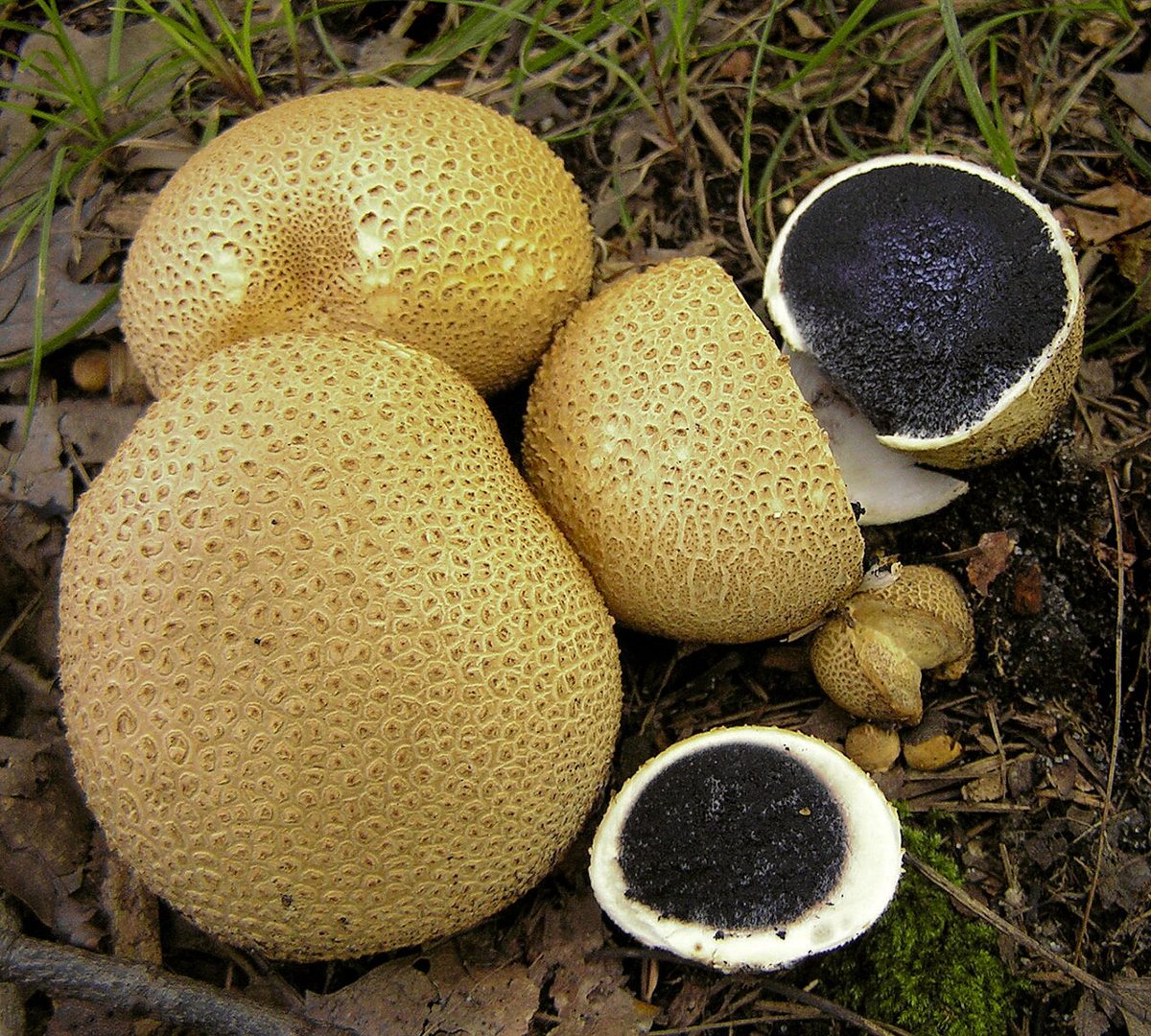
Common Earthball
Scleroderma citrinum
A potato-like yellowish ball with cracked, scaly skin, common on acid soils in woods and heaths. It is the poisonous mushroom most often mistaken for an edible puffball, but a single cut shows the difference.
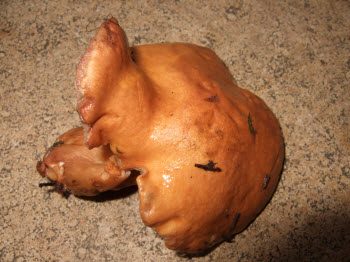
Cow Bolete
Suillus bovinus
A slimy, buff to orange-brown bolete of pine heaths and plantations, recognised by its large compound pores that run down the stem. Chris photographed them on Ludshott Common in November 2009. Edible but rubbery and bland.
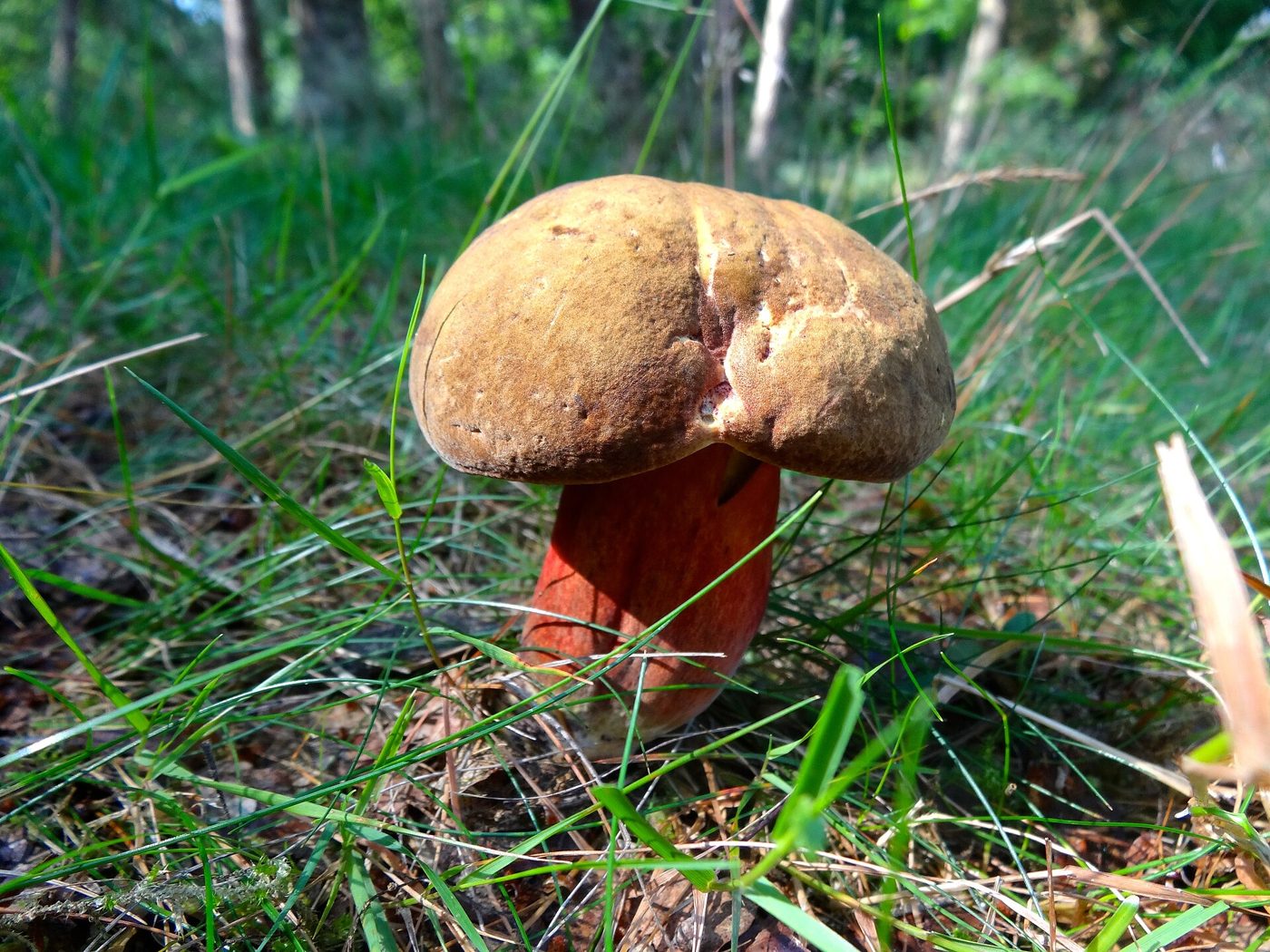
Scarletina Bolete
Neoboletus luridiformis
A chunky brown bolete with red pores and a yellow stem covered in tiny red dots. Its yellow flesh turns dark blue-black the instant it is cut. A good edible for experienced foragers, but only when thoroughly cooked, and it breaks the beginner's rule of avoiding red-pored boletes.
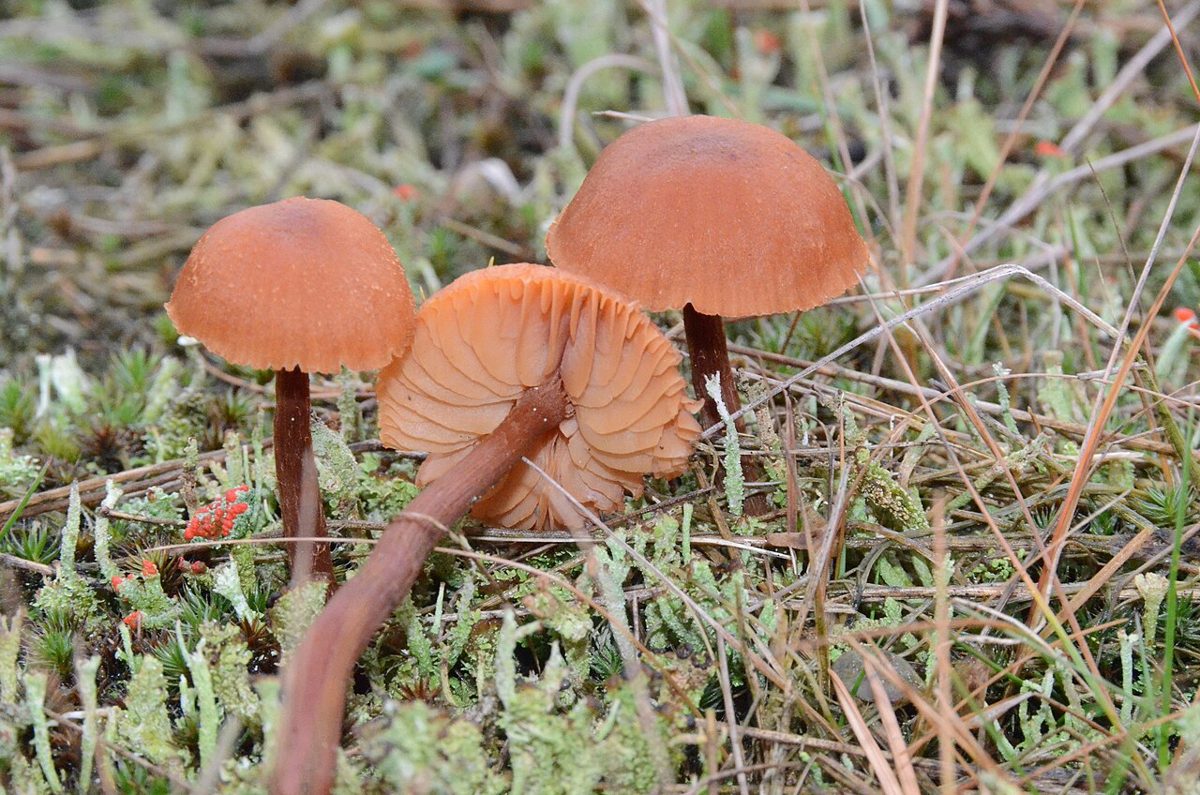
The Deceiver
Laccaria laccata
A small orange-brown mushroom with thick, widely spaced pink gills, found almost everywhere from summer to early winter. It earns its name by changing colour as it dries and looking like many other little brown mushrooms.