Wild Mushrooms Online
Species guideIn seasonLookalikesIdentifyRecipesArticlesMembers' findsCoursesForagers ClubSafety
Sign in
Sign inSpecies guideIn seasonLookalikesIdentifyRecipesArticlesMembers' findsCoursesForagers ClubSafety
Wild MushroomsOnline

A UK field guide and foragers club: species, seasons, recipes and the finds our members bring back from the woods.

Learn

Species guideForaging calendarLookalikes comparedRecipesArticles & field notesForaging safety

Take part

Members' findsCourses & eventsForagers ClubRecommended kit

About

About the siteSign in or join

Identification information is offered in good faith for education. Eating wild fungi is always at your own risk, and some species are deadly. Some links to kit are affiliate links, which help pay for the site at no extra cost to you. As an Amazon Associate I earn from qualifying purchases.

© 2026 Wild Mushrooms Online. All rights reserved.

← Species guide

Dryad's Saddle

Cerioporus squamosus · Polyporaceae

Also called Pheasant's Back Mushroom; formerly Polyporus squamosus

Edible with caution

A large, saddle-shaped spring and summer bracket covered in feather-like brown scales, common on sycamore, beech and elm. Easy to recognise and edible when very young, but it turns corky fast.
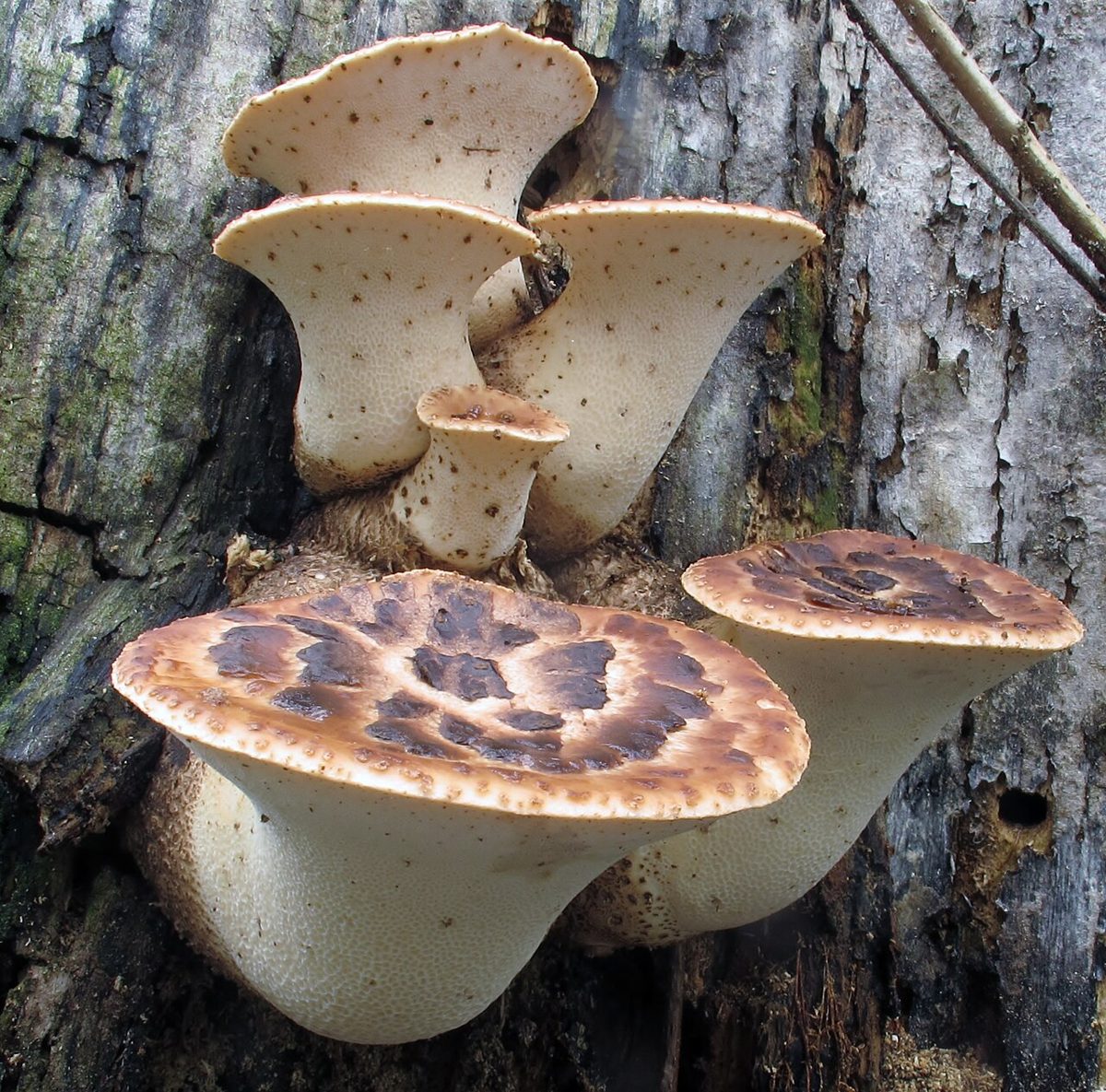
Dryad's Saddle, photograph 1 of 3
Photo: walt sturgeon, CC BY-SA 3.0 · 1 of 3 · Photos alone cannot confirm identification

Edible with caution. Edible only when young and soft enough to slice easily; older brackets are tough and indigestible. Always cook.

Read the full foraging safety guidance.

Season

April to September

J
F
M
A
M
J
J
A
S
O
N
D

Where it grows

  • Broadleaf woodland
  • Dead wood
  • Living trees
  • Stumps
  • Parks

Identification

Cap
A bracket 10-60cm across, fan- to saddle-shaped, cream to pale ochre with concentric rings of dark brown flattened scales like pheasant feathers.
Gills / pores
No gills: large, angular cream pores running down the stem.
Stem
Short, thick and off-centre, blackish at the base.
Flesh
White and thick; soft and succulent when young, soon corky.
Spore print
White.
Smell & taste
Strong and distinctive, of watermelon rind or cucumber; taste mild.

Lookalikes

Very distinctive. Chicken of the Woods is bright yellow and orange. Giant Polypore lacks the feathery scales and bruises black.

In the kitchen

Slice the soft young edges thinly and fry until crisp, or use in stir-fries.
Advertisement

Share Facebook X

Useful kit

Affiliate links
  • Opinel No.8 Mushroom Knife

    Curved blade with a boar bristle brush in the handle. The standard foraging knife for good reason.

    Around 20 GBP
  • Traditional Willow Basket

    Open weave so spores drop as you walk and nothing sweats into mush. A plastic bag ruins a haul.

    Around 35 GBP
  • Collins Fungi Guide

    The most complete British field guide in one volume. Heavy, but nothing else comes close for detail.

    Around 30 GBP

As an Amazon Associate I earn from qualifying purchases.

Found one?

Post a photo to the members' feed and let other foragers weigh in before you decide anything.

Post your find →

Also caution

Conifer Parasol in the field

Conifer Parasol

Chlorophyllum olivieri

Edible with caution

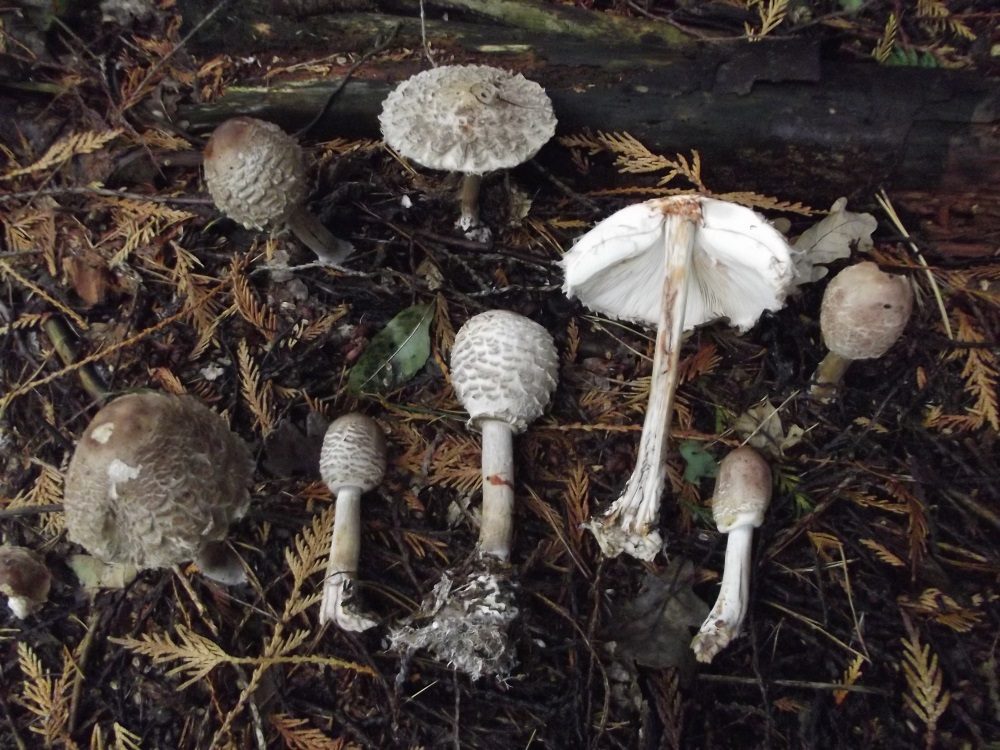
A shaggy parasol-like mushroom in coniferous woodland. Several similar species require careful separation.

J
F
M
A
M
J
J
A
S
O
N
D

Field Blewit

Lepista saeva

Edible with caution

A pasture mushroom with a dull buff cap and an unmistakable violet-blue stem.

J
F
M
A
M
J
J
A
S
O
N
D

Common Inkcap

Coprinopsis atramentaria

Edible with caution

Edible in itself, but it causes a violent reaction with alcohol taken up to three days later.
J
F
M
A
M
J
J
A
S
O
N
D
Edit with