Morchella esculenta · Morchellaceae
Also called Common Morel
The great prize of spring: a honeycombed hollow cone, best hunted on disturbed chalky ground.
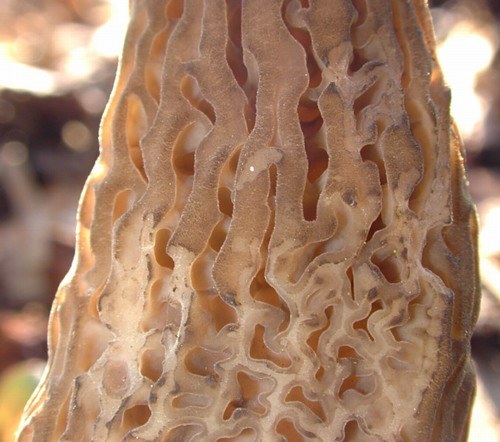
Edible with caution. Morels are toxic raw and must be cooked thoroughly. Slice lengthways to confirm the hollow interior.
Read the full foraging safety guidance.
March to May
False Morel (Gyromitra esculenta) has a brain-like lobed reddish-brown cap and is NOT hollow inside. Early morels are lobed rather than pitted.
Cook for at least 10 minutes. Superb with cream, chicken and sherry. Dries beautifully.
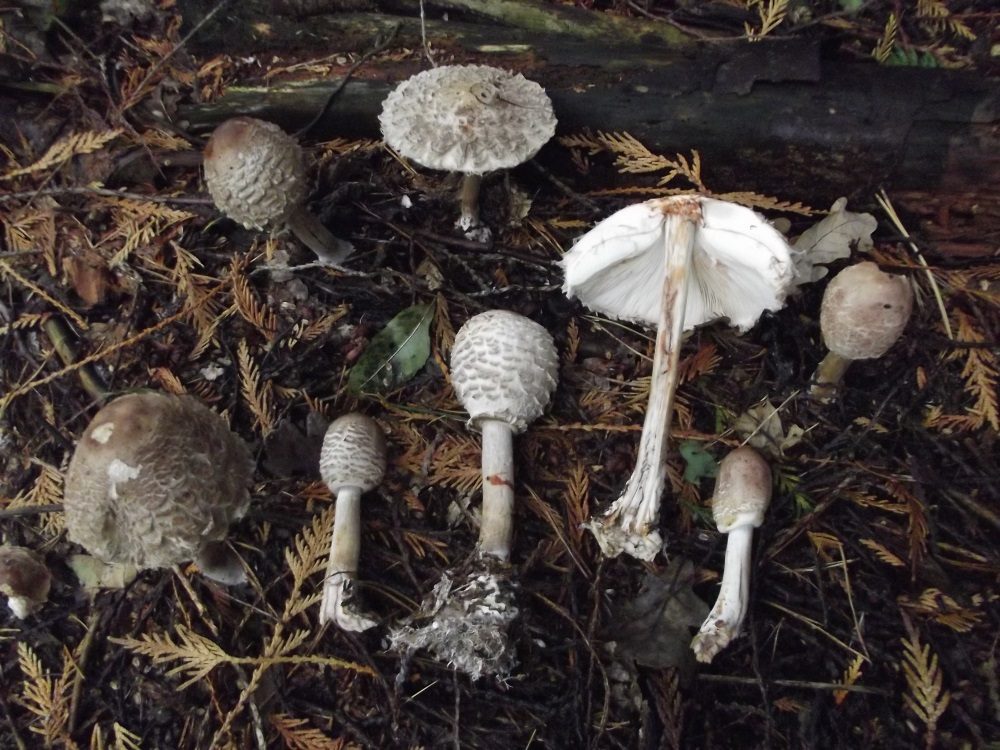
Chlorophyllum olivieri
A shaggy parasol-like mushroom in coniferous woodland. Several similar species require careful separation.
Lepista saeva
A pasture mushroom with a dull buff cap and an unmistakable violet-blue stem.
Coprinopsis atramentaria
Edible in itself, but it causes a violent reaction with alcohol taken up to three days later.