Lepista nuda · Tricholomataceae
Also called Blue Stalk
A late-season woodland mushroom with a striking lilac flush and a perfumed smell.
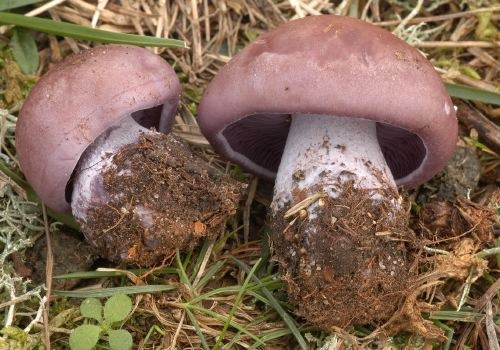
Edible with caution. Must be cooked thoroughly: raw blewits cause stomach upsets, and some people react to them even cooked.
Read the full foraging safety guidance.
September to December
Purple Cortinarius species have RUSTY brown spores and a cobwebby veil on young stems. Check the pale pink spore print.
Rich and meaty. Cook well in butter with cream and thyme.
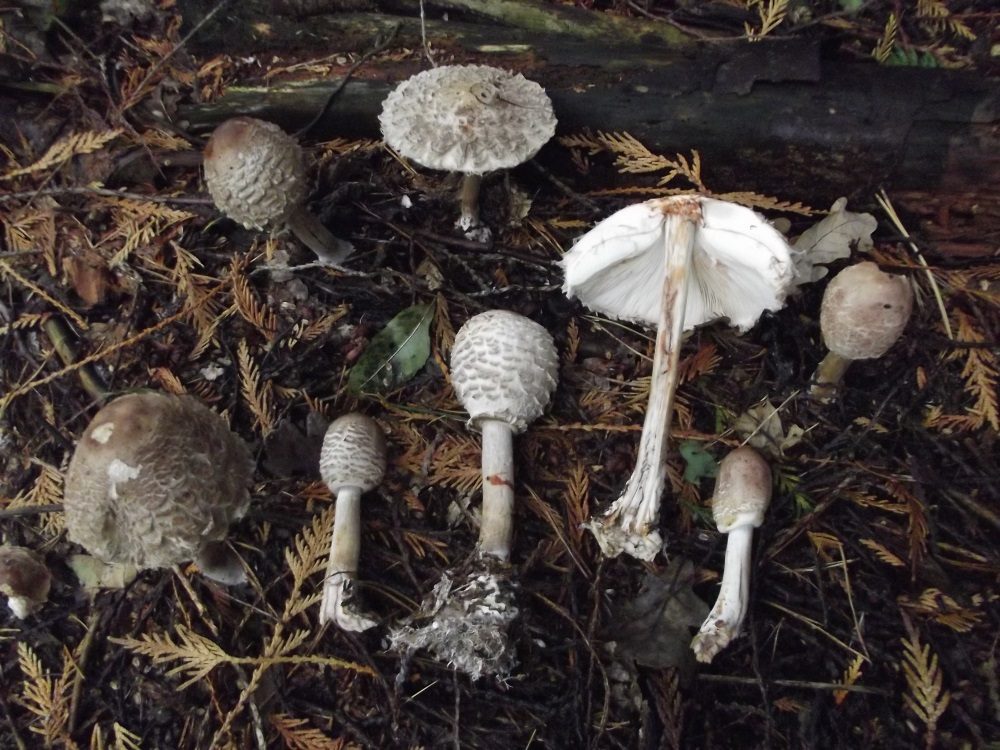
Chlorophyllum olivieri
A shaggy parasol-like mushroom in coniferous woodland. Several similar species require careful separation.
Lepista saeva
A pasture mushroom with a dull buff cap and an unmistakable violet-blue stem.
Coprinopsis atramentaria
Edible in itself, but it causes a violent reaction with alcohol taken up to three days later.