UK species guide
68 British fungi, written up the way you actually use them in the field: what it looks like, when it appears, where it grows, and what dangerous species it can be mistaken for.
Never eat a wild mushroom on the strength of a website alone. Some deadly species look very like good edibles. Check every feature, and get an expert opinion if there is any doubt at all.
Read the full foraging safety guidance.
Checking the weather across the UK…
Showing 5 of 68 species
Common Inkcap
Coprinopsis atramentaria
Edible in itself, but it causes a violent reaction with alcohol taken up to three days later.
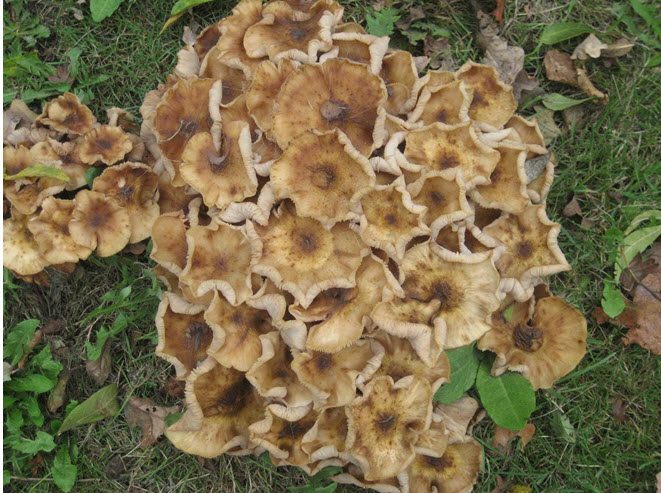
Honey Fungus
Armillaria mellea
The tree-killing parasite of woods, parks and gardens, fruiting in dense honey-to-tawny clumps on stumps and at the base of trees from late summer into early winter. Edible only young and thoroughly cooked, it upsets some people, and its clumps can hide the deadly Funeral Bell.
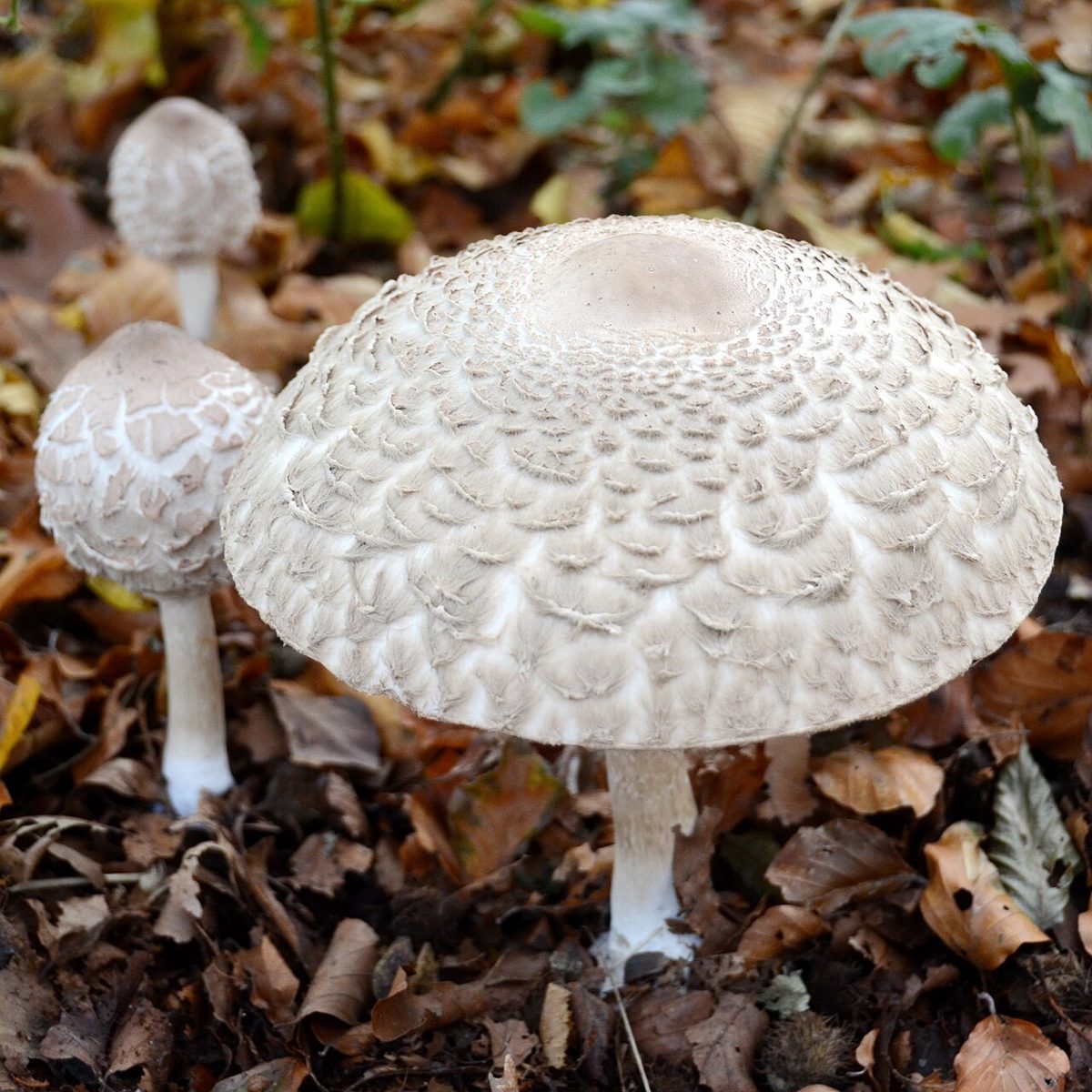
Shaggy Parasol
Chlorophyllum rhacodes
A big, shaggy-scaled parasol of woodland edges, gardens and compost heaps, whose flesh turns saffron-orange when cut. Eaten by some, but it upsets others, and small parasol-like Lepiota species can be deadly.
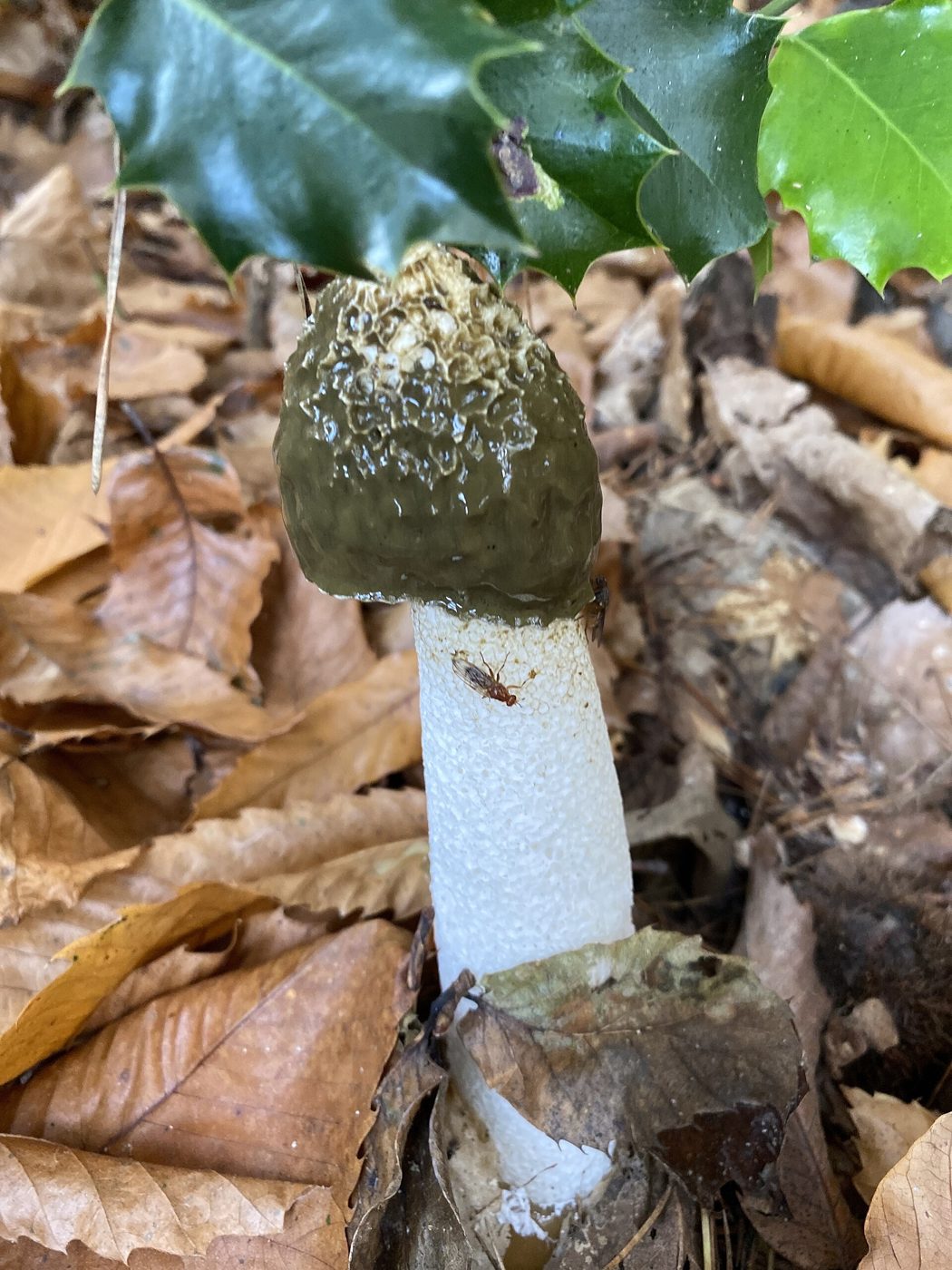
Stinkhorn
Phallus impudicus
A white, spongy stem topped with olive-green slime that smells of rotting meat, rising from a soft white "egg" in woods and woodchip from summer to late autumn. You usually smell it long before you see it.
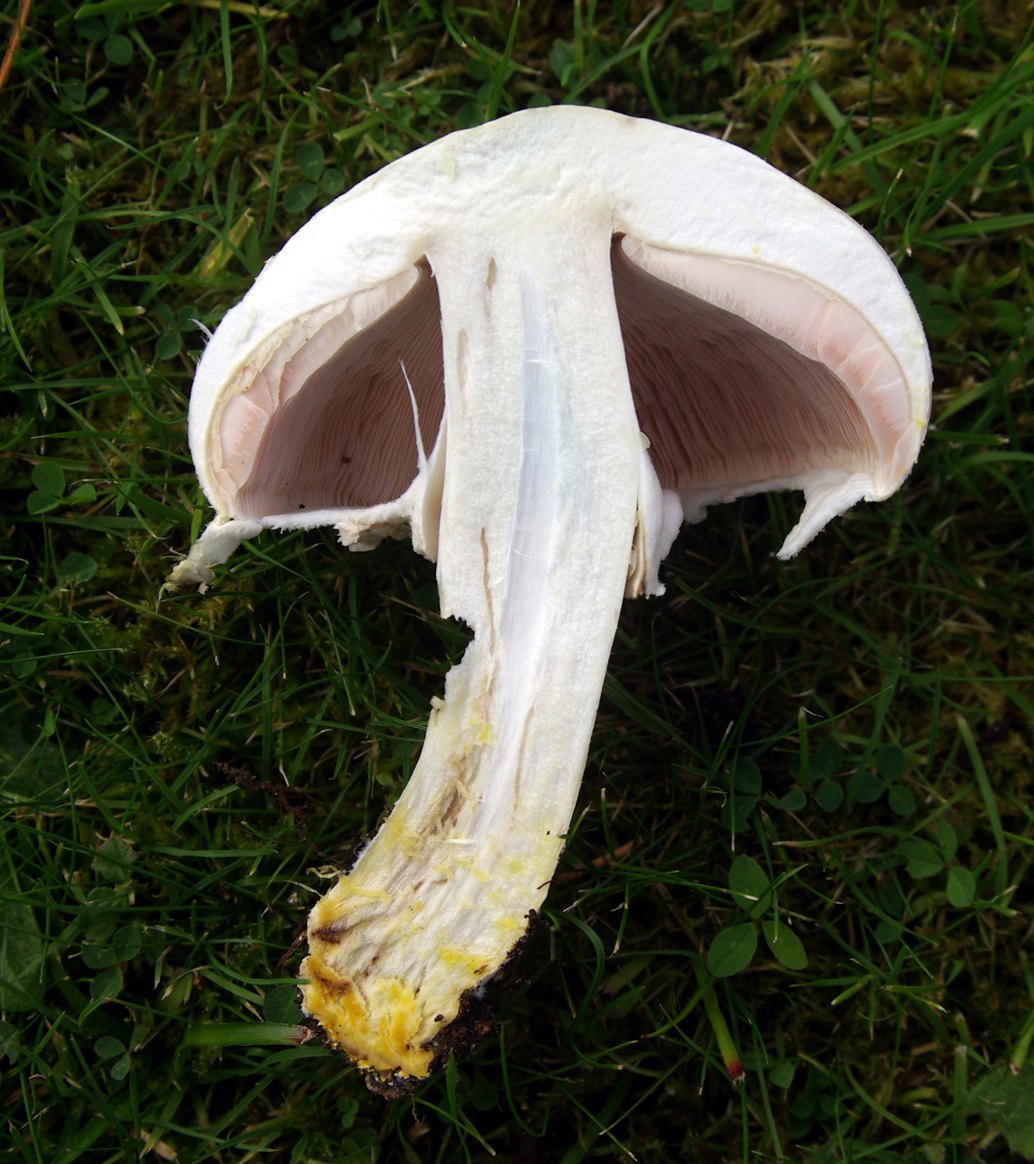
Yellow Stainer
Agaricus xanthodermus
A field-mushroom lookalike that turns bright chrome yellow when cut and makes most people ill.