
Chanterelle vs False Chanterelle
The golden trumpet everyone wants, and the orange impostor that grows alongside it. The false chanterelle will not kill you, but it upsets plenty of people and it wastes a good basket.
The test that decides it
Real chanterelles have blunt, forking, vein-like ridges that run down the stem, not true blades. They smell distinctly of apricots and the flesh is white inside. False chanterelles have thin, crowded, soft true gills, a deeper orange colour throughout, and no apricot smell.
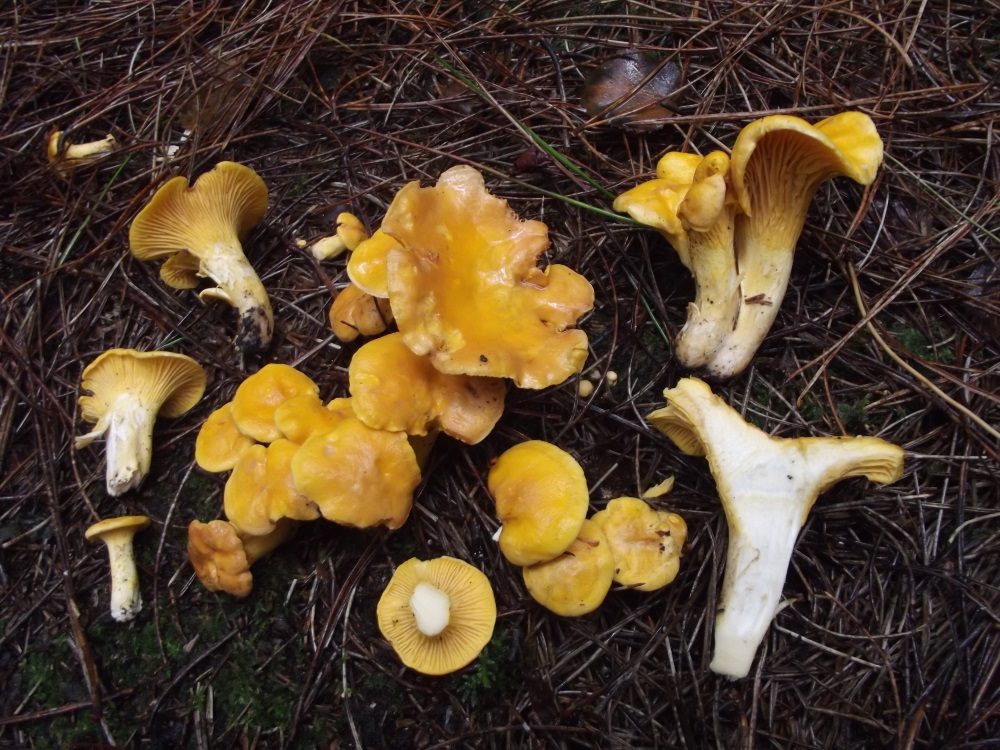
Chanterelle
Cantharellus cibarius
- Blunt forking ridges, not sharp gills
- Egg-yolk yellow right through; flesh white when torn
- Clear smell of apricots
- Grows from soil, with birch, beech and oak
Full species guide →
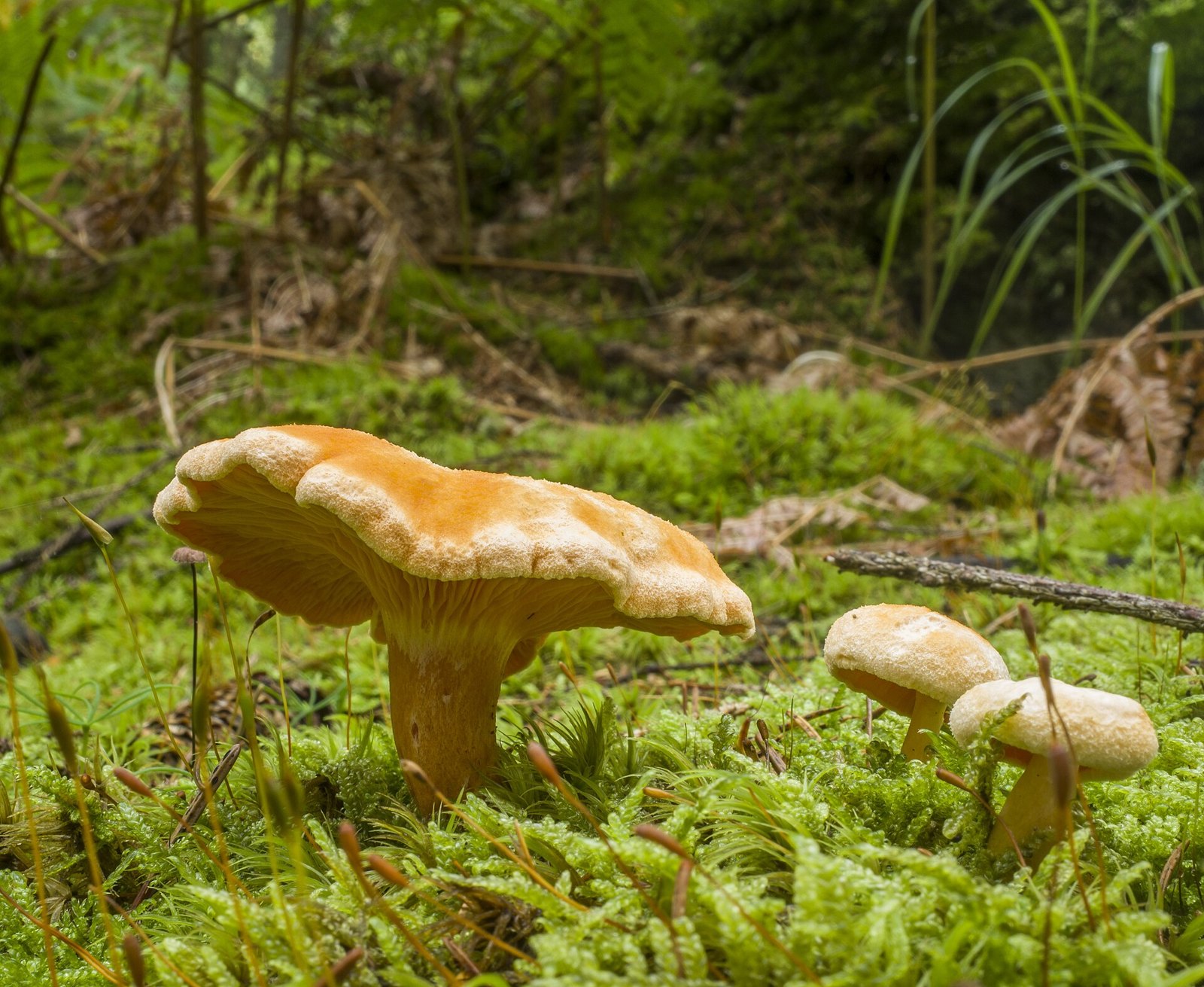
False Chanterelle
Hygrophoropsis aurantiaca
- Thin, crowded, soft true gills that snap cleanly
- Deeper orange, often with a browner cap centre
- No apricot smell
- Usually on conifer debris, woodchip and rotting wood
Feature by feature
| Feature | Chanterelle | False Chanterelle |
|---|---|---|
| Underside | Blunt, forking, vein-like ridges that fade into the stem | Thin, crowded, sharp-edged true gills |
| Colour | Even egg-yolk yellow, white flesh inside | Orange, often graded darker at the cap centre |
| Smell | Apricots | Faint, unremarkable |
| Substrate | Soil, mossy banks, mycorrhizal with trees | Rotting conifer wood, needle litter, woodchip |
| Texture | Firm, slightly rubbery, tears in fibres | Soft, thin-fleshed, gills break cleanly |
Never eat a wild mushroom on the strength of a website alone. Some deadly species look very like good edibles. Check every feature, and get an expert opinion if there is any doubt at all.
Read the full foraging safety guidance.
Common questions
- Is false chanterelle poisonous?
- It is not deadly, but it is widely reported to cause stomach upset and hallucinatory effects in some people, and it tastes poor. Treat it as one to leave.
- What about the Jack-o''-Lantern?
- Omphalotus illudens and its relatives are genuinely poisonous chanterelle mimics, growing in dense clumps on stumps with true gills and a bitter smell. They are rare in Britain but worth knowing. Chanterelles never grow in tight clumps from wood.
- Do chanterelles come back to the same spot?
- Yes. They are mycorrhizal, partnered with living trees, so a productive bank will fruit year after year if you cut cleanly and do not disturb the ground.
Checked against
- Index Fungorum / Species Fungorum current names
- Original field notes, wildmushroomsonline.co.uk archive