Field Mushroom vs Yellow Stainer vs Death Cap
The most common and the most dangerous confusion in British foraging. A white mushroom in short grass is usually a Field Mushroom, but the Yellow Stainer will make you ill, and a young Death Cap in the button stage has been mistaken for a field mushroom with fatal results.
The test that decides it
Check the base of the stem every single time. Amanitas emerge from a bag (a volva) and field mushrooms never do. Then check the gills: a field mushroom's gills are pink turning chocolate brown, a death cap's stay white for life.
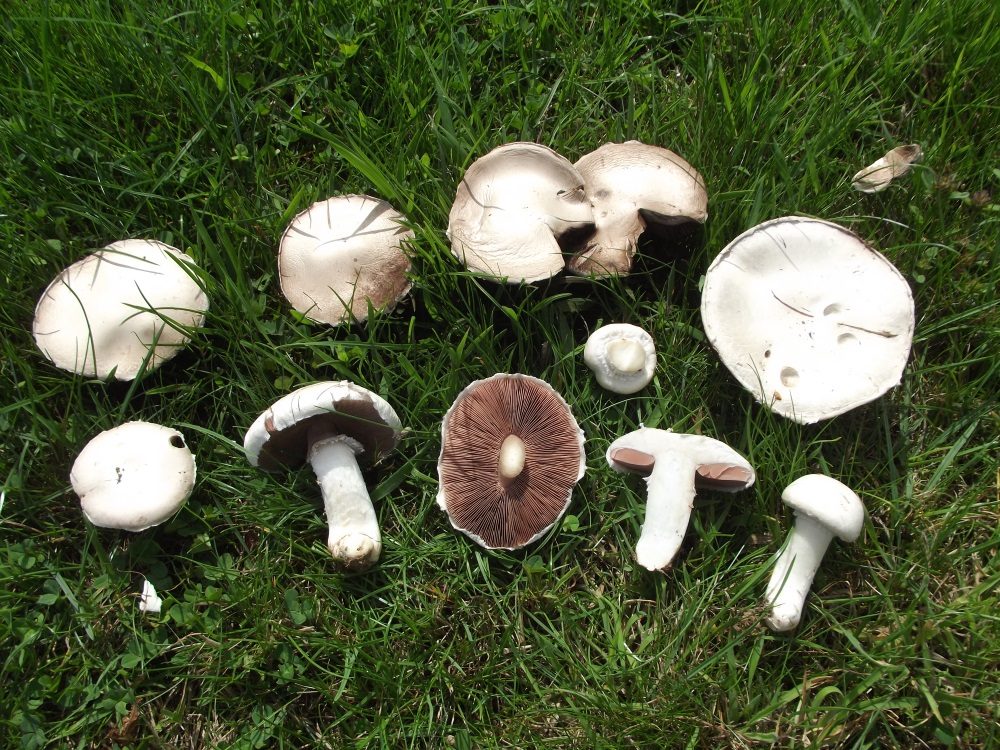
Field Mushroom
Agaricus campestris
- Gills bright pink when young, going deep chocolate brown with age
- No bag or sac at the base of the stem
- Pleasant mushroomy smell
- Short grazed grassland, late summer to autumn
Full species guide →
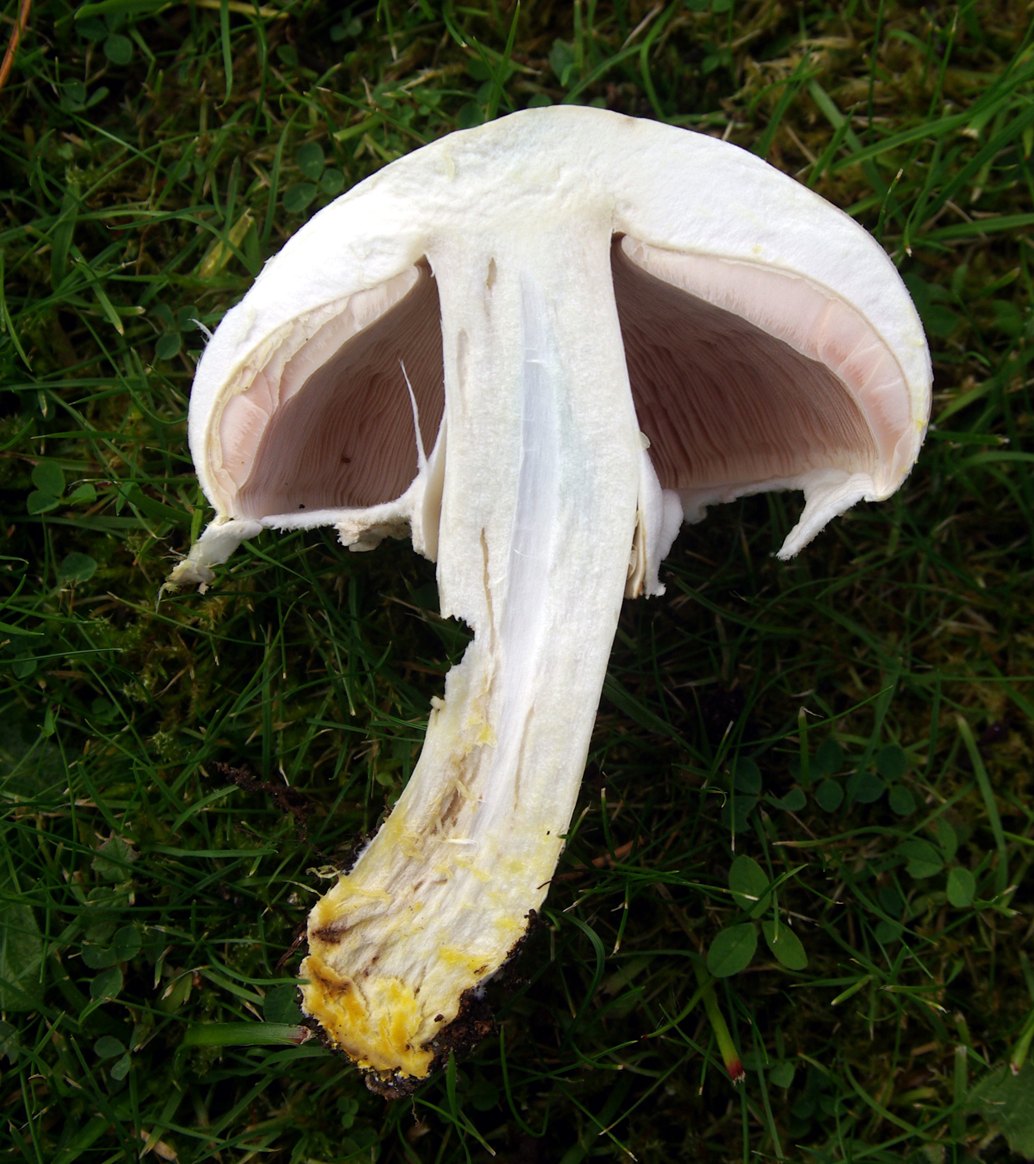
Yellow Stainer
Agaricus xanthodermus
- Stem base bruises bright chromium yellow within seconds when cut
- Smells of ink, phenol or old hospital disinfectant, strongest when cooking
- Causes severe stomach cramps, vomiting and sweating in most people
- Common on lawns, parks and under hedges
Full species guide →
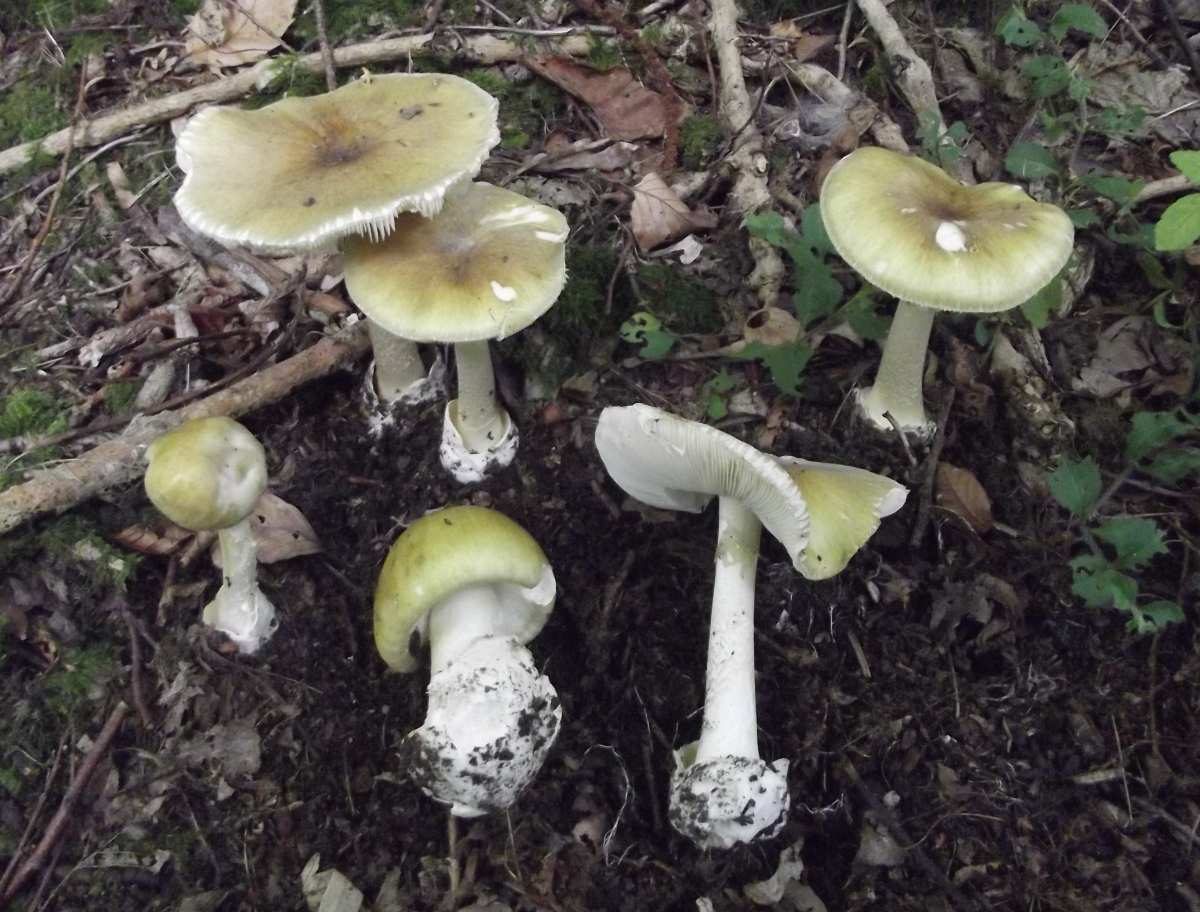
Death Cap
Amanita phalloides
- Emerges from a white bag (volva) at the stem base - dig, do not pull
- Gills stay pure white at every age
- Usually olive-green cap, but pale and white forms occur
- Associated with oak and beech, not open grassland
Full species guide →
Feature by feature
| Feature | Field Mushroom | Yellow Stainer | Death Cap |
|---|---|---|---|
| Base of stem | No sac; stem simply tapers | No sac, but bruises vivid yellow when scratched | Emerges from a distinct white bag or volva |
| Gill colour | Pink, then chocolate brown | Pinkish grey, then brown | Pure white, always |
| Smell | Pleasant, mushroomy | Ink or phenol, strongest at the stem base and in the pan | Faint, sickly sweet in older specimens |
| Spore print | Dark brown | Dark brown | White |
| Habitat | Grazed pasture and meadow | Lawns, parks, hedgerows, gardens | Broadleaf woodland with oak and beech |
| Ring on stem | Thin, often torn away | Thicker, with a double edge | Large, pendulous skirt |
Never eat a wild mushroom on the strength of a website alone. Some deadly species look very like good edibles. Check every feature, and get an expert opinion if there is any doubt at all.
Read the full foraging safety guidance.
Common questions
- Does a yellow stainer always go yellow?
- The yellowing is strongest at the very base of the stem and it fades within a minute or two. Scratch the base with a knife and watch immediately. The smell test is the more reliable confirmation.
- Can a death cap be white?
- Yes. A pure white form exists and young buttons of all colour forms look pale. This is exactly why the volva and the white gills are the checks that matter, not the cap colour.
- Are horse mushrooms affected?
- Horse Mushroom and Wood Mushroom also yellow slightly, but slowly and faintly, and they smell of aniseed rather than ink. If it smells of aniseed it is not a yellow stainer.
Checked against
- Theft Act 1968 s.4(3) (legislation.gov.uk)
- Index Fungorum / Species Fungorum current names
- Original field notes, wildmushroomsonline.co.uk archive 2011