Laccaria amethystina · Hydnangiaceae
A small brilliant violet mushroom of leaf litter, edible but slight and known to take up arsenic.
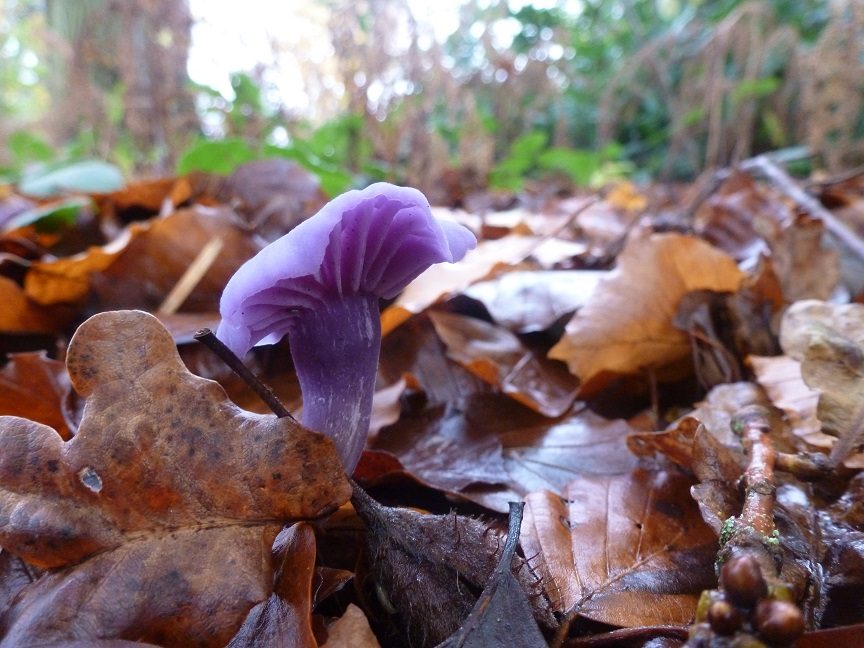
Edible. It accumulates arsenic from the soil, so eat only in small quantities and not from roadsides or contaminated ground.
Read the full foraging safety guidance.
August to November
Lilac Cortinarius and Mycea species: check the white spore print and thick widely spaced gills.
Pretty as a garnish. Keeps its colour if cooked briefly.
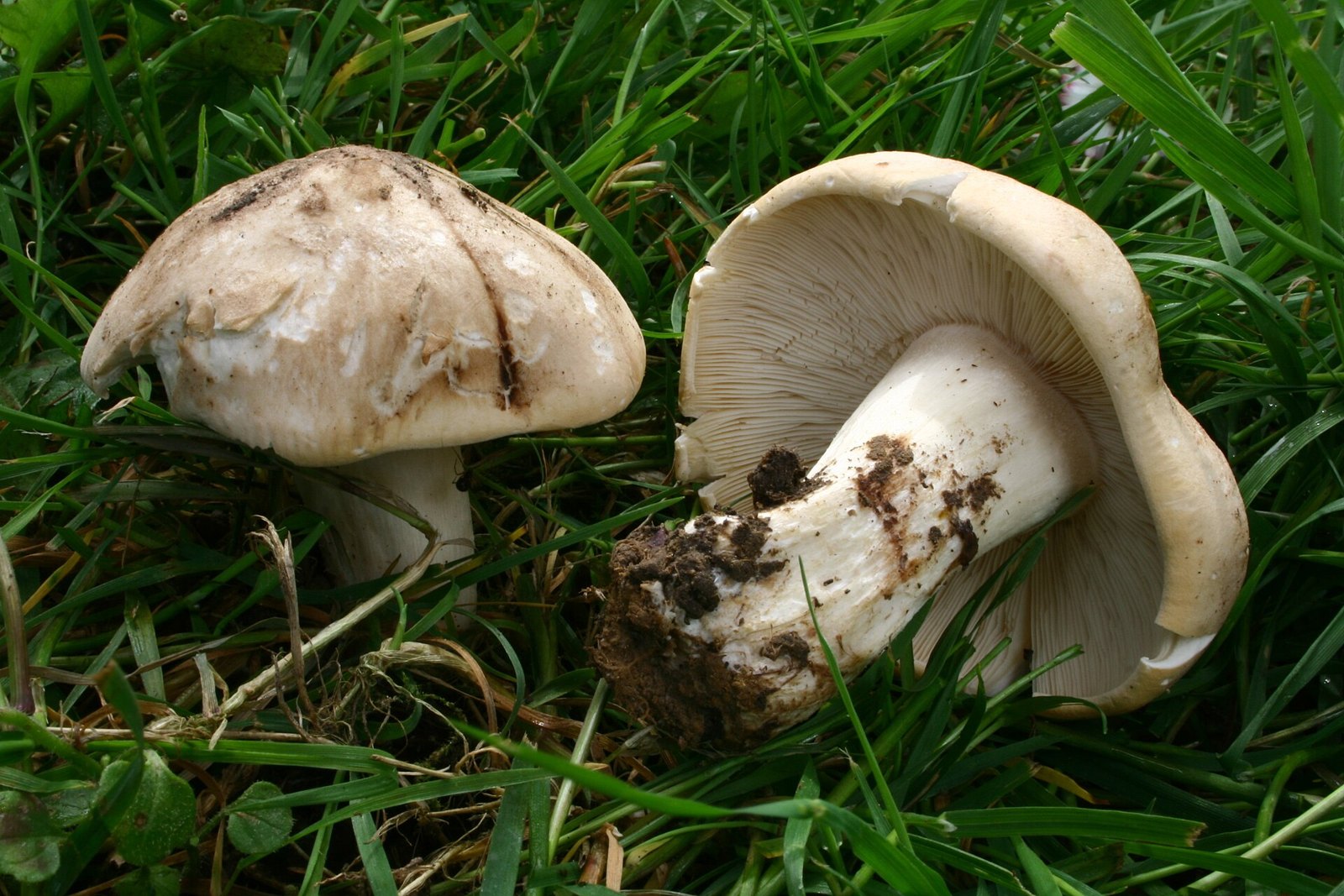
Calocybe gambosa
A solid white spring mushroom of grassland, traditionally appearing around St Georges Day.
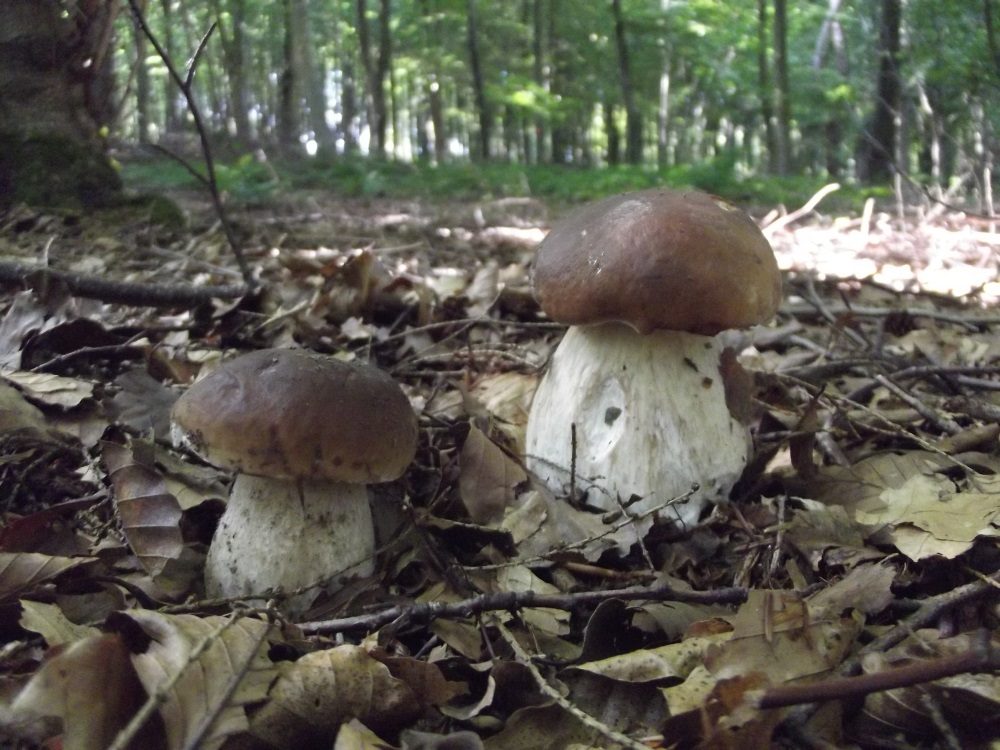
Boletus edulis
The most sought-after wild mushroom in Britain: nutty, firm and richly scented, with a pale bun-like cap and a fat netted stem.
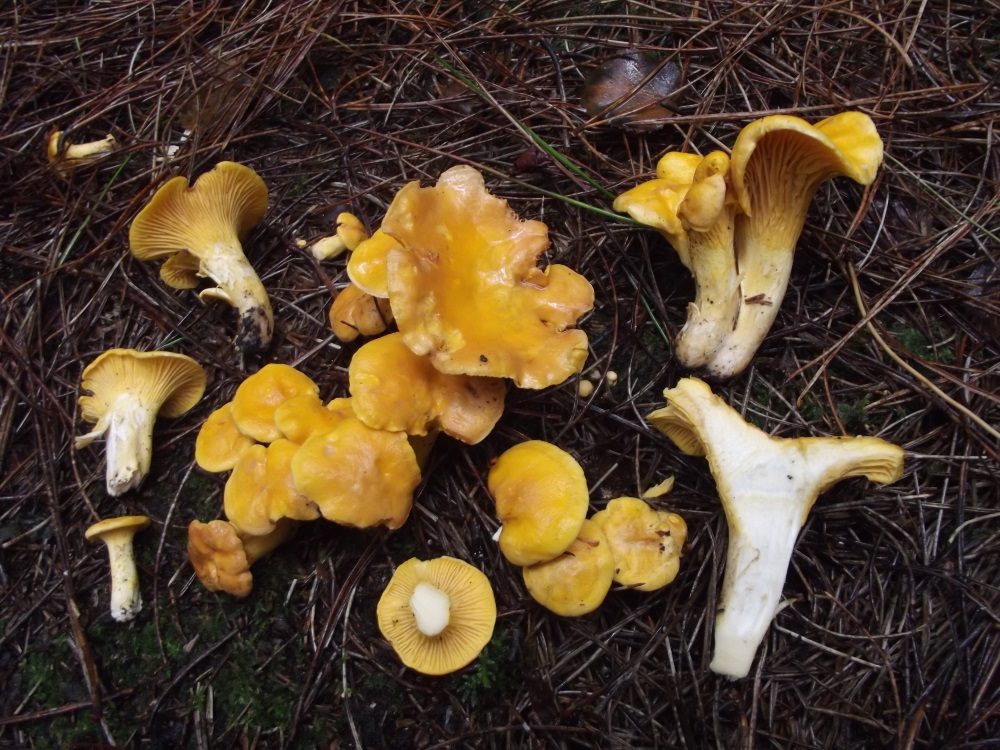
Cantharellus cibarius
Egg-yolk yellow, trumpet-shaped and smelling faintly of apricots. One of the safest and finest edibles once learned.