Laetiporus sulphureus · Fomitopsidaceae
Also called Sulphur Polypore
Vivid sulphur-yellow and orange brackets on standing trees, with a texture famously like chicken breast.
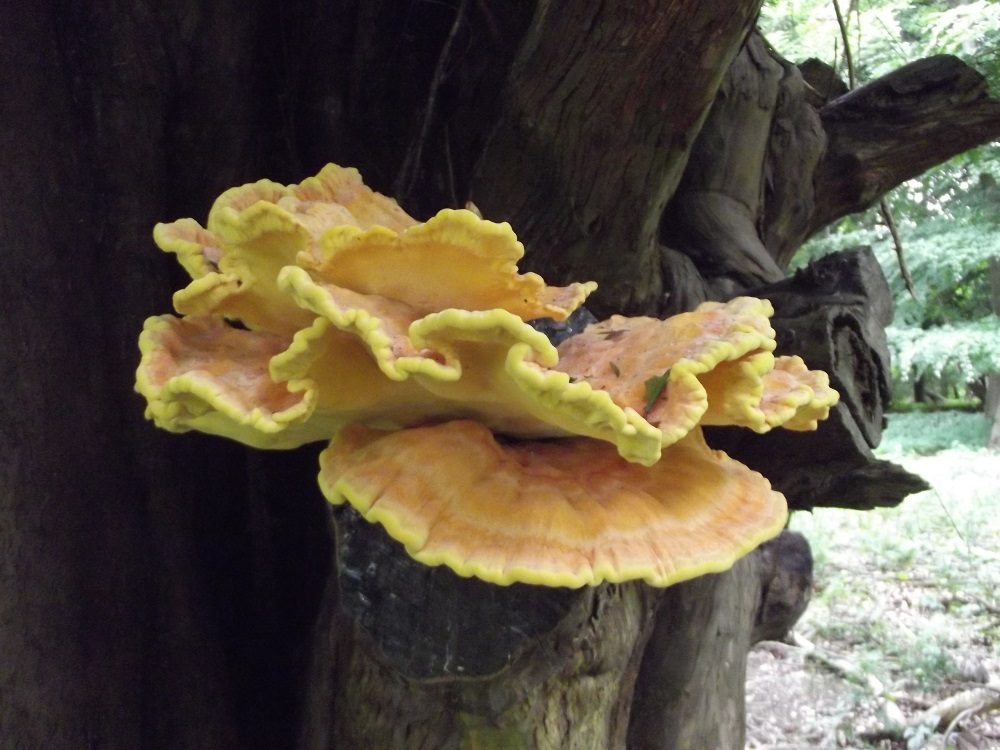
Edible with caution. A minority of people react badly to it, and fruitings from yew, eucalyptus, conifers and laburnum should never be eaten. Eat only young soft edges, cook thoroughly and try a small portion the first time.
Read the full foraging safety guidance.
April to October
Few. Other bracket fungi are woodier and browner.
Slice the tender outer margin, cook through properly in butter or batter. Never eat raw.
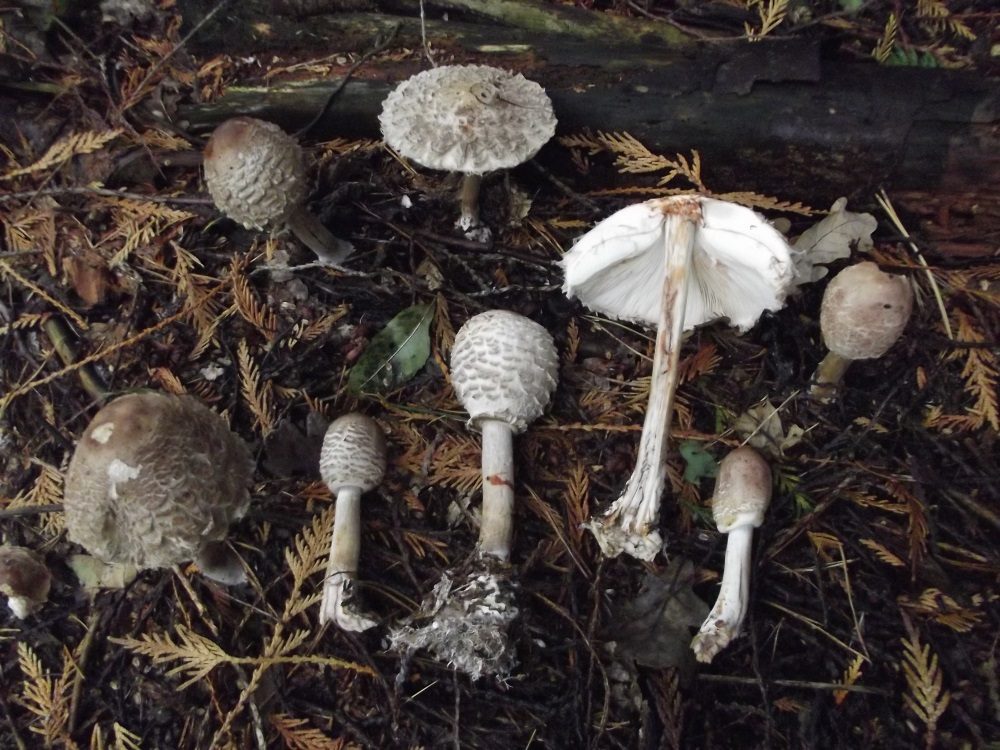
Chlorophyllum olivieri
A shaggy parasol-like mushroom in coniferous woodland. Several similar species require careful separation.
Lepista saeva
A pasture mushroom with a dull buff cap and an unmistakable violet-blue stem.
Coprinopsis atramentaria
Edible in itself, but it causes a violent reaction with alcohol taken up to three days later.