UK species guide
68 British fungi, written up the way you actually use them in the field: what it looks like, when it appears, where it grows, and what dangerous species it can be mistaken for.
Never eat a wild mushroom on the strength of a website alone. Some deadly species look very like good edibles. Check every feature, and get an expert opinion if there is any doubt at all.
Read the full foraging safety guidance.
Checking the weather across the UK…
Showing 7 of 68 species
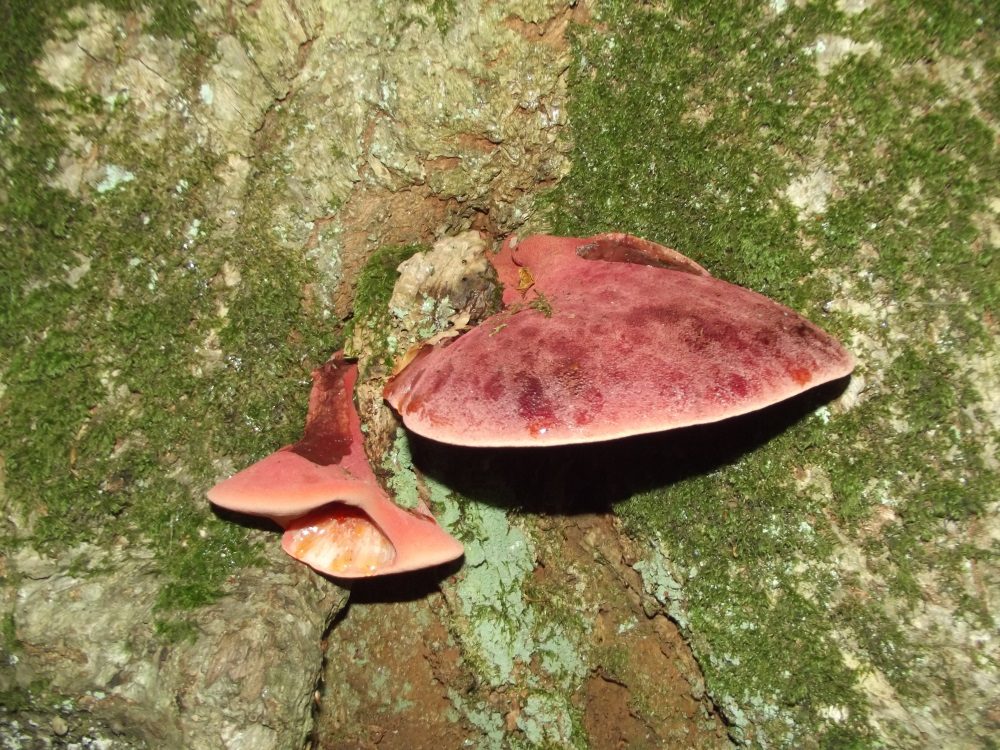
Beefsteak Fungus
Fistulina hepatica
A reddish bracket fungus that grows on broadleaf trees. Confirm the host and underside as well as the colour.
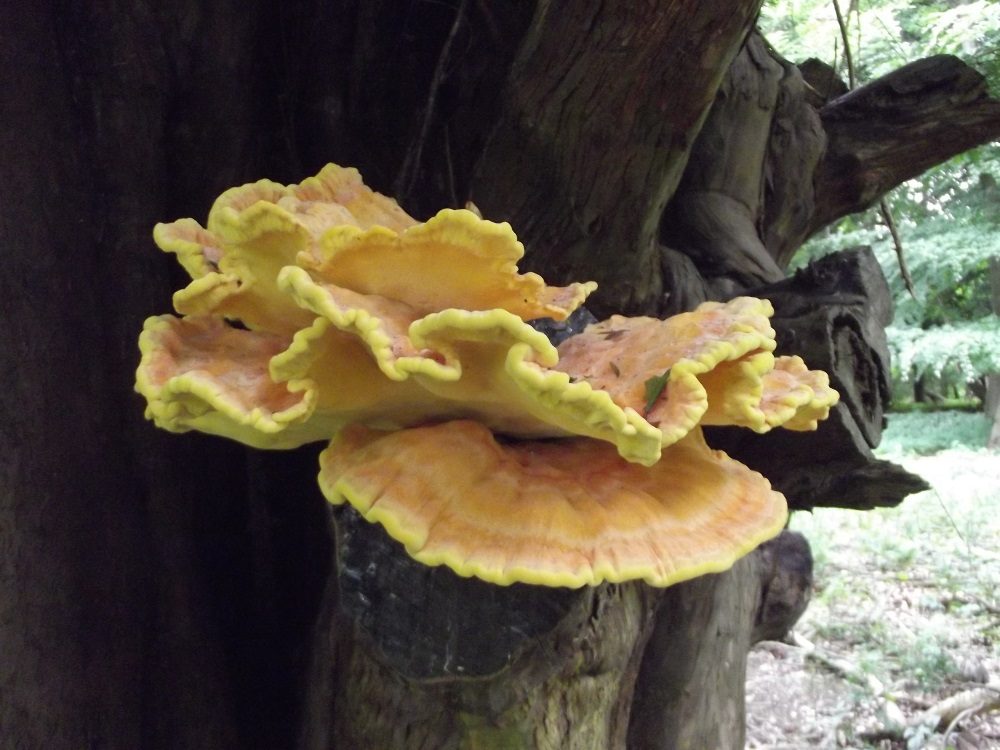
Chicken of the Woods
Laetiporus sulphureus
Vivid sulphur-yellow and orange brackets on standing trees, with a texture famously like chicken breast.
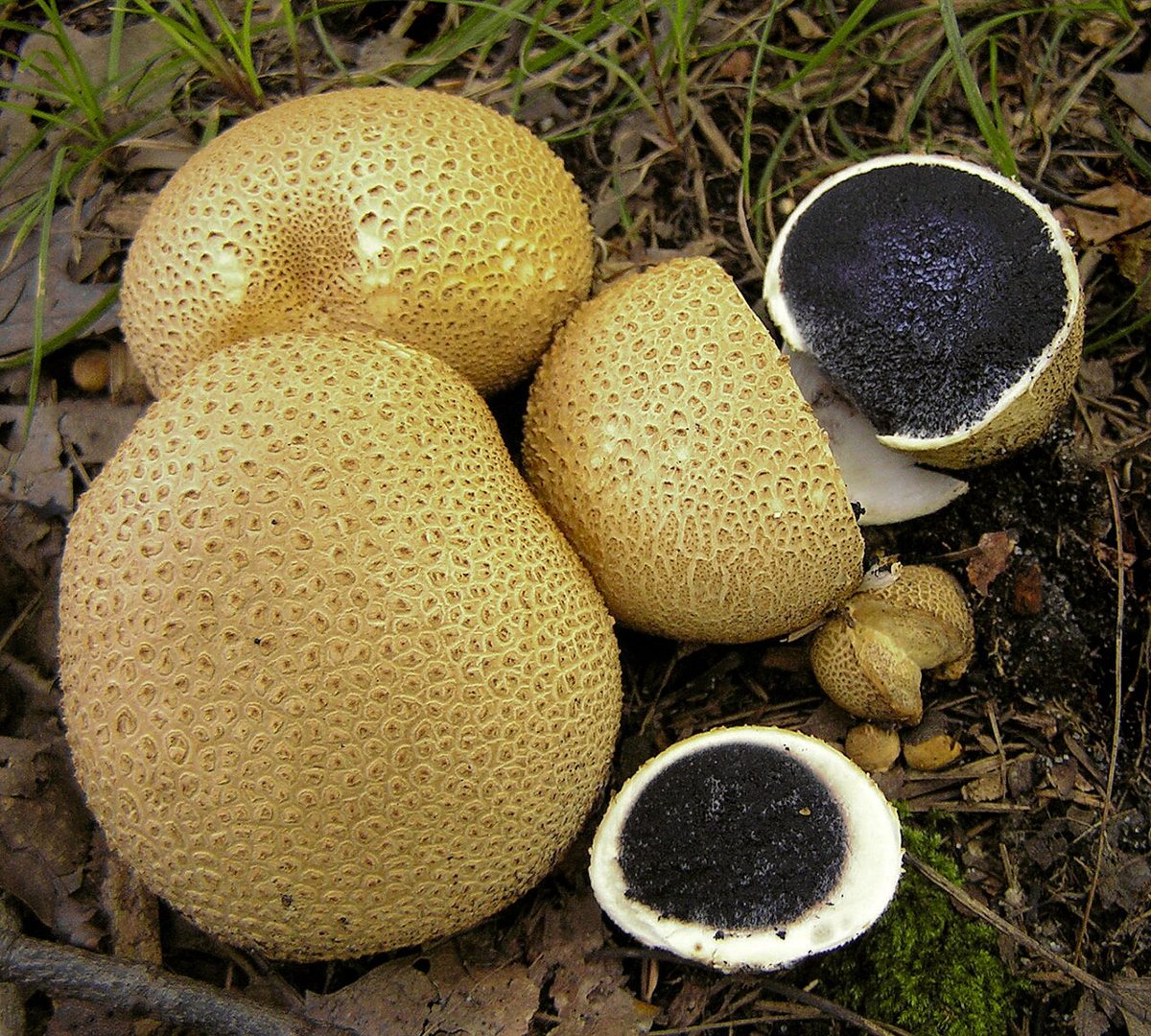
Common Earthball
Scleroderma citrinum
A potato-like yellowish ball with cracked, scaly skin, common on acid soils in woods and heaths. It is the poisonous mushroom most often mistaken for an edible puffball, but a single cut shows the difference.
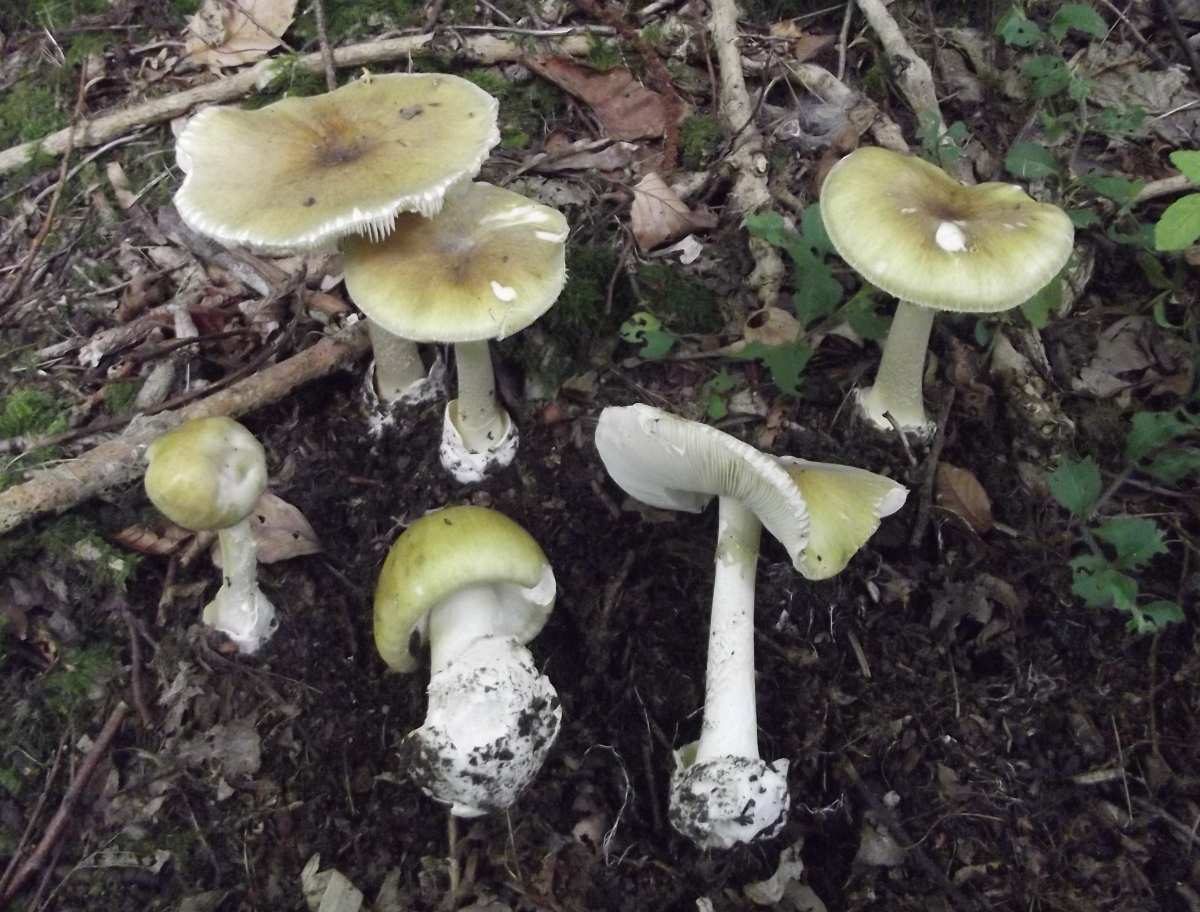
Death Cap
Amanita phalloides
Responsible for the great majority of fatal mushroom poisonings worldwide. Learn this one before anything else.
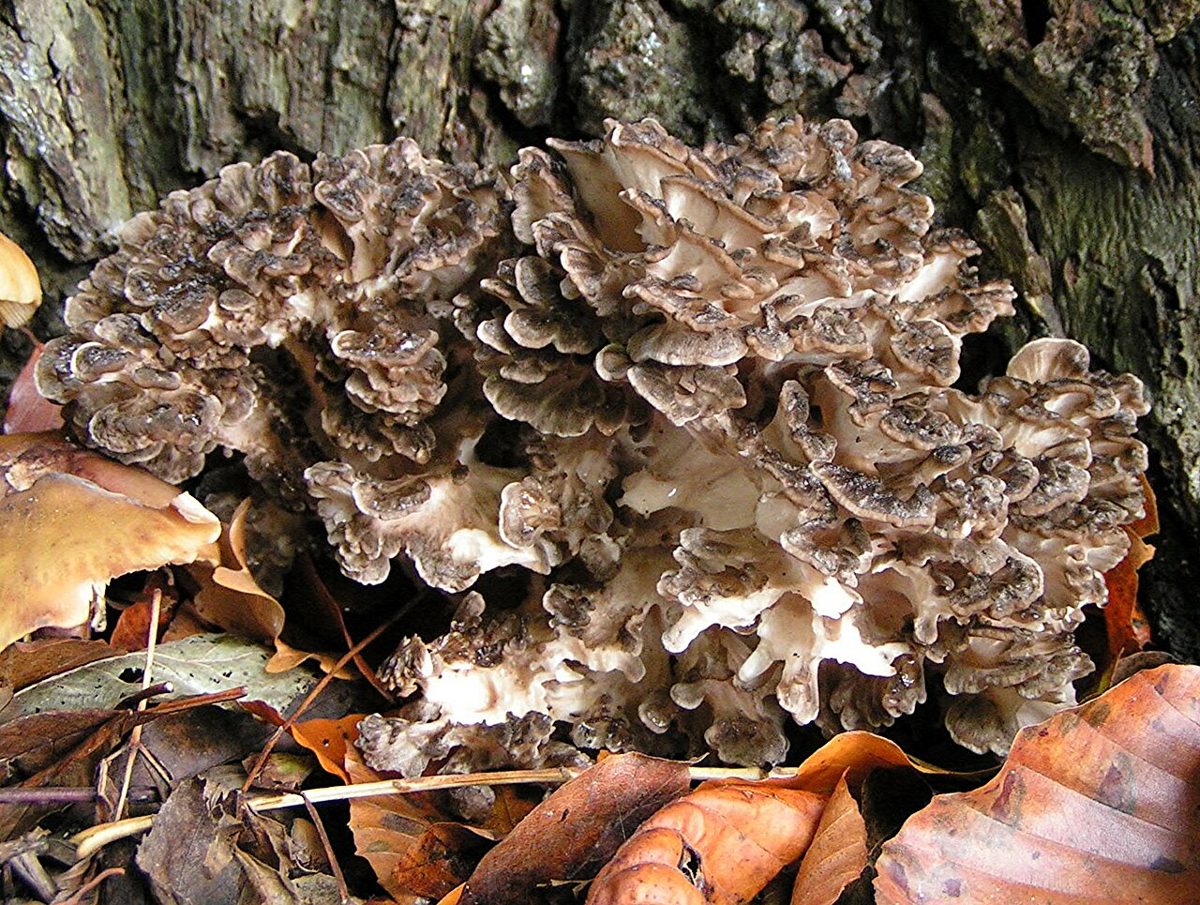
Hen of the Woods
Grifola frondosa
A big, ruffled rosette of grey-brown fronds at the base of old oaks, found occasionally in southern England in autumn. Sold in shops as maitake, it is one of the best-flavoured wild mushrooms and has no dangerous lookalikes.
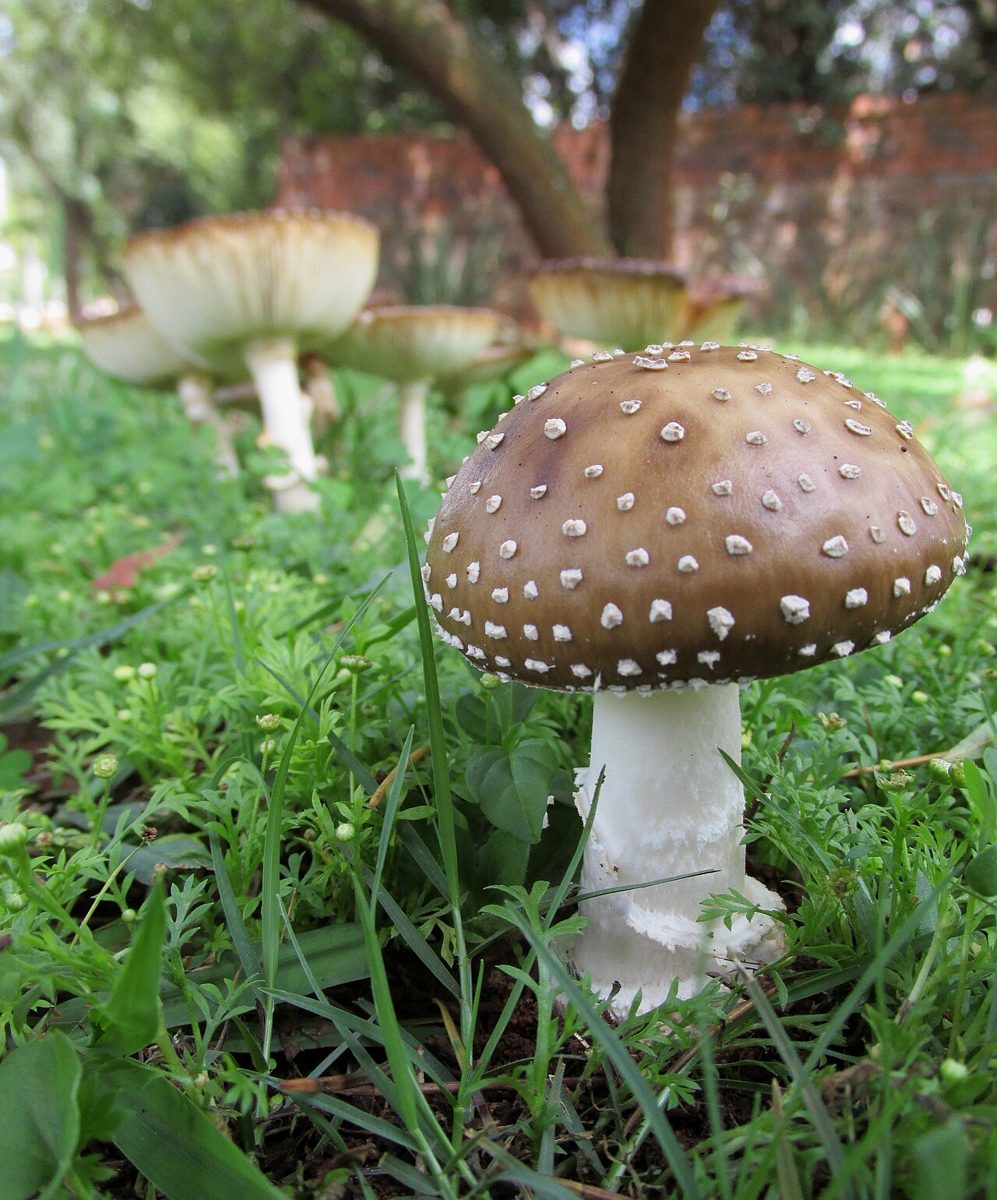
Panther Cap
Amanita pantherina
A brown Amanita dotted with pure white warts, found mainly with beech and oak. It contains the same toxins as the Fly Agaric in higher amounts, can occasionally kill, and is the classic dangerous double of the Blusher.
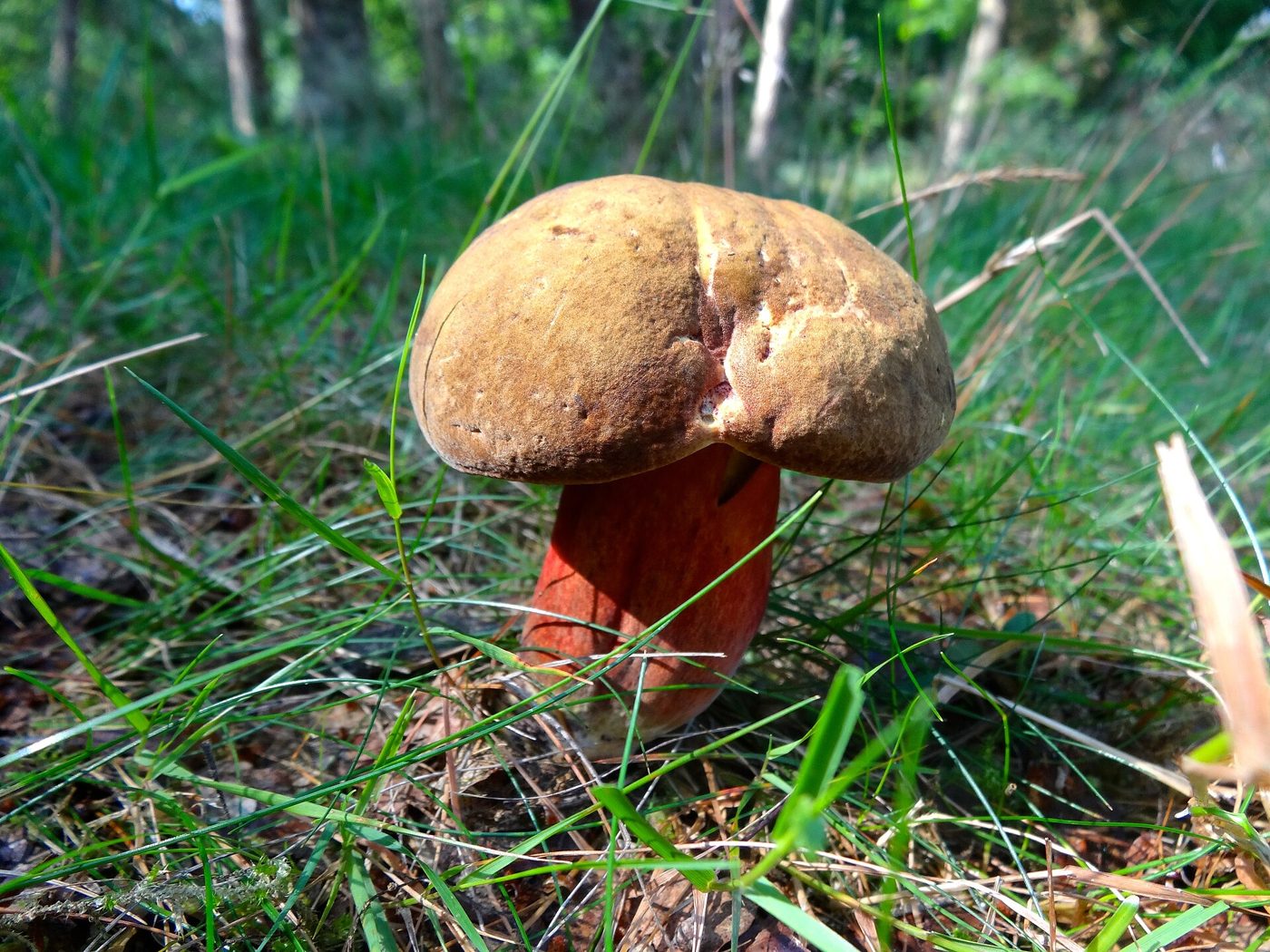
Scarletina Bolete
Neoboletus luridiformis
A chunky brown bolete with red pores and a yellow stem covered in tiny red dots. Its yellow flesh turns dark blue-black the instant it is cut. A good edible for experienced foragers, but only when thoroughly cooked, and it breaks the beginner's rule of avoiding red-pored boletes.