Amanita phalloides · Amanitaceae
Responsible for the great majority of fatal mushroom poisonings worldwide. Learn this one before anything else.
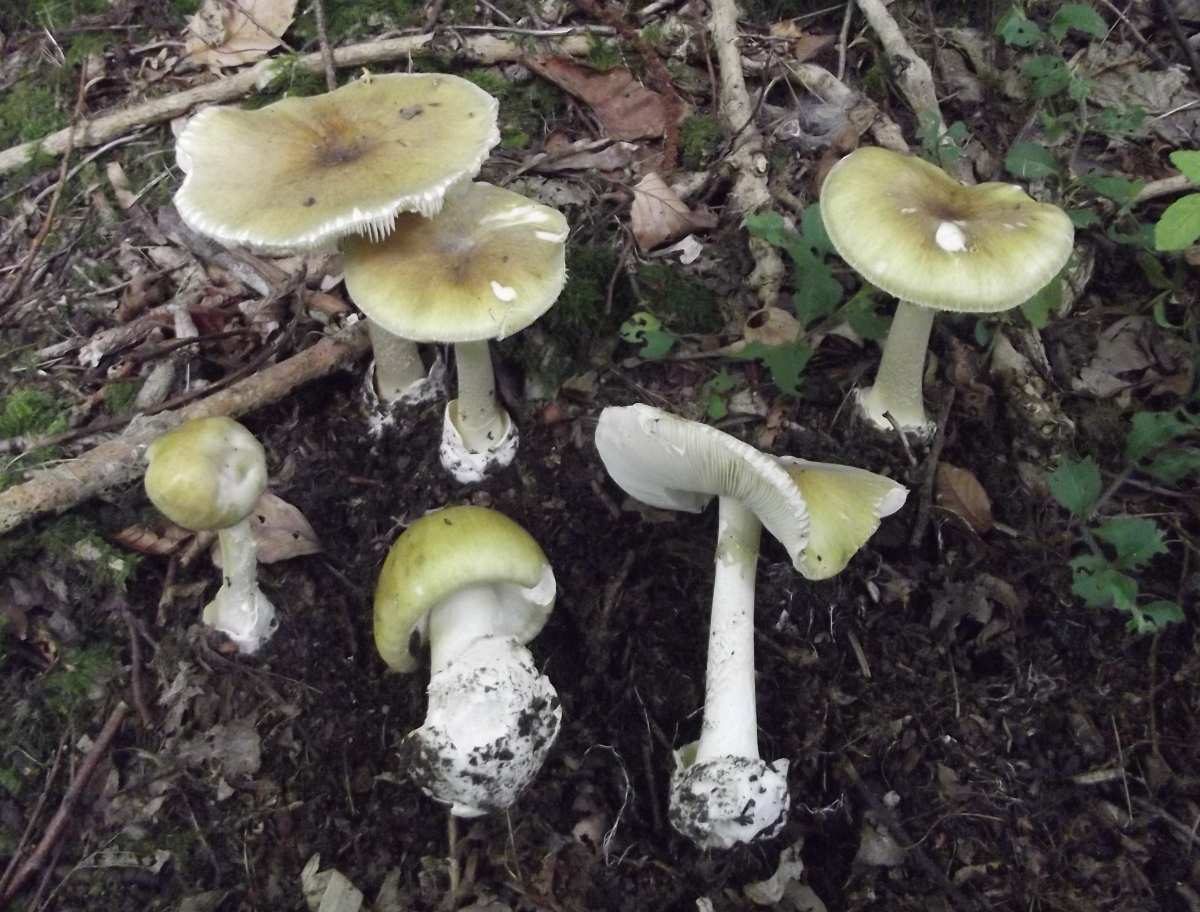
Deadly poisonous. DEADLY. Half a cap can kill an adult. Symptoms begin 6-24 hours later, appear to improve, then liver failure follows. Always dig up the base of any white-gilled mushroom to look for a volva.
Read the full foraging safety guidance.
August to November
See what else is out in August, September, October and November.
Young specimens resemble puffballs and edible Agaricus mushrooms. Green-capped Russulas lack a ring and a volva. Stinkhorn eggs look similar at first but have a layer of clear jelly inside. False Death Cap (Amanita citrina) is pale lemon-yellow or white, smells of raw potato and has a round bulb with a sharp rim at the base instead of a loose bag.
Never eat. Wash your hands after handling and keep it out of your foraging basket.
Field Mushroom vs Yellow Stainer vs Death Cap
How do I tell a field mushroom from a yellow stainer or a death cap?
Stinkhorn Egg vs Puffballs, Earthballs and Death Cap Buttons
How do I tell a stinkhorn egg from a puffball or a young Death Cap?
False Death Cap vs Death Cap vs Destroying Angel
How do I tell a False Death Cap from a Death Cap or Destroying Angel?
The Death Cap: the one species to learn first
Amanita phalloides accounts for the overwhelming majority of fatal mushroom poisonings in Europe. Learning it properly is the first thing any British forager should do.
Never eat a mushroom you are not sure of
The single rule that everything else on this site is built around, and why an app, a book or a friend's opinion is not enough on its own.
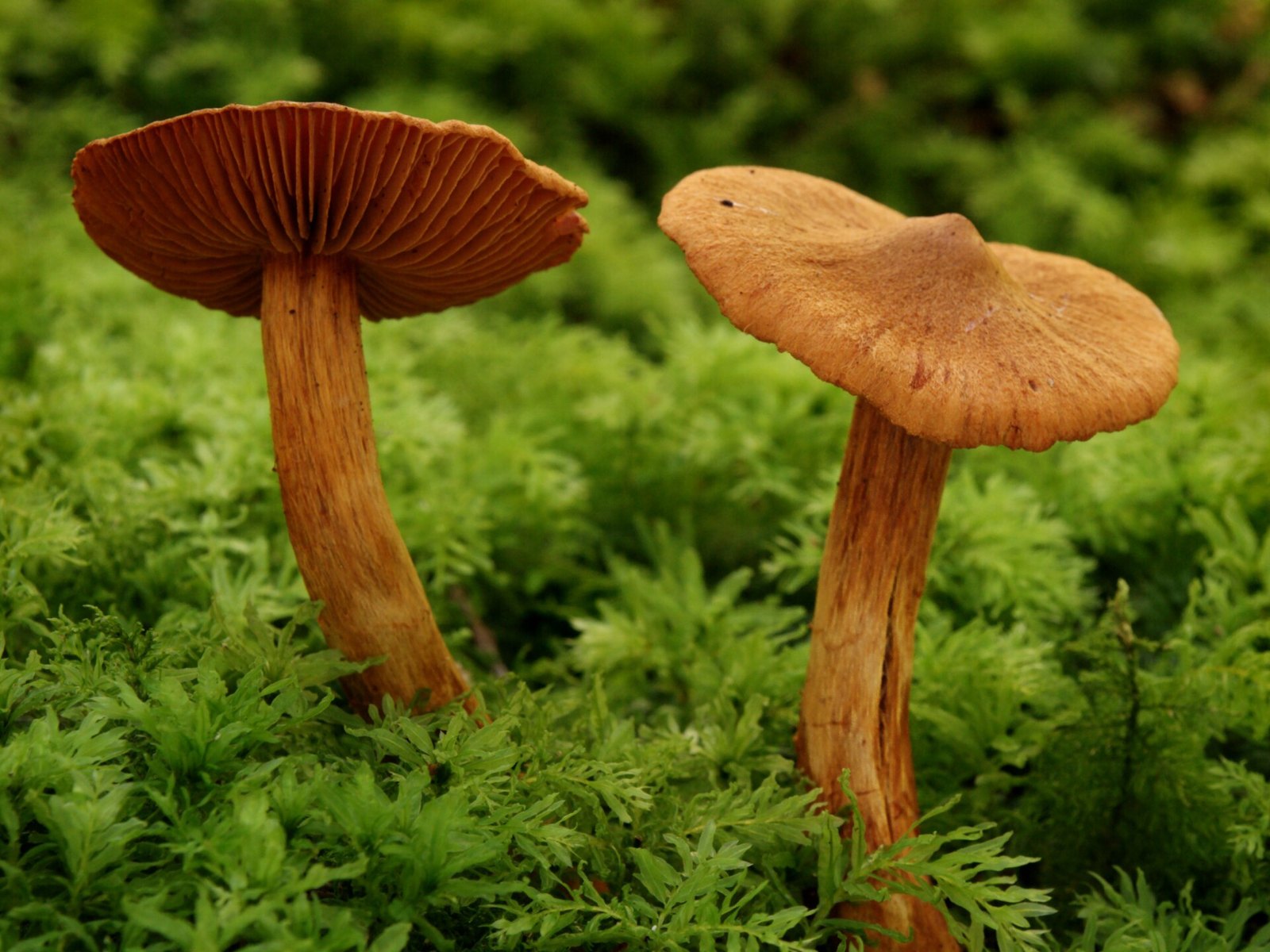
Cortinarius rubellus
A modest orange-brown mushroom whose poison destroys the kidneys weeks after the meal.
Amanita virosa
Pure white, elegant and lethal. The one to check for whenever you pick a white mushroom.
Galerina marginata
A small brown mushroom on dead wood carrying the same toxins as the Death Cap.