UK species guide
70 British fungi, written up the way you actually use them in the field: what it looks like, when it appears, where it grows, and what dangerous species it can be mistaken for.
Never eat a wild mushroom on the strength of a website alone. Some deadly species look very like good edibles. Check every feature, and get an expert opinion if there is any doubt at all.
Read the full foraging safety guidance.
Checking the weather across the UK…
Showing 5 of 70 species
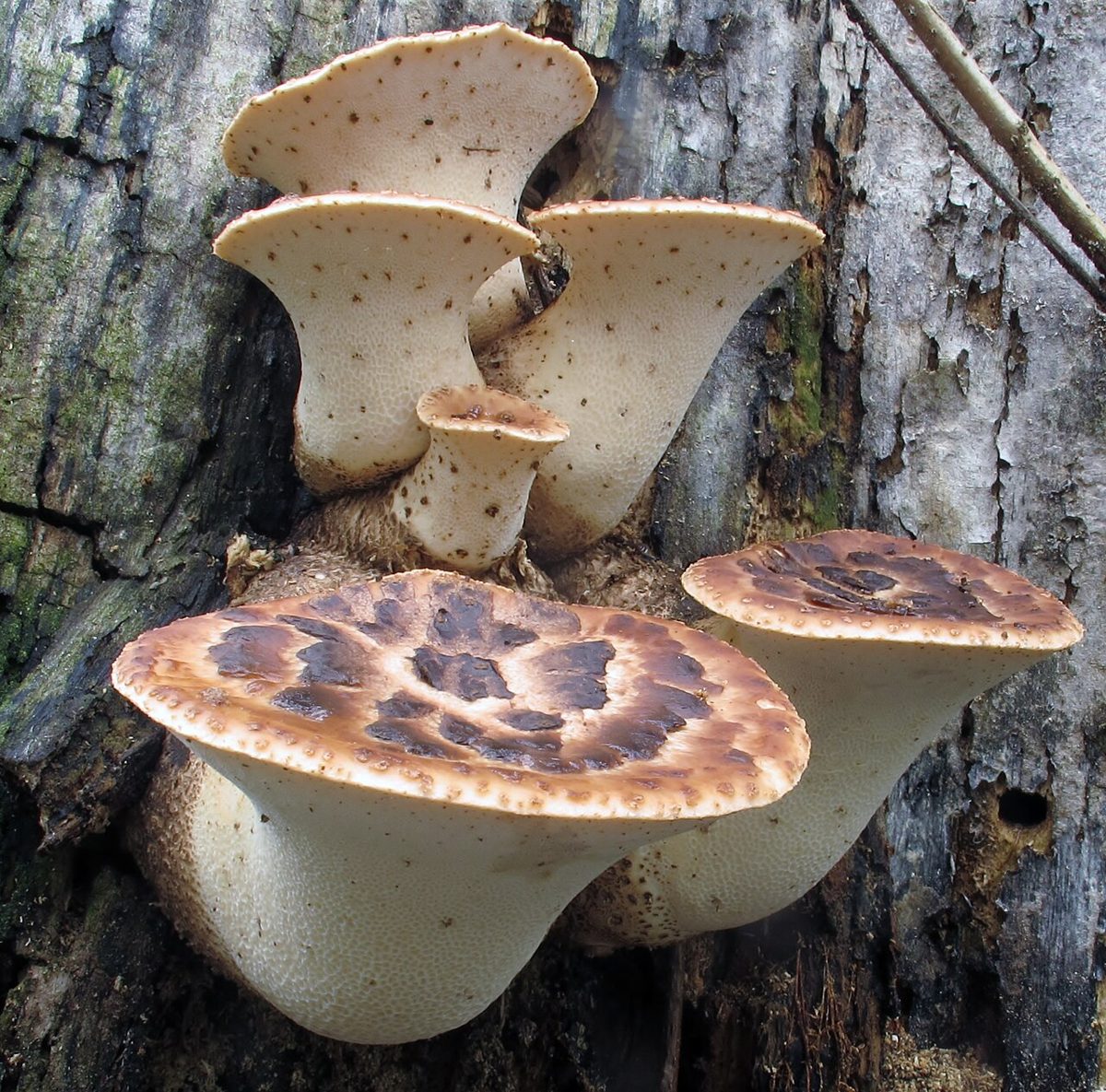
Dryad's Saddle
Cerioporus squamosus
A large, saddle-shaped spring and summer bracket covered in feather-like brown scales, common on sycamore, beech and elm. Easy to recognise and edible when very young, but it turns corky fast.
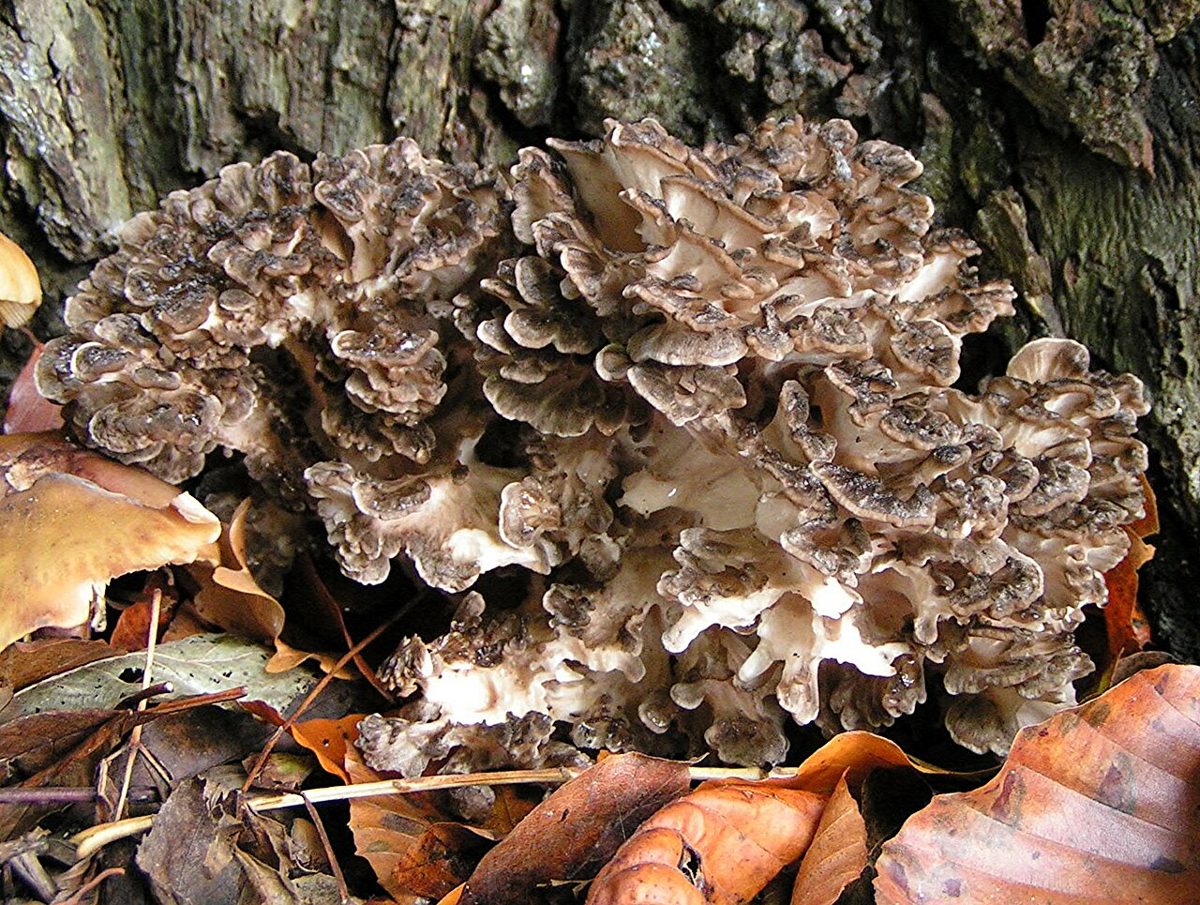
Hen of the Woods
Grifola frondosa
A big, ruffled rosette of grey-brown fronds at the base of old oaks, found occasionally in southern England in autumn. Sold in shops as maitake, it is one of the best-flavoured wild mushrooms and has no dangerous lookalikes.
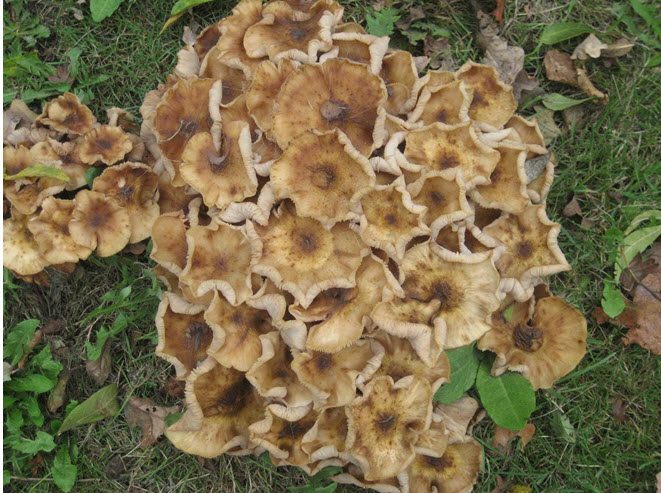
Honey Fungus
Armillaria mellea
The tree-killing parasite of woods, parks and gardens, fruiting in dense honey-to-tawny clumps on stumps and at the base of trees from late summer into early winter. Edible only young and thoroughly cooked, it upsets some people, and its clumps can hide the deadly Funeral Bell.
Livid Pinkgill
Entoloma sinuatum
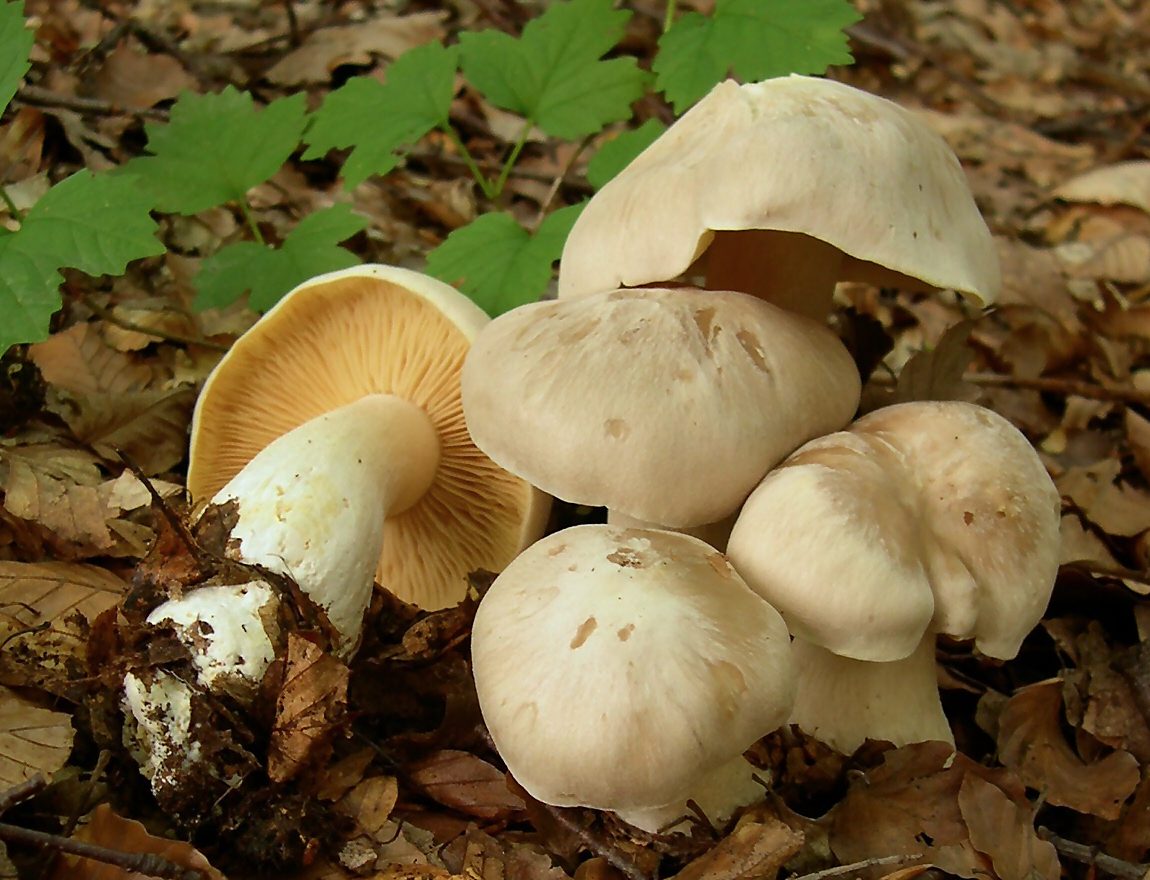
A big, pale, fleshy mushroom of broadleaf woods and parks with yellowish gills that slowly turn salmon-pink and a mealy smell. It looks wholesome and is often picked by mistake, but it causes severe vomiting and diarrhoea and is one of the most common causes of mushroom poisoning in Europe.
Yellow Stainer
Agaricus xanthodermus
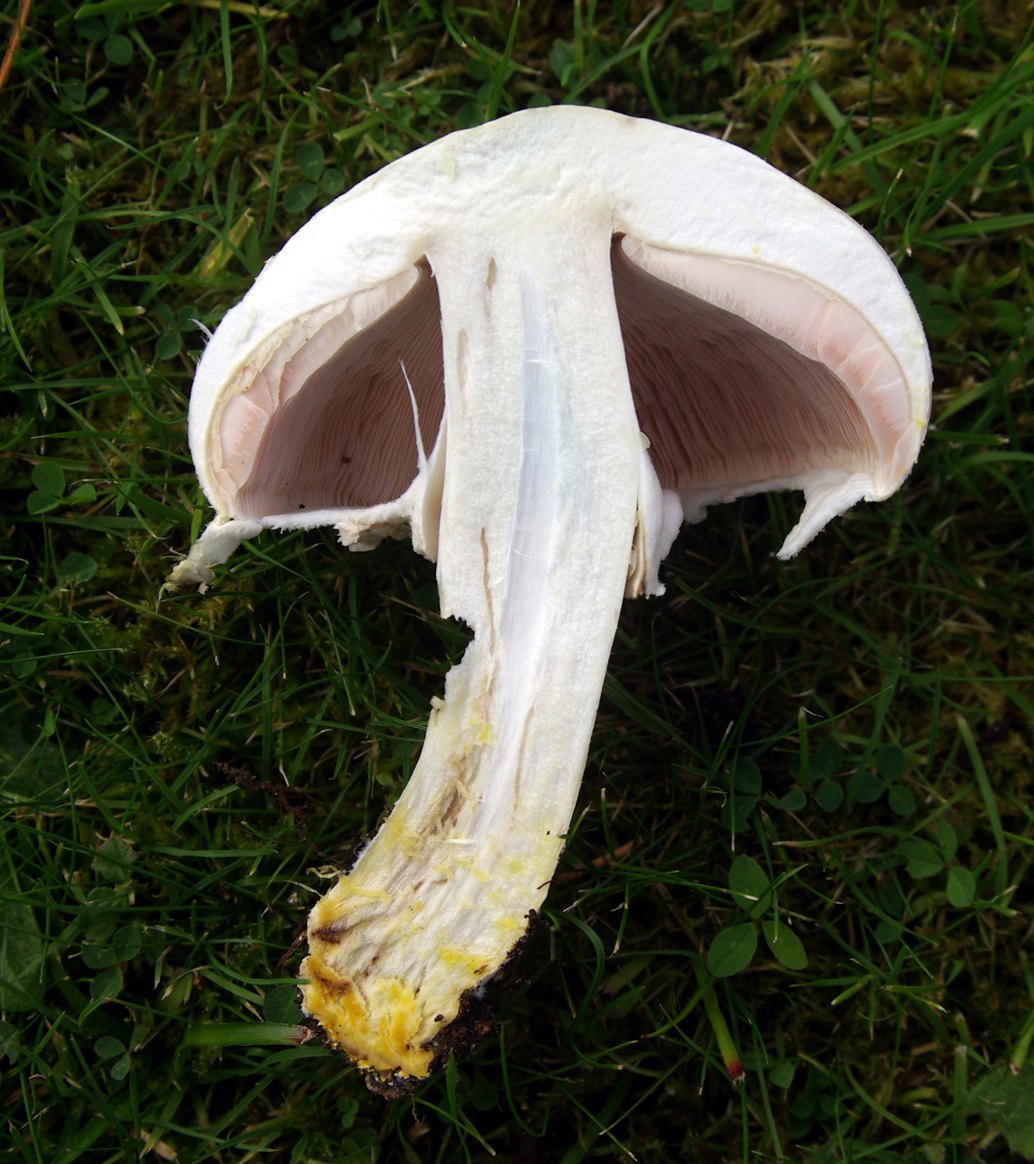
A field-mushroom lookalike that turns bright chrome yellow when cut and makes most people ill.