UK species guide
72 British fungi, written up the way you actually use them in the field: what it looks like, when it appears, where it grows, and what dangerous species it can be mistaken for.
Never eat a wild mushroom on the strength of a website alone. Some deadly species look very like good edibles. Check every feature, and get an expert opinion if there is any doubt at all.
Read the full foraging safety guidance.
Checking the weather across the UK…
Showing 4 of 72 species
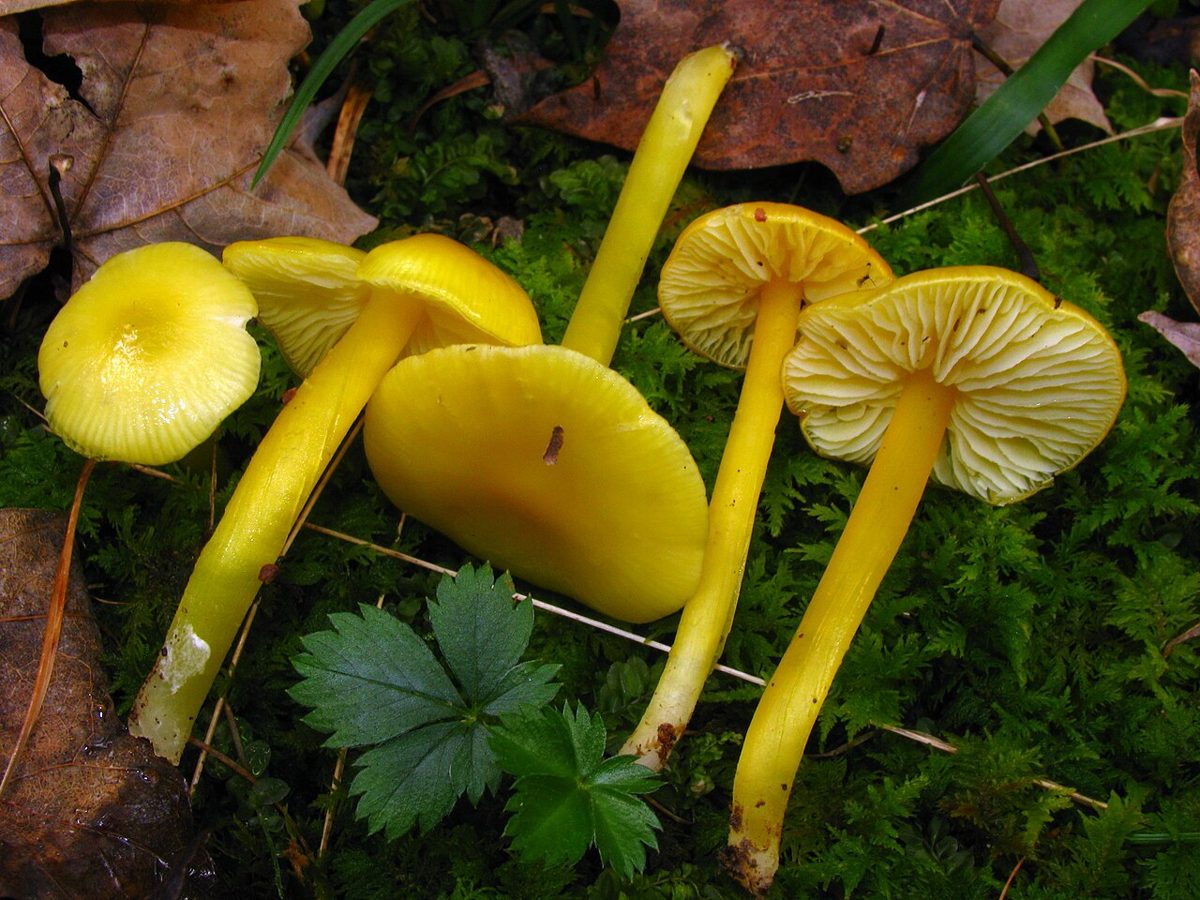
Golden Waxcap
Hygrocybe chlorophana
A small, shiny, lemon-to-egg-yolk yellow waxcap of old unfertilised grassland, lawns and churchyards. One of the commoner waxcaps and a good sign of a healthy grassland, but too small, slimy and tasteless to be worth eating.
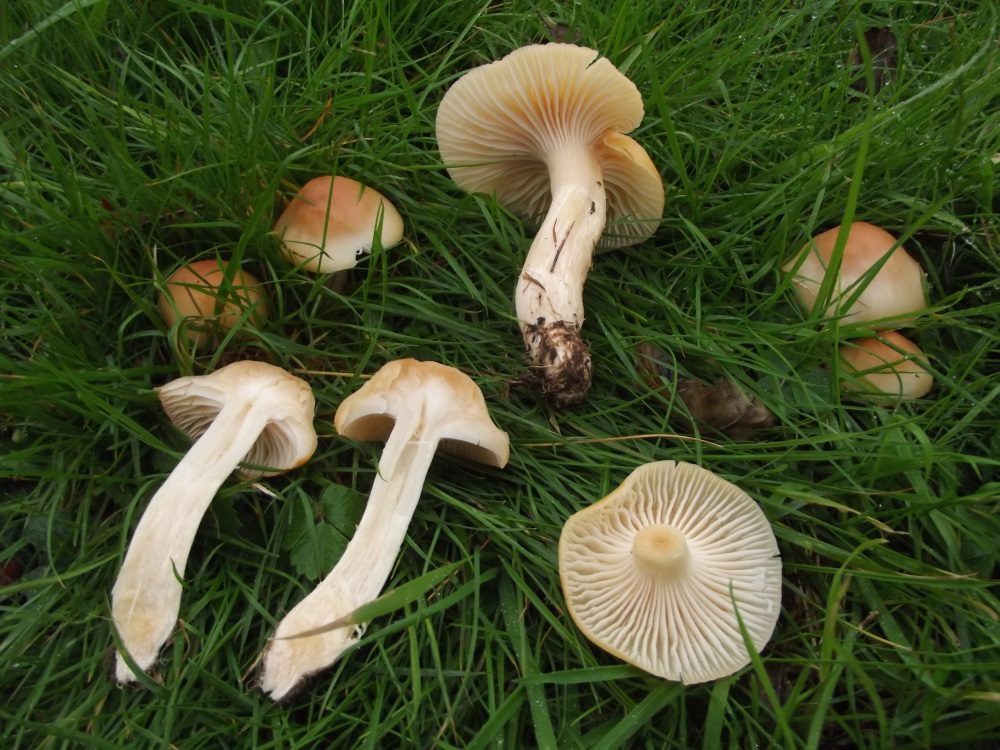
Meadow Waxcap
Cuphophyllus pratensis
A pale orange-buff waxcap of old, unimproved grassland.
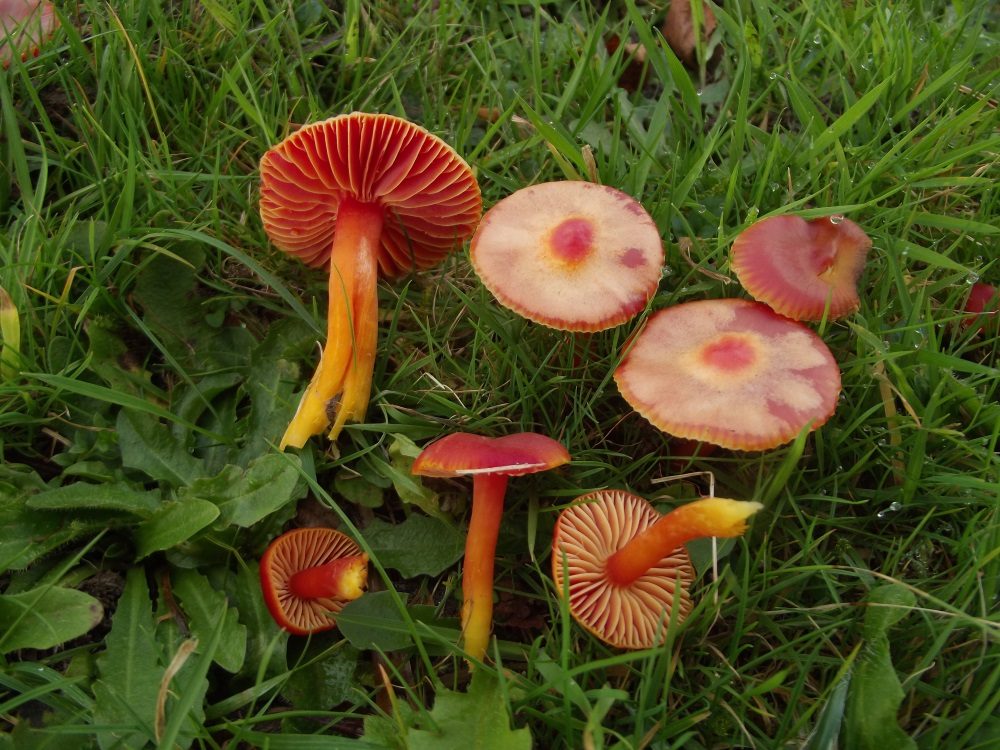
Scarlet Waxcap
Hygrocybe coccinea
A small red waxcap associated with old grassland.
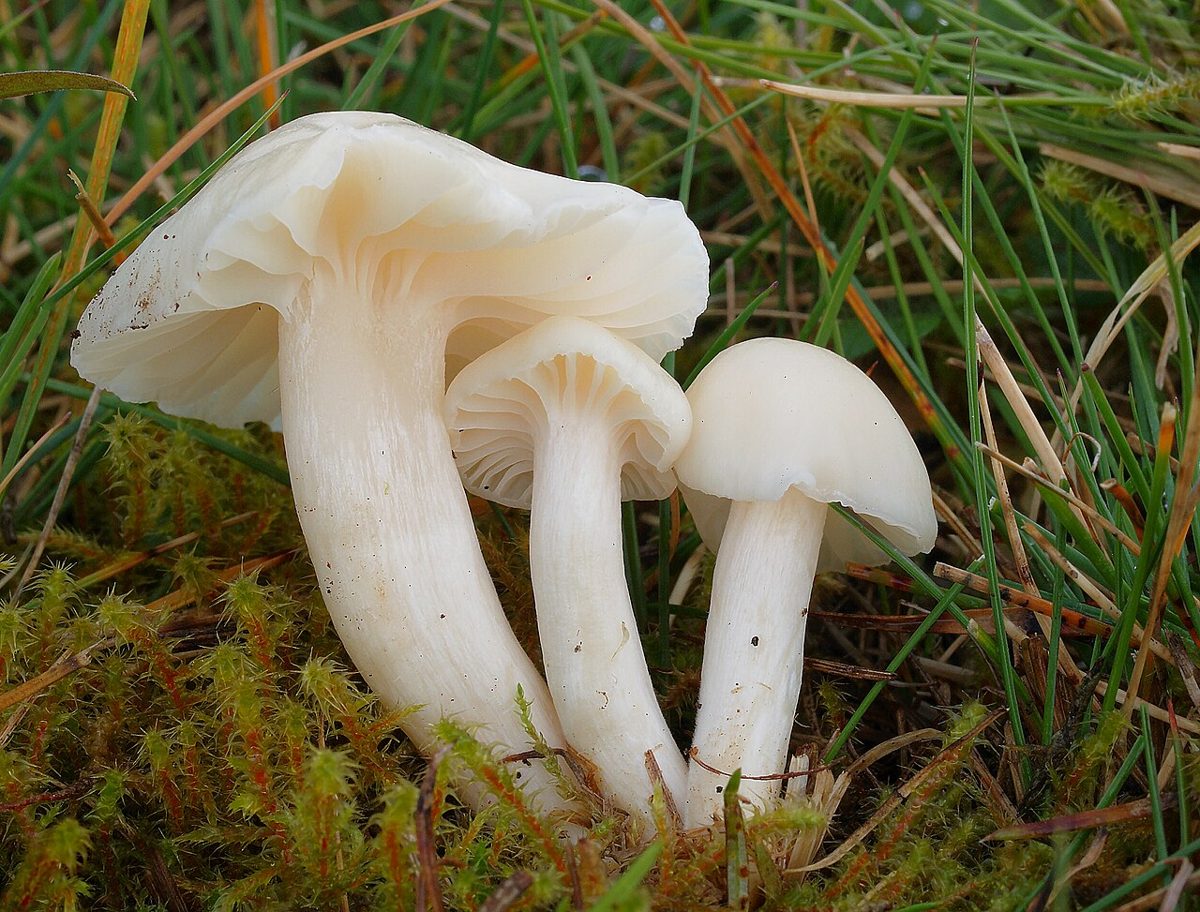
Snowy Waxcap
Cuphophyllus virgineus
A small, pure white to ivory waxcap with thick, widely spaced, waxy gills running down the stem. It is the commonest waxcap in Britain, turning up in autumn on unfertilised lawns, churchyards and parks. Edible, but deadly white funnels grow on the same lawns at the same time.