Hygrocybe chlorophana · Hygrophoraceae
Also called Hygrophorus chlorophanus (old name)
A small, shiny, lemon-to-egg-yolk yellow waxcap of old unfertilised grassland, lawns and churchyards. One of the commoner waxcaps and a good sign of a healthy grassland, but too small, slimy and tasteless to be worth eating.
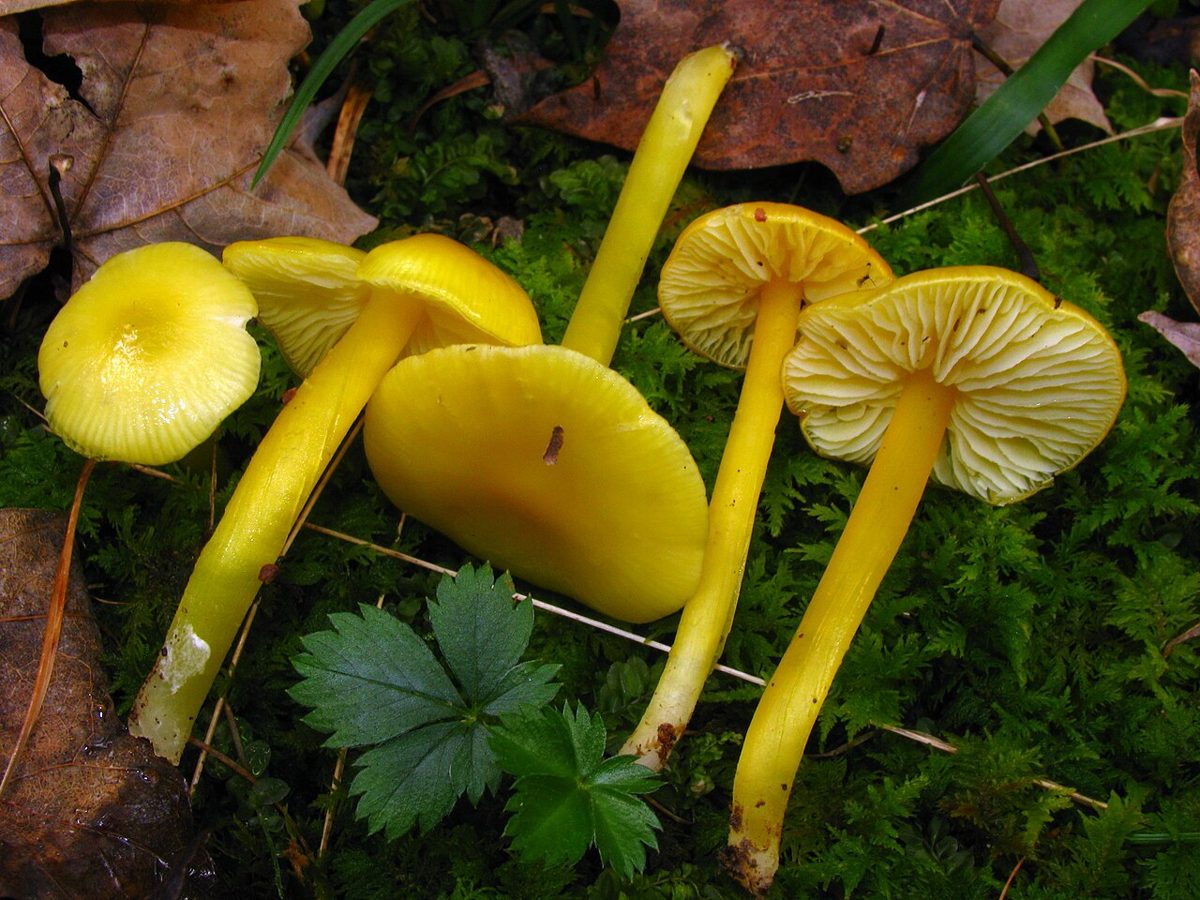
Inedible. Not recommended for eating. Some continental sources list it as edible, but it is small and slimy, its yellow lookalikes include the Blackening Waxcap, which is regarded as poisonous, and waxcap grasslands are a scarce, declining habitat. Many of the best sites are nature reserves or SSSIs, where picking without permission is against the law. Photograph it and leave it.
Read the full foraging safety guidance.
August to November
See what else is out in August, September, October and November.
Butter Waxcap (Hygrocybe ceracea) is smaller, greasy rather than slimy, and its gills run slightly down the stem. Blackening Waxcap (Hygrocybe conica) has a pointed, cone-shaped cap that can be yellow, orange or red, and every part slowly turns black when handled or as it ages. Parrot Waxcap (Gliophorus psittacinus) can be yellowish when old, but usually keeps a trace of green slime at the top of the stem. Meadow Waxcap is orange-buff with gills running well down the stem. Yellow Fieldcap (Bolbitius titubans) is a fragile yellow mushroom of rich grass and dung, but its gills turn rusty brown and it gives a brown spore print.
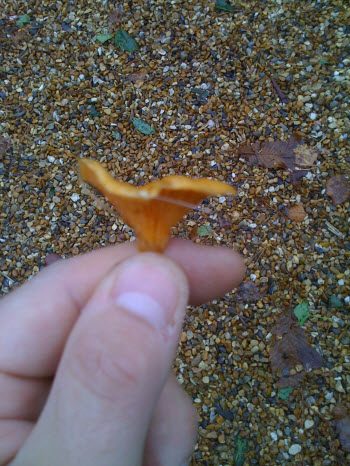
Paralepista flaccida
An orange-brown funnel that turns up in troops and rings in conifer and broadleaf litter from September into winter. Chris found dozens of them on Ludshott Common in November 2009. Not worth eating, but worth knowing so you can rule it out.
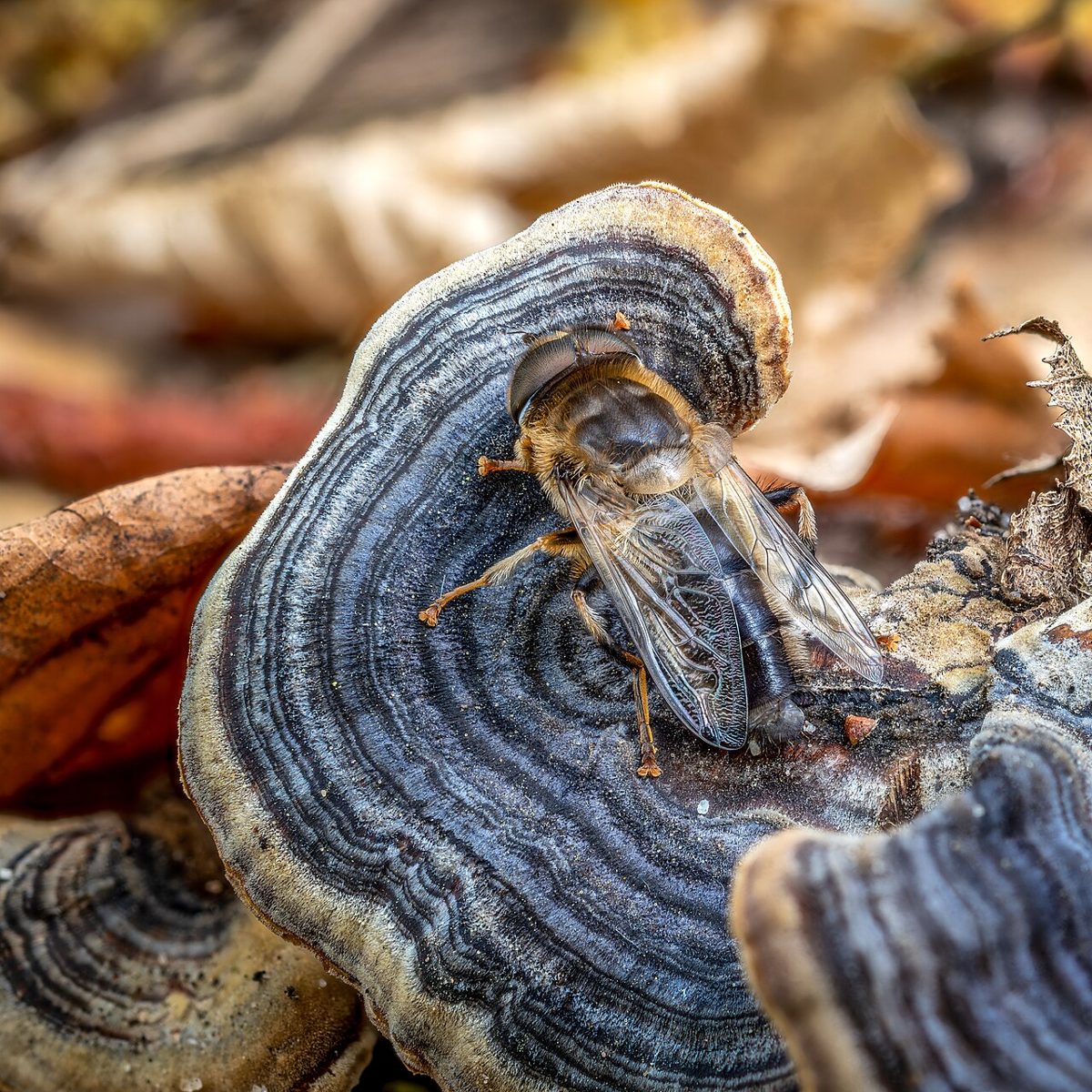
Trametes versicolor
Thin, leathery brackets in overlapping tiers, banded in browns, greys and blues like a fanned turkey tail, on dead wood all year round. One of the most common fungi in Britain, but far too tough to eat.
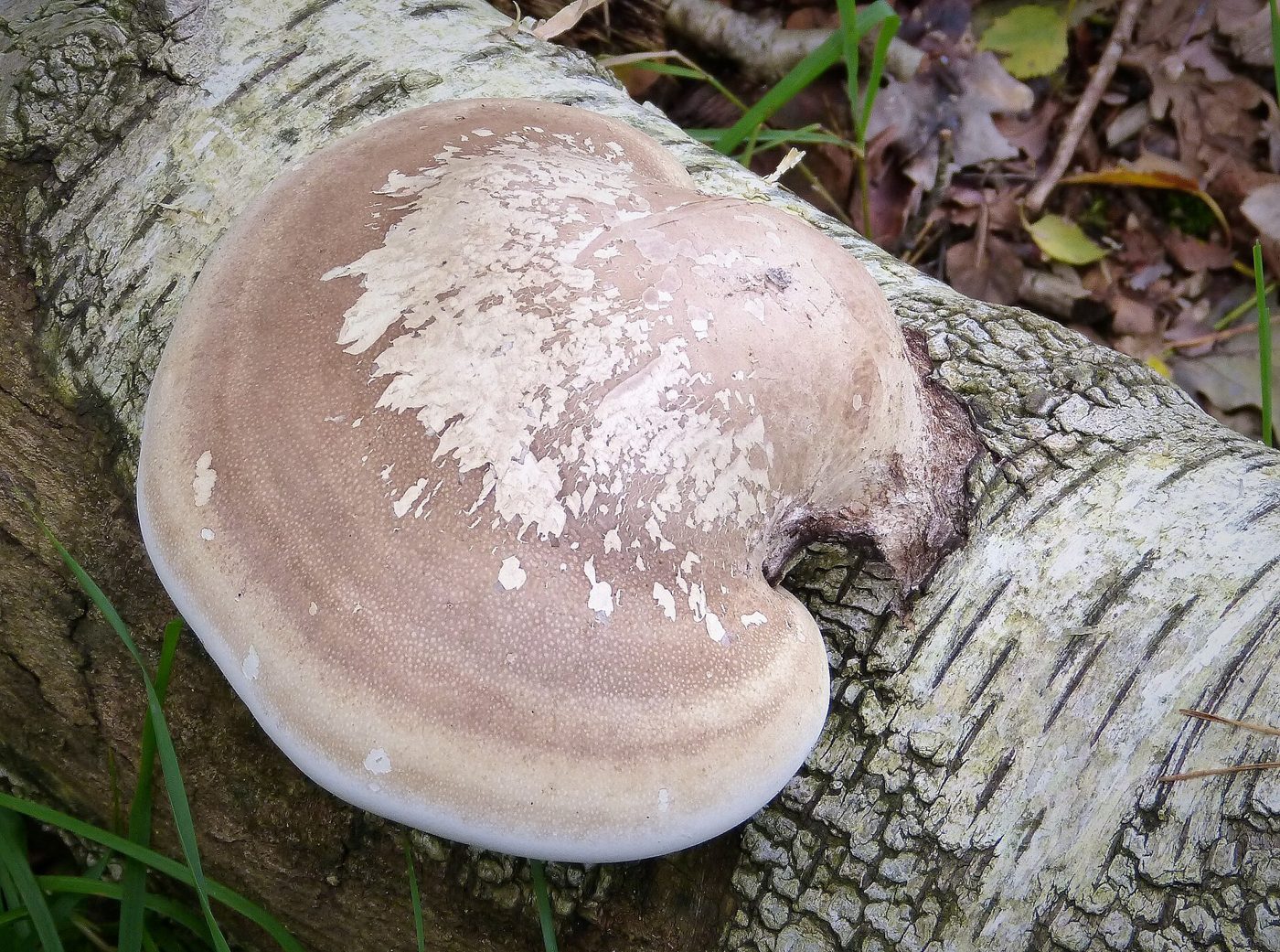
Fomitopsis betulina
A smooth, pale, kidney-shaped bracket that grows only on birch, mostly on dead and dying trees. Fresh brackets appear from late summer and old ones stay on the tree all year. It is bitter and corky, so it is not eaten.