Wild Mushrooms Online
Species guideIn seasonLookalikesIdentifyRecipesArticlesMembers' findsCoursesForagers ClubSafety
Sign in
Sign inSpecies guideIn seasonLookalikesIdentifyRecipesArticlesMembers' findsCoursesForagers ClubSafety
Wild MushroomsOnline

A UK field guide and foragers club: species, seasons, recipes and the finds our members bring back from the woods.

Learn

Species guideForaging calendarLookalikes comparedRecipesArticles & field notesForaging safety

Take part

Members' findsCourses & eventsForagers ClubRecommended kit

About

About the siteSign in or join

Identification information is offered in good faith for education. Eating wild fungi is always at your own risk, and some species are deadly. Some links to kit are affiliate links, which help pay for the site at no extra cost to you. As an Amazon Associate I earn from qualifying purchases.

© 2026 Wild Mushrooms Online. All rights reserved.

← Species guide

Snowy Waxcap

Cuphophyllus virgineus · Hygrophoraceae

Also called Hygrocybe virginea, Camarophyllus virgineus (old names); Hygrocybe nivea

Edible with caution

A small, pure white to ivory waxcap with thick, widely spaced, waxy gills running down the stem. It is the commonest waxcap in Britain, turning up in autumn on unfertilised lawns, churchyards and parks. Edible, but deadly white funnels grow on the same lawns at the same time.
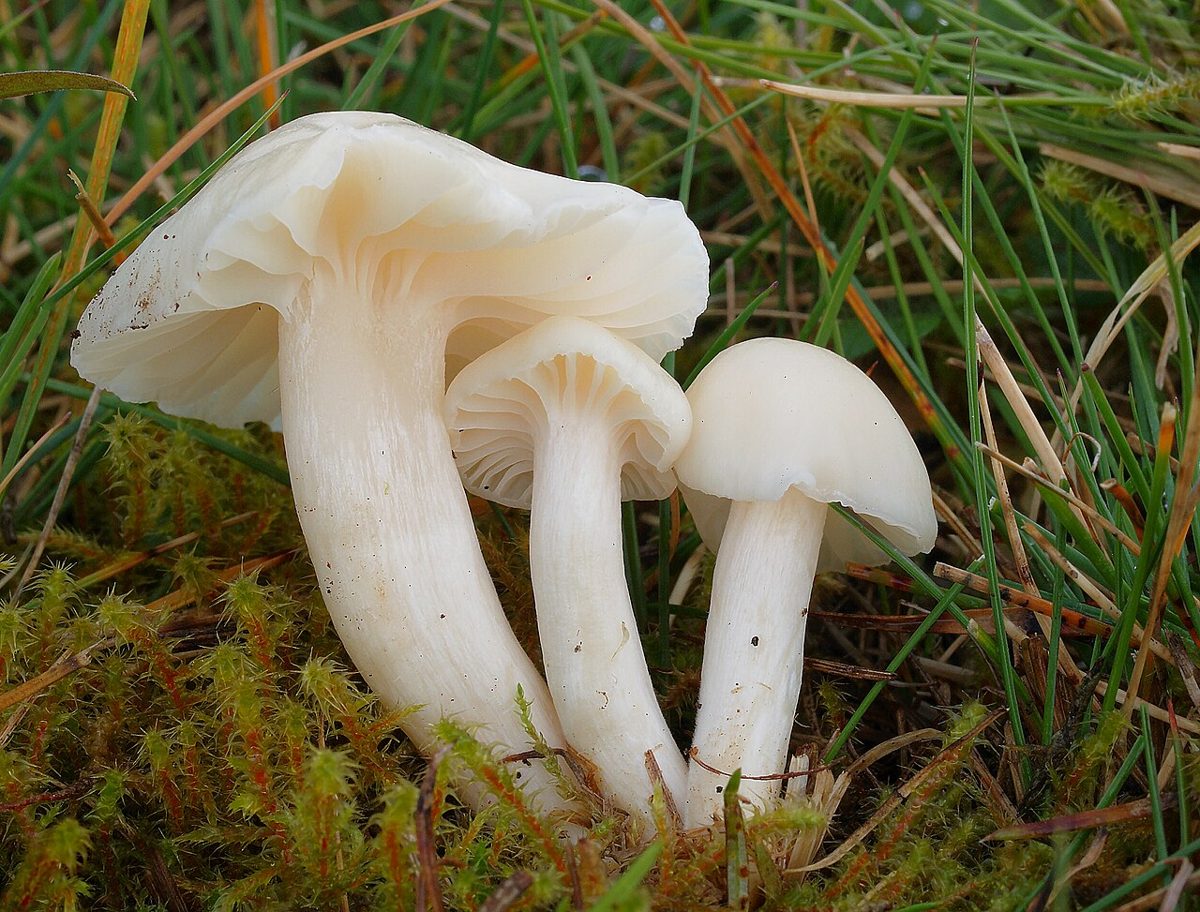
Snowy Waxcap, photograph 1 of 1
Original photograph · 1 of 1 · Photos alone cannot confirm identification

Edible with caution. Edible, but only for experienced foragers. Fool's Funnel (Clitocybe rivulosa) is also small and white, grows on the same lawns at the same time, and can cause serious muscarine poisoning. Check for the Snowy Waxcap's thick, waxy, widely spaced gills; if the gills are thin and crowded, or the cap has a frosted bloom, leave it. If anyone may have eaten a small white lawn mushroom and starts sweating, drooling or feeling unwell, call NHS 111 or go to A&E and take a sample.

Read the full foraging safety guidance.

Season

September to December

J
F
M
A
M
J
J
A
S
O
N
D

See what else is out in September, October, November and December.

Where it grows

  • Grassland
  • Lawns
  • Parks
  • Unimproved grassland
  • Meadows

Identification

Cap
1-5cm across, white to ivory, sometimes faintly cream or ochre at the centre. Domed at first, then flat or slightly dipped in the middle. Greasy and slightly see-through at the edge when wet, drying opaque white.
Gills / pores
White, thick, waxy and widely spaced, running down the stem (decurrent), often with small cross-veins between them. Rub one between your fingers and it feels like candle wax.
Stem
2-5cm tall, white, smooth and dry, usually tapering towards the base. No ring.
Flesh
White and thin, not changing colour when cut.
Spore print
White.
Smell & taste
No distinctive smell and a mild taste. A very similar white waxcap that smells of cedar or pencil shavings is the Cedarwood Waxcap (Cuphophyllus russocoriaceus).

Lookalikes

Fool's Funnel (Clitocybe rivulosa) is the dangerous one: white and growing in grass, often in rings, but its gills are thin and crowded, and its cap has a dull, frosty bloom, often with faint rings. The Miller (Clitopilus prunulus) has crowded gills that turn pink, a pink spore print and a strong smell of raw flour, and usually grows near trees. Cedarwood Waxcap (Cuphophyllus russocoriaceus) looks almost identical but smells of cedar wood or pencil shavings. Meadow Waxcap has the same shape and waxy gills but is orange-buff.

In the kitchen

Edible, with a mild flavour, but each cap is tiny and we do not recommend gathering it for the table. If you are completely sure of your identification, a few caps can go into a mixed mushroom fry. Never pick from nature reserves, SSSIs or old meadows managed for waxcaps.
Compare with its lookalikes

  • Snowy Waxcap vs Fool's Funnel vs The Miller

    How do I tell a Snowy Waxcap from a Fool's Funnel or The Miller?

Advertisement

Share Facebook X

Useful kit

Affiliate links
  • Opinel No.8 Mushroom Knife

    Curved blade with a boar bristle brush in the handle. The standard foraging knife for good reason.

    Around 20 GBP
  • Traditional Willow Basket

    Open weave so spores drop as you walk and nothing sweats into mush. A plastic bag ruins a haul.

    Around 35 GBP
  • Collins Fungi Guide

    The most complete British field guide in one volume. Heavy, but nothing else comes close for detail.

    Around 30 GBP

As an Amazon Associate I earn from qualifying purchases.

Found one?

Post a photo to the members' feed and let other foragers weigh in before you decide anything.

Post your find →

Also caution

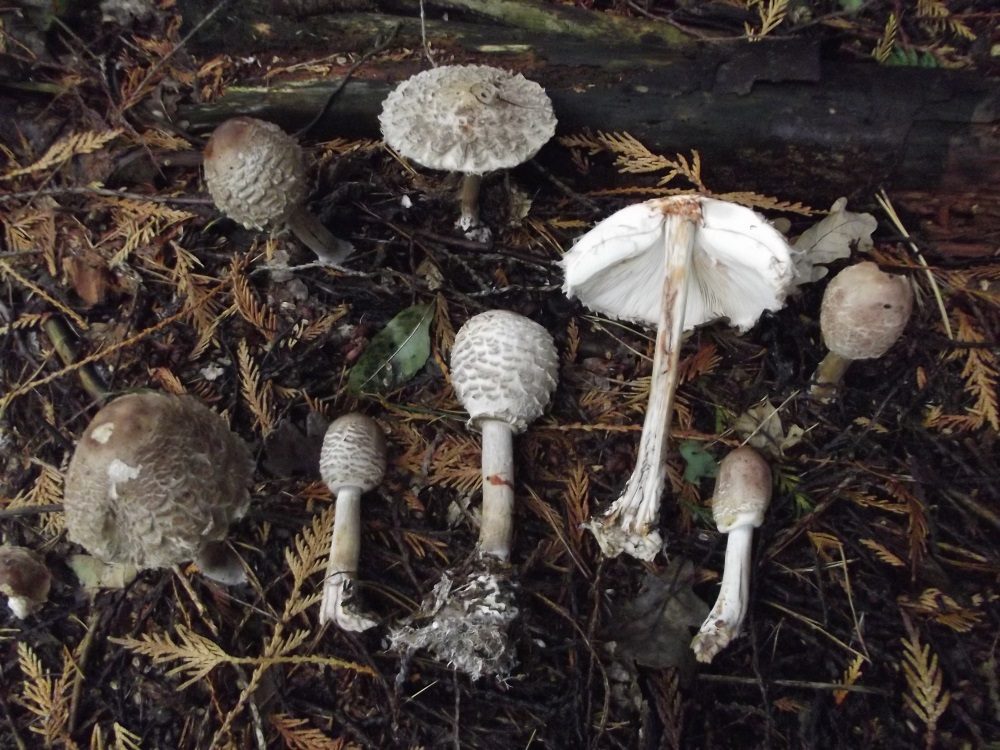
Conifer Parasol in the field

Conifer Parasol

Chlorophyllum olivieri

Edible with caution

A shaggy parasol-like mushroom in coniferous woodland. Several similar species require careful separation.

J
F
M
A
M
J
J
A
S
O
N
D

Field Blewit

Lepista saeva

Edible with caution

A pasture mushroom with a dull buff cap and an unmistakable violet-blue stem.

J
F
M
A
M
J
J
A
S
O
N
D

Common Inkcap

Coprinopsis atramentaria

Edible with caution

Edible in itself, but it causes a violent reaction with alcohol taken up to three days later.
J
F
M
A
M
J
J
A
S
O
N
D
Edit with