The Blusher vs Panther Cap
The Blusher is one of the commonest Amanitas in British woods and is eaten, cooked, by experienced foragers. The Panther Cap grows in the same beech and oak woods, looks very similar and is poisonous enough to kill. The difference comes down to three checks: the flesh, the ring and the base of the stem.
The test that decides it
If the flesh does not slowly turn pink where it is cut or nibbled, it is not the Blusher. The Panther Cap has pure white warts, a smooth ring with no grooves and a rimmed bulb at the base. If any one of those checks is unclear, leave it: no meal is worth the risk.
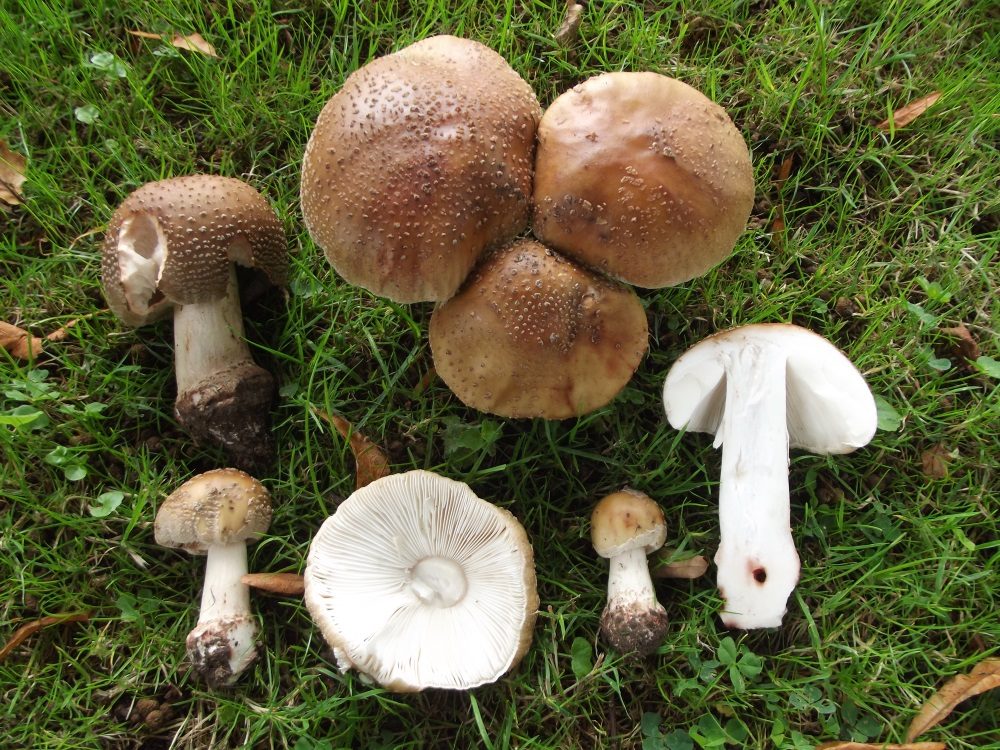
The Blusher
Amanita rubescens
- Cap tinged reddish-brown, with greyish to pinkish warts
- Flesh slowly turns pink where cut or nibbled by slugs
- Ring has fine grooves on its upper side
- Edible only when thoroughly cooked; poisonous raw
Full species guide →
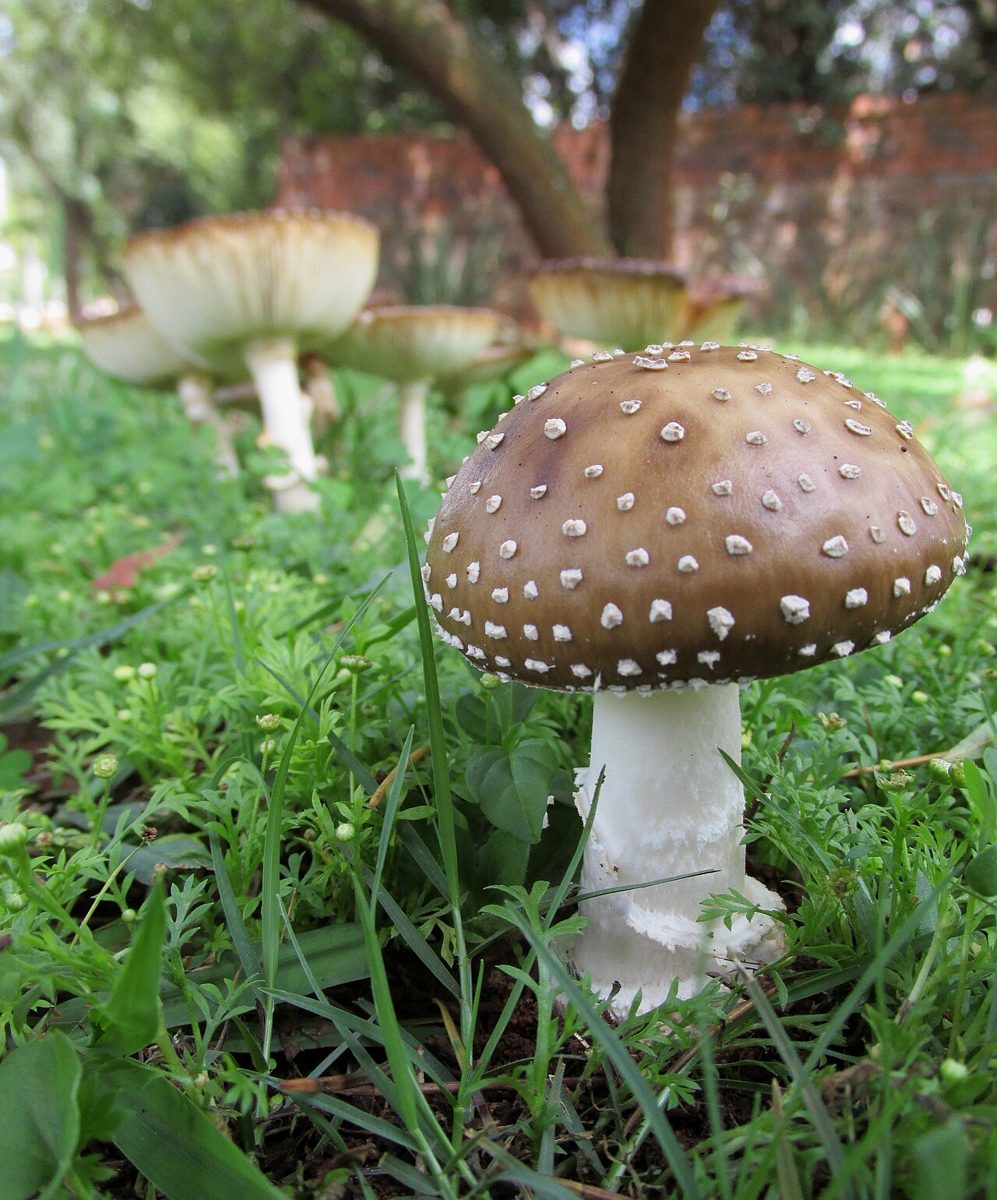
Panther Cap
Amanita pantherina
- Olive-brown to grey-brown cap with pure white warts
- Flesh stays white
- Smooth ring with no grooves
- Bulb with a distinct rim, often with hoop-like bands above
Full species guide →
Feature by feature
| Feature | The Blusher | Panther Cap |
|---|---|---|
| Cap | Reddish-brown to pinkish-tan | Olive-brown to grey-brown, edge finely lined |
| Warts | Greyish to pinkish, easily rubbed off | Pure white |
| Flesh when cut | Slowly turns pink, especially in the stem base | Stays white |
| Ring | Fine grooves on the upper side | Smooth, no grooves |
| Stem base | Swollen, often pinkish and slug-eaten | Bulb with a sharp rim like a collar, often with hoops above |
Never eat a wild mushroom on the strength of a website alone. Some deadly species look very like good edibles. Check every feature, and get an expert opinion if there is any doubt at all.
Read the full foraging safety guidance.
Common questions
- Is the Blusher safe to eat?
- Only thoroughly cooked, and only when every check points to it. It is poisonous raw. Many experienced foragers still avoid it because of the Panther Cap.
- What about the Grey Spotted Amanita?
- Amanita excelsa has grey warts, a grooved ring and no rimmed bulb, and its flesh does not blush. It is not recommended either, because it is too easily confused with the Panther Cap.
- What are the symptoms of Panther Cap poisoning?
- Confusion, agitation, hallucinations, vomiting and drowsiness, usually within a few hours; severe cases can lead to coma. Call NHS 111 or 999 and keep a sample of the mushroom.
Checked against
- British Mycological Society species notes
- Wild Food UK: The Blusher and Panther Cap
- NHS guidance on mushroom poisoning
- Index Fungorum / Species Fungorum current names