Scarletina Bolete vs Lurid and Devil's Bolete
Red pores, blue-staining flesh: the Scarletina Bolete breaks every beginner's rule, yet it is one of the best edible boletes when well cooked. The Lurid Bolete is a close cousin that upsets more people, and the Devil's Bolete is poisonous. The stem tells them apart: tiny red dots, or a raised red net.
The test that decides it
Look closely at the stem. A Scarletina has a dense covering of tiny red dots and no net. Any raised net pattern on the stem means it is not a Scarletina. A pale, chalky cap on a swollen red stem means Devil's Bolete. If you are not sure, leave all red-pored boletes alone.
Scarletina Bolete
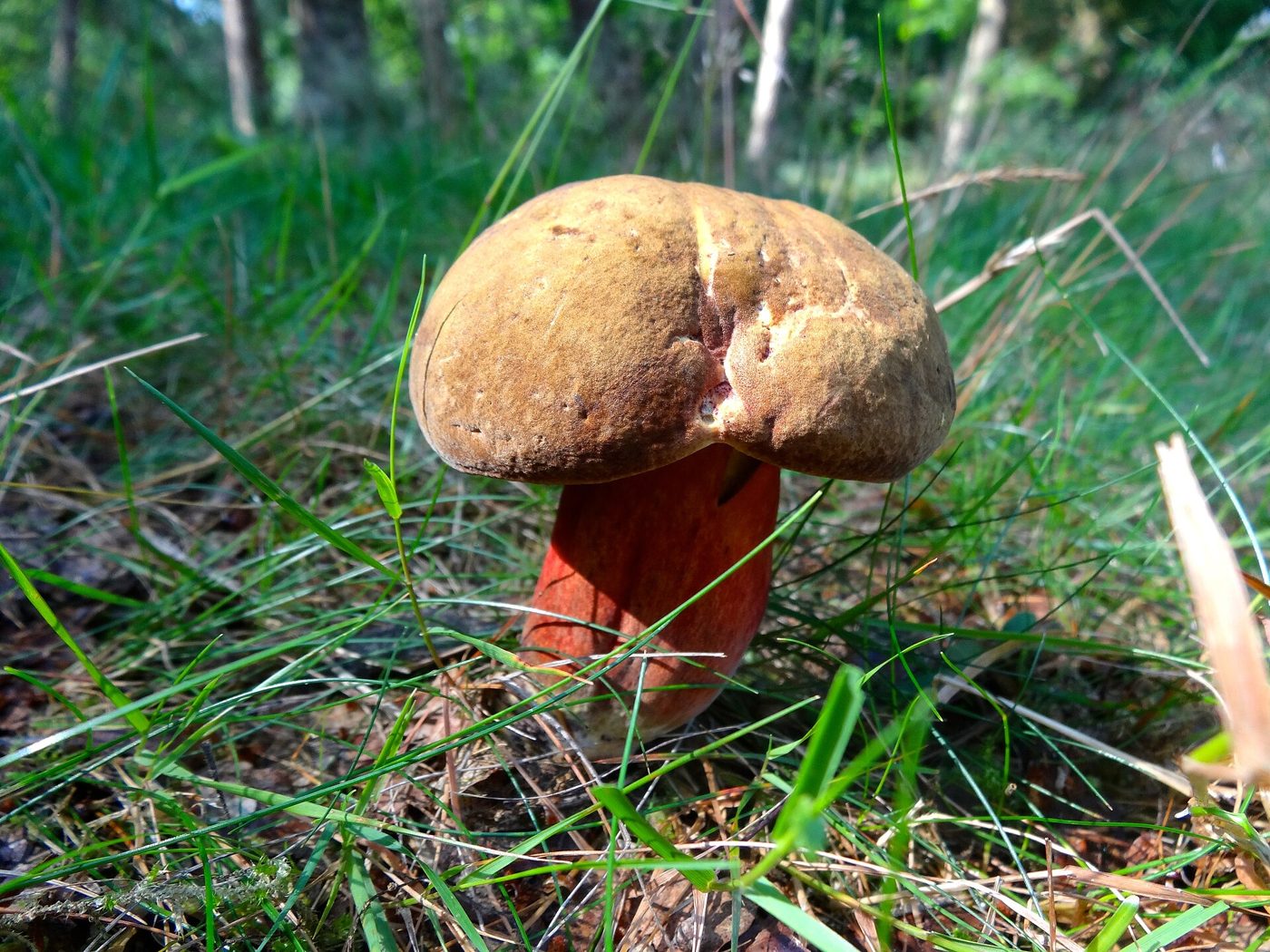
Neoboletus luridiformis
- Dark brown, velvety cap
- Yellow stem covered in tiny red dots, with no net
- Yellow flesh turns dark blue-black instantly
- Edible only when thoroughly cooked
Full species guide →
Lurid Bolete
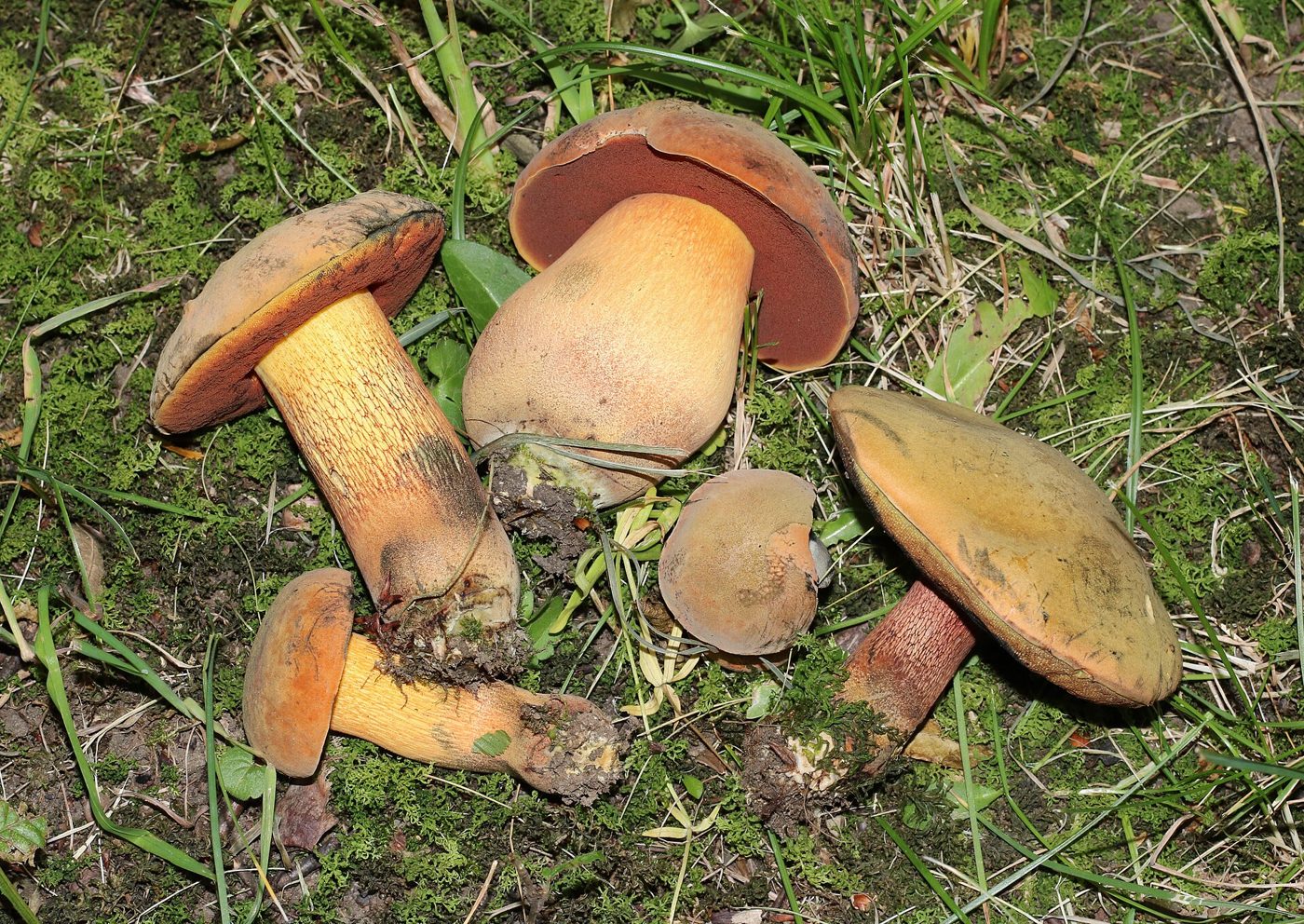
Suillellus luridus
- Olive-brown to tawny cap, often paler than the Scarletina
- Stem with a raised red net pattern
- Cut flesh shows an orange-red line just above the tubes, then blues
- Not recommended: causes upsets in some people, especially with alcohol
Devil's Bolete
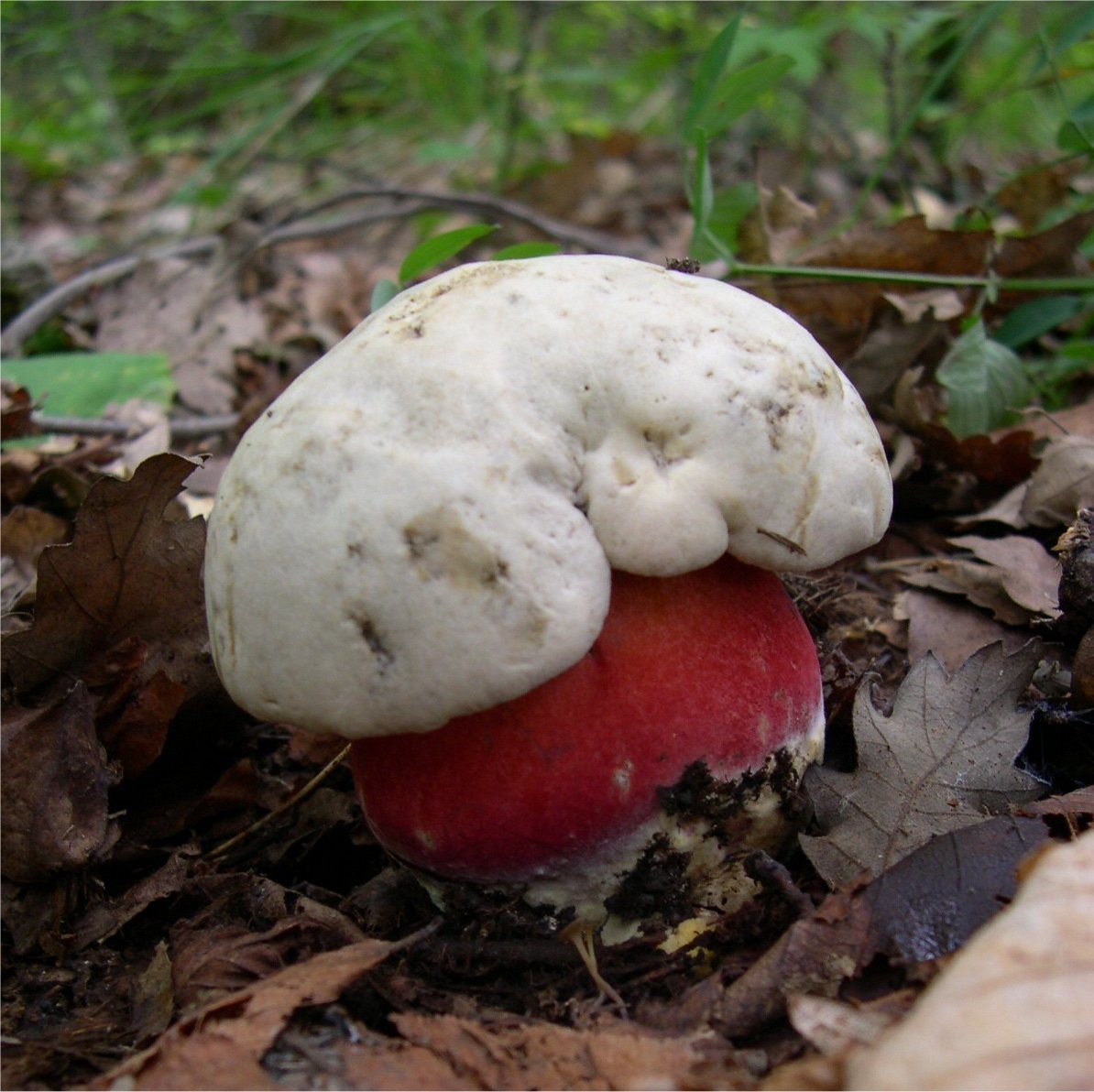
Rubroboletus satanas
- Chalky pale grey to off-white cap
- Swollen, bulbous stem with a red net
- Pale flesh slowly turns pale blue
- Under beech and oak on chalk or limestone; rare
- Poisonous: severe vomiting
Feature by feature
| Feature | Scarletina Bolete | Lurid Bolete | Devil's Bolete |
|---|---|---|---|
| Cap | Dark brown to bay, velvety | Olive-brown to tawny | Chalky pale grey to off-white |
| Stem | Tiny red dots, no net | Raised red net | Red net on a swollen, bulbous stem |
| Cut flesh | Yellow, instantly dark blue-black | Yellow, blues; orange-red line above the tubes | Pale, slowly pale blue |
| Where | Broadleaf and conifer woods, often on acid soil | Broadleaf woods and parkland on chalk or limestone | Under beech and oak on chalk or limestone; rare |
| Edibility | Edible only when well cooked | Not recommended | Poisonous |
Never eat a wild mushroom on the strength of a website alone. Some deadly species look very like good edibles. Check every feature, and get an expert opinion if there is any doubt at all.
Read the full foraging safety guidance.
Common questions
- Is it true that blue-staining boletes are poisonous?
- No. Many good edibles, including the Scarletina and the Bay Bolete, turn blue when cut. Colour change alone is not a test of safety, which is why each check matters.
- Can you eat the Scarletina raw?
- No. It is poisonous raw and must be thoroughly cooked.
- Are there deadly boletes in Britain?
- No British bolete is known to be deadly, but the Devil's Bolete causes severe vomiting and some others cause stomach upsets.
Checked against
- First Nature: Neoboletus luridiformis
- Wild Food UK: Scarletina Bolete
- Galloway Wild Foods: Scarletina Bolete
- NHS guidance on mushroom poisoning
- Index Fungorum / Species Fungorum current names