From the old site's diary, Sunday 8 November 2009. I went out on my home patch, Ludshott Common in Hampshire. It had rained heavily the night before and there were fungi everywhere.
Ludshott is a dry heathland and usually struggles to produce good fungi. Normally I head for the New Forest or the Devil's Punchbowl near Grayshott, which is damper and more varied. But I knew this would be a special day when I met a couple carrying a bag full of small, edible porcini. (A tip: plastic bags make fungi sweat. A basket is better.)
Cow Bolete
I haven't seen many of these on Ludshott, but I found a patch of about 20. They weren't huge, but they were young and in great condition. The Cow Bolete (Suillus bovinus) grows with pine on acid, sandy ground like this. It is edible, though it's usually rated as mediocre.
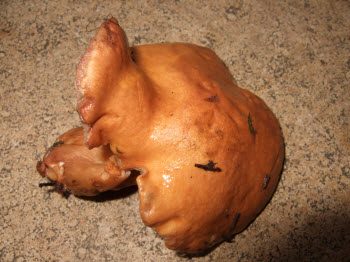
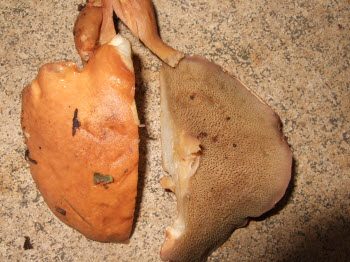
Brown Birch Bolete, or something else?
At the time I thought this was the Brown Birch Bolete (Leccinum scabrum). It was wet, so the cap was slimy, which made it harder to name. I ruled out Slippery Jack (Suillus luteus) because that has a clear ring on its stem, and this didn't.
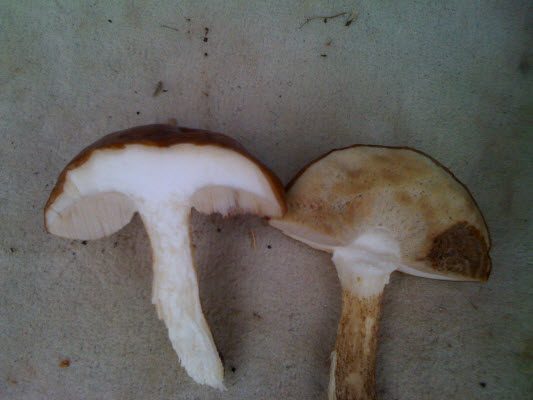
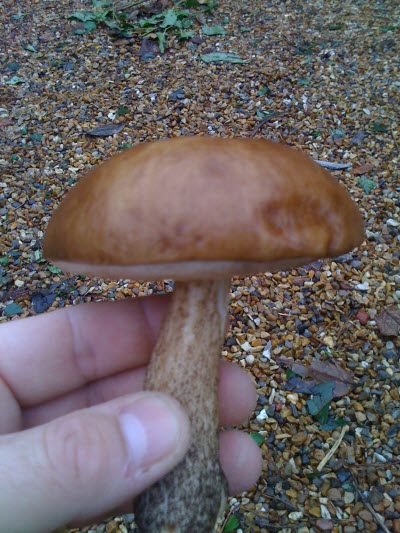
Today I'd add some warnings. Several Leccinum boletes have caused stomach upsets, especially if they are undercooked, so always cook them thoroughly. Slippery Jack is eaten by many people, but it upsets some, and the slimy cap skin is best peeled off. Look at the stem for dark scales (Leccinum) or a ring (Slippery Jack), and check which tree it's growing under.
Tawny Funnel
I found dozens of these. They were fairly new to me, so I looked them up in my copy of The Mushroom Book, whose flow chart at the front is excellent for narrowing things down. Sorry about the quality of the photos.
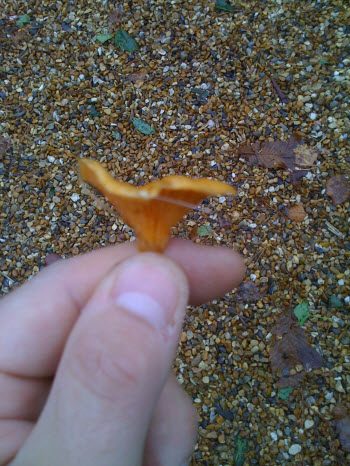
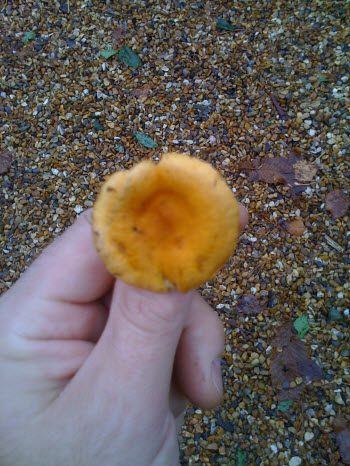
The Tawny Funnel (now Paralepista flaccida) is not a good one to eat. Funnel-shaped mushrooms include some deadly poisonous Clitocybe species, so beginners should leave them all alone.
Also seen, but not photographed
Orange Birch Bolete, an ink cap, a knight cap of some kind, a Russula and Fly Agaric. Not a bad haul for a dry common after one wet night.