
The old site carried an article every spring announcing "The St George's mushrooms are coming!" It's still one of the best signs that the foraging year has begun.
When and where
St George's mushroom (Calocybe gambosa) traditionally appears around 23 April in southern England, and often later further north. It can keep going into June. Look in old grassland, chalk downland, roadside verges, hedge bottoms and woodland edges. It often grows in rings or arcs, and comes back in the same spots year after year.
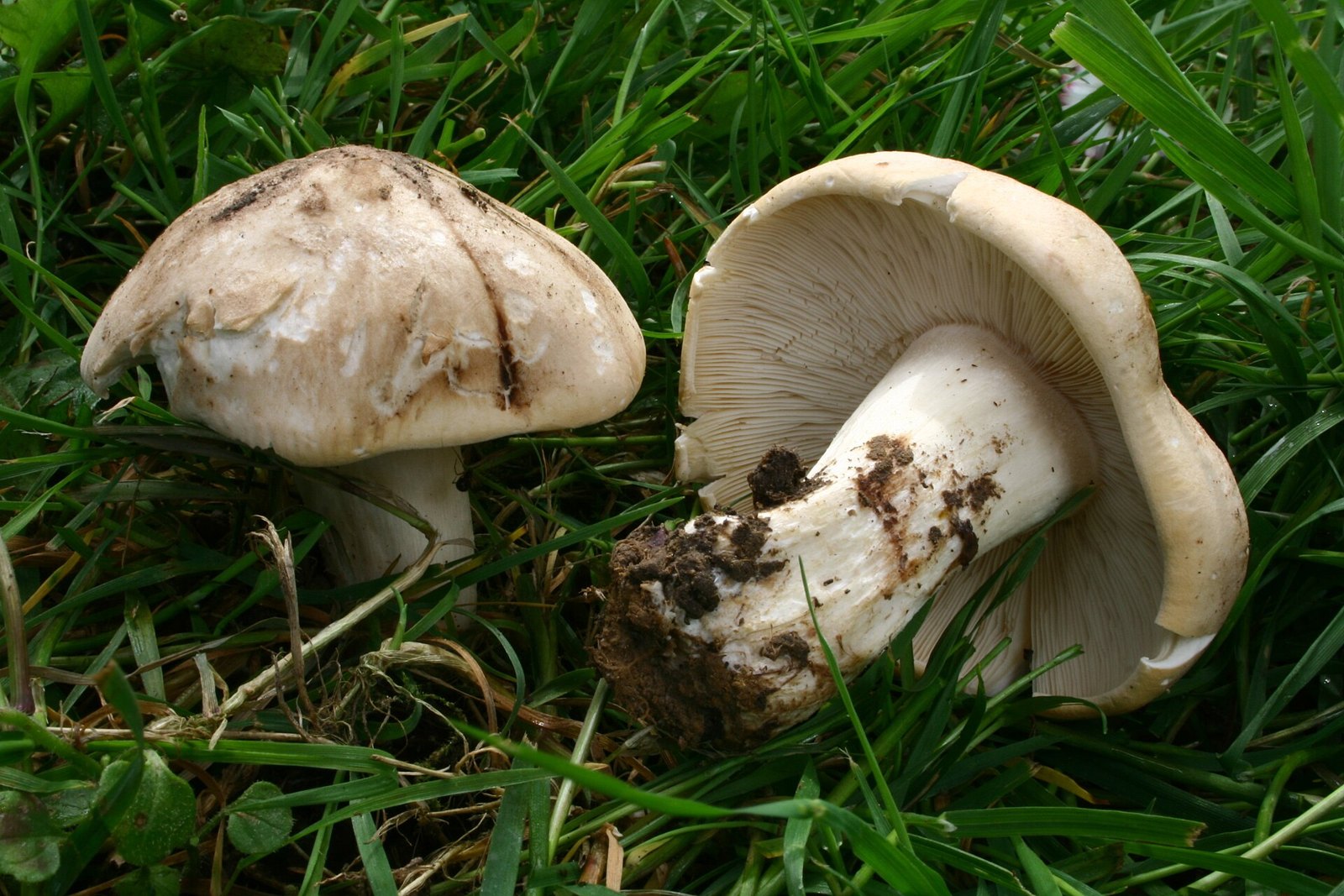
Key features
It is a chunky, white to cream mushroom with a thick, firm stem and a cap about 5–15cm across. The gills are white and very crowded, and it has no ring and no bag at the base. The spore print is white. Most distinctive of all is the strong smell of fresh flour or cucumber.
Deadly lookalikes
The Deadly Fibrecap (Inocybe erubescens) grows at the same time of year, often under beech on chalk. Its cap is conical to bell-shaped and silky-fibrous, it bruises and ages red, it has a brown spore print, and it doesn't smell of flour. It contains muscarine and has caused deaths.
Other white grassland mushrooms, like the poisonous Fool's Funnel (Clitocybe rivulosa), are mostly found later in the year, but can overlap. The Livid Pinkgill (Entoloma sinuatum) has gills that turn pink and a pink spore print. If you are not sure, take a spore print and check every feature.
Before you pick
Take only what you'll use, leave the young buttons and the rest of the ring, and never pick on protected sites. If even one feature doesn't fit, don't eat it.