Back on the old site, every spring brought the same question: "Spring is late this year, so where are all the morels?" They are the mushroom people most want to find, and the one they least often do. Here's what we've learned since.
When to look
In the UK, morels (the Morchella esculenta group) usually appear from late March to May, and April is the peak in the south. A cold spell followed by a few days of warm rain is often what sets them off. A late, cold spring pushes the season back by weeks, which is why some years seem to have none at all.
Where to look
Look on chalky or limestone soil, along woodland edges with ash, in old orchards, and on disturbed ground such as old bonfire sites. Some of the most reliable spots are in town: fresh bark or woodchip mulch in flower beds, car parks and new landscaping. Morels are well camouflaged, so once you find one, stop and search the ground around it slowly.
How to recognise a true morel
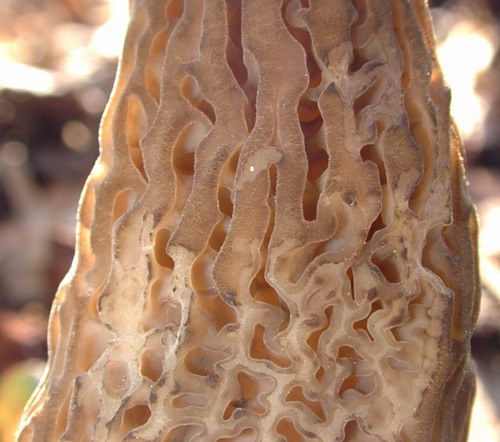
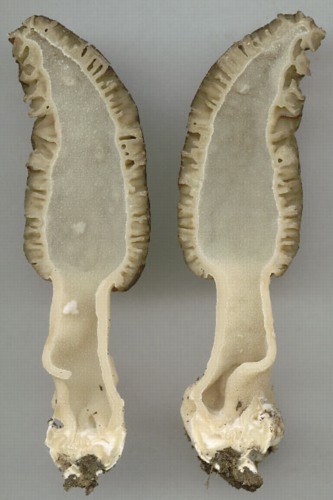
A true morel has a honeycomb cap of pits and ridges, joined directly to the stem. Slice it lengthways from top to bottom and it is completely hollow, a single open chamber from the cap tip to the base of the stem. That cut is the most important test you can do.
Rule out the False Morel
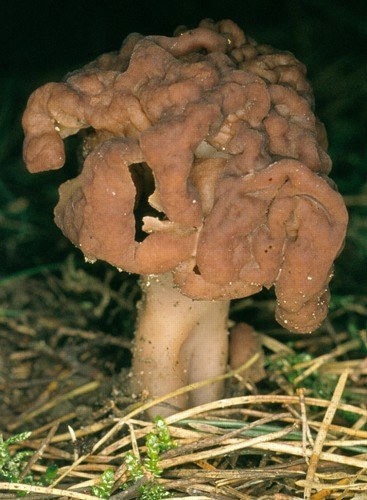
The False Morel (Gyromitra esculenta) has a brain-like, wrinkled and lobed cap rather than neat pits, often reddish-brown. Cut open, it is chambered or stuffed with cottony tissue, not hollow. It contains gyromitrin, a toxin that can cause serious liver damage and has killed people. In Britain it is uncommon and usually found under pine on sandy soil. If it isn't hollow, it isn't a morel.
Picking and cooking
Cut morels at the base, never pull them, and carry them in a basket so the spores can drop as you walk. Always cook them thoroughly. Raw or undercooked morels cause stomach upsets, and some people react even to cooked ones, so try a small amount the first time. Get permission to forage where you need it, and pick only for your own use.