Wild Mushrooms Online
Species guideIn seasonLookalikesIdentifyRecipesArticlesMembers' findsCoursesForagers ClubSafety
Sign in
Sign inSpecies guideIn seasonLookalikesIdentifyRecipesArticlesMembers' findsCoursesForagers ClubSafety
Wild MushroomsOnline

A UK field guide and foragers club: species, seasons, recipes and the finds our members bring back from the woods.

Learn

Species guideForaging calendarLookalikes comparedRecipesArticles & field notesForaging safety

Take part

Members' findsCourses & eventsForagers ClubRecommended kit

About

About the siteSign in or join

Identification information is offered in good faith for education. Eating wild fungi is always at your own risk, and some species are deadly. Some links to kit are affiliate links, which help pay for the site at no extra cost to you. As an Amazon Associate I earn from qualifying purchases.

© 2026 Wild Mushrooms Online. All rights reserved.

← Species guide

Fly Agaric

Amanita muscaria · Amanitaceae

Poisonous

The classic red and white toadstool. Hallucinogenic and poisonous. Admire it, do not eat it.
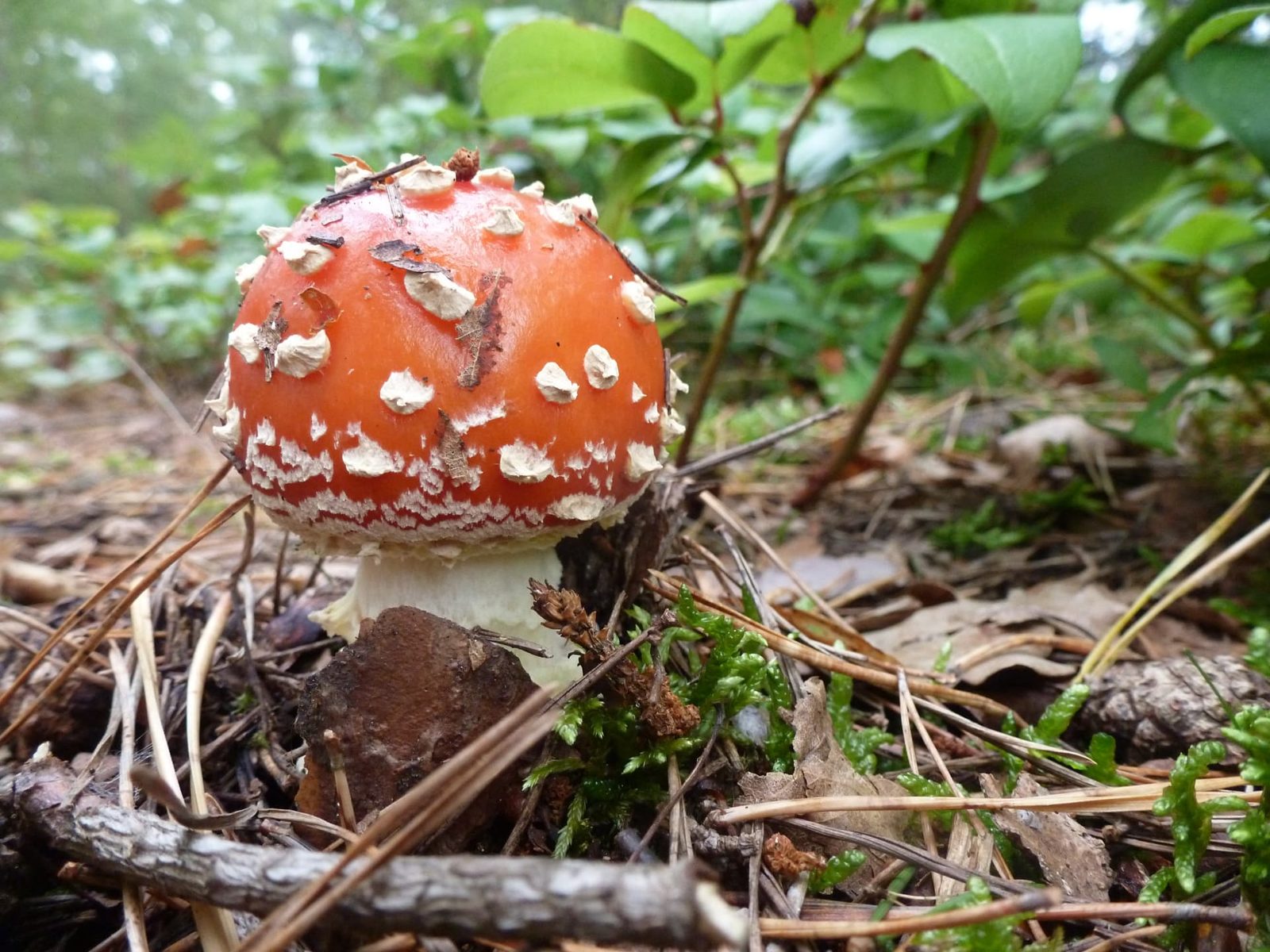
Fly Agaric, photograph 1 of 1
Original photograph · 1 of 1 · Photos alone cannot confirm identification

Poisonous. Contains ibotenic acid and muscimol. Causes confusion, nausea, delirium and sedation. Poisonings are rarely fatal but always unpleasant, and reactions vary wildly.

Read the full foraging safety guidance.

Season

August to November

J
F
M
A
M
J
J
A
S
O
N
D

See what else is out in August, September, October and November.

Where it grows

  • Birch
  • Pine
  • Heathland

Identification

Cap
8-20cm, scarlet fading to orange, covered with white removable warts, often washed off by rain.
Gills / pores
Free, white, crowded.
Stem
White, with a floppy ring and a scaly bulbous base.
Flesh
White, yellowish under the cap skin.
Spore print
White.
Smell & taste
Faint.

Lookalikes

Other red-capped Amanitas such as the Blusher. All Amanitas should be left alone by beginners.

In the kitchen

Do not eat.

Read more about Fly Agaric

  • Field diary: Ludshott Common after the rain (November 2009)

    One wet night turned dry Hampshire heathland into a fungi hotspot: Cow Boletes, birch boletes, Tawny Funnels and a basket of porcini.

Advertisement

Share Facebook X

Useful kit

Affiliate links
  • Opinel No.8 Mushroom Knife

    Curved blade with a boar bristle brush in the handle. The standard foraging knife for good reason.

    Around 20 GBP
  • Traditional Willow Basket

    Open weave so spores drop as you walk and nothing sweats into mush. A plastic bag ruins a haul.

    Around 35 GBP
  • Collins Fungi Guide

    The most complete British field guide in one volume. Heavy, but nothing else comes close for detail.

    Around 30 GBP

As an Amazon Associate I earn from qualifying purchases.

Found one?

Post a photo to the members' feed and let other foragers weigh in before you decide anything.

Post your find →

Also poisonous

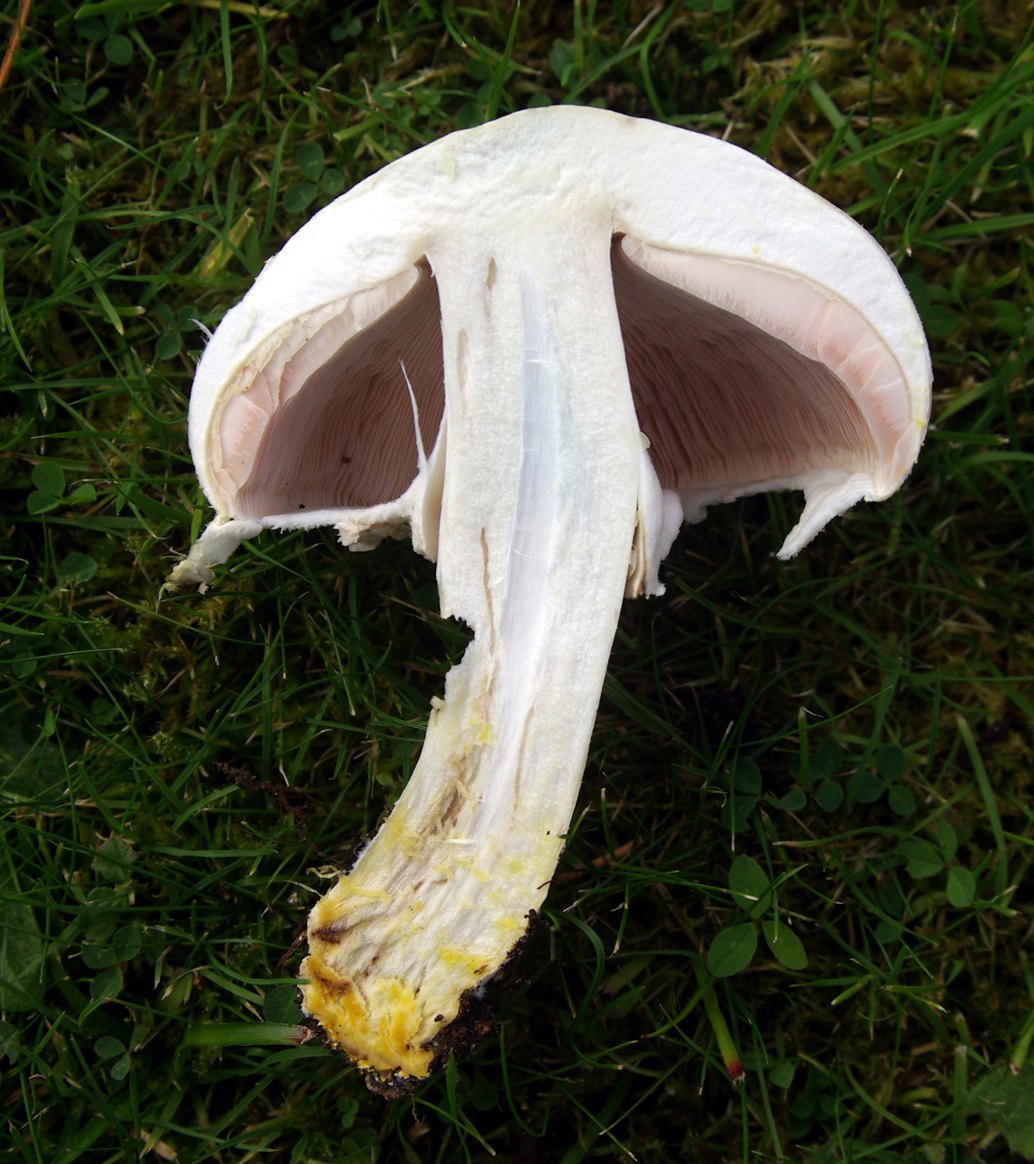
Yellow Stainer in the field

Yellow Stainer

Agaricus xanthodermus

Poisonous

A field-mushroom lookalike that turns bright chrome yellow when cut and makes most people ill.

J
F
M
A
M
J
J
A
S
O
N
D

Sulphur Tuft

Hypholoma fasciculare

Poisonous

Dense sulphur-yellow clusters on stumps all year. Very common, very bitter, and toxic.
J
F
M
A
M
J
J
A
S
O
N
D
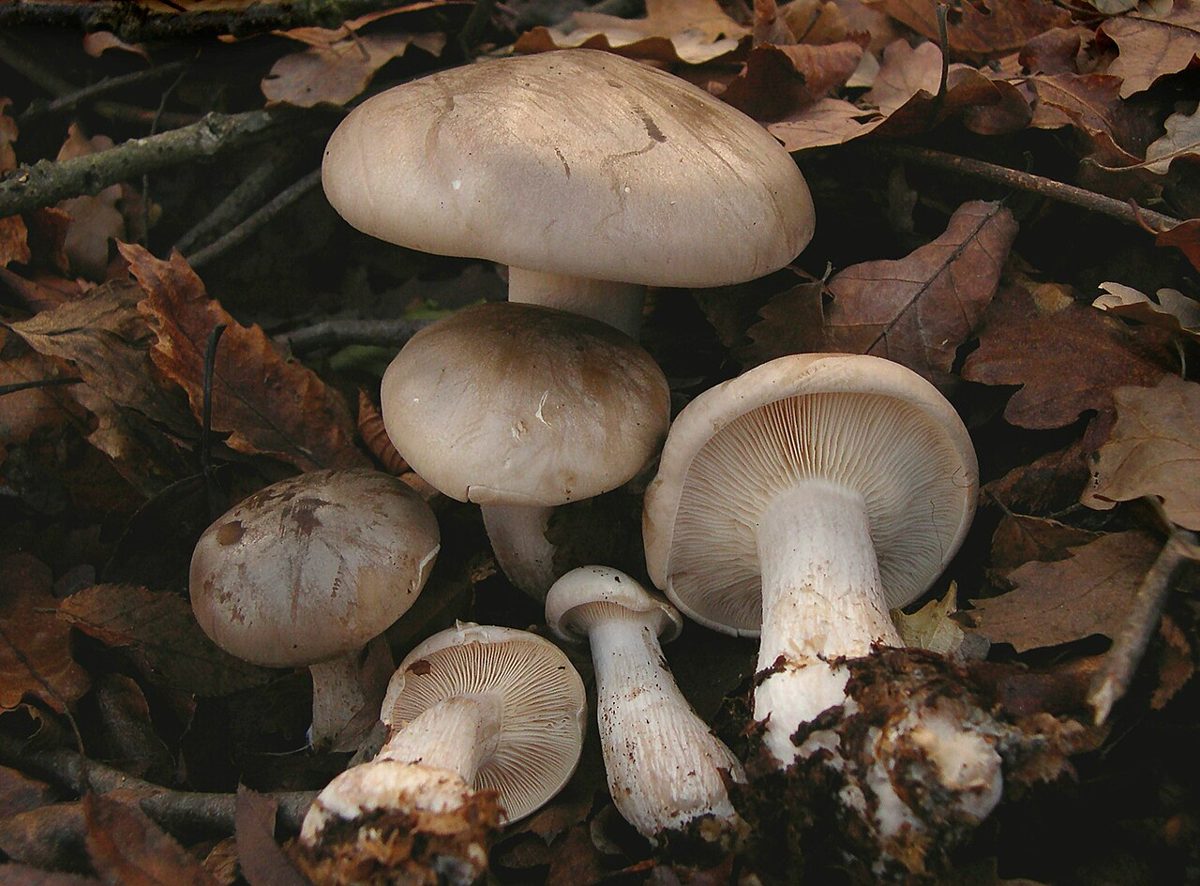
Clouded Funnel in the field

Clouded Funnel

Clitocybe nebularis

Poisonous

A big, fleshy grey mushroom of late autumn leaf litter, often in rings of dozens. Once widely eaten, it is now treated as poisonous by most UK guides because it causes stomach upsets in a significant share of people, even when cooked. It is also the only host of the strange Piggyback Rosegill.
J
F
M
A
M
J
J
A
S
O
N
D
Edit with