Clitocybe rivulosa
A small pale funnel-shaped grassland mushroom; an important poisonous lookalike of edible spring species.
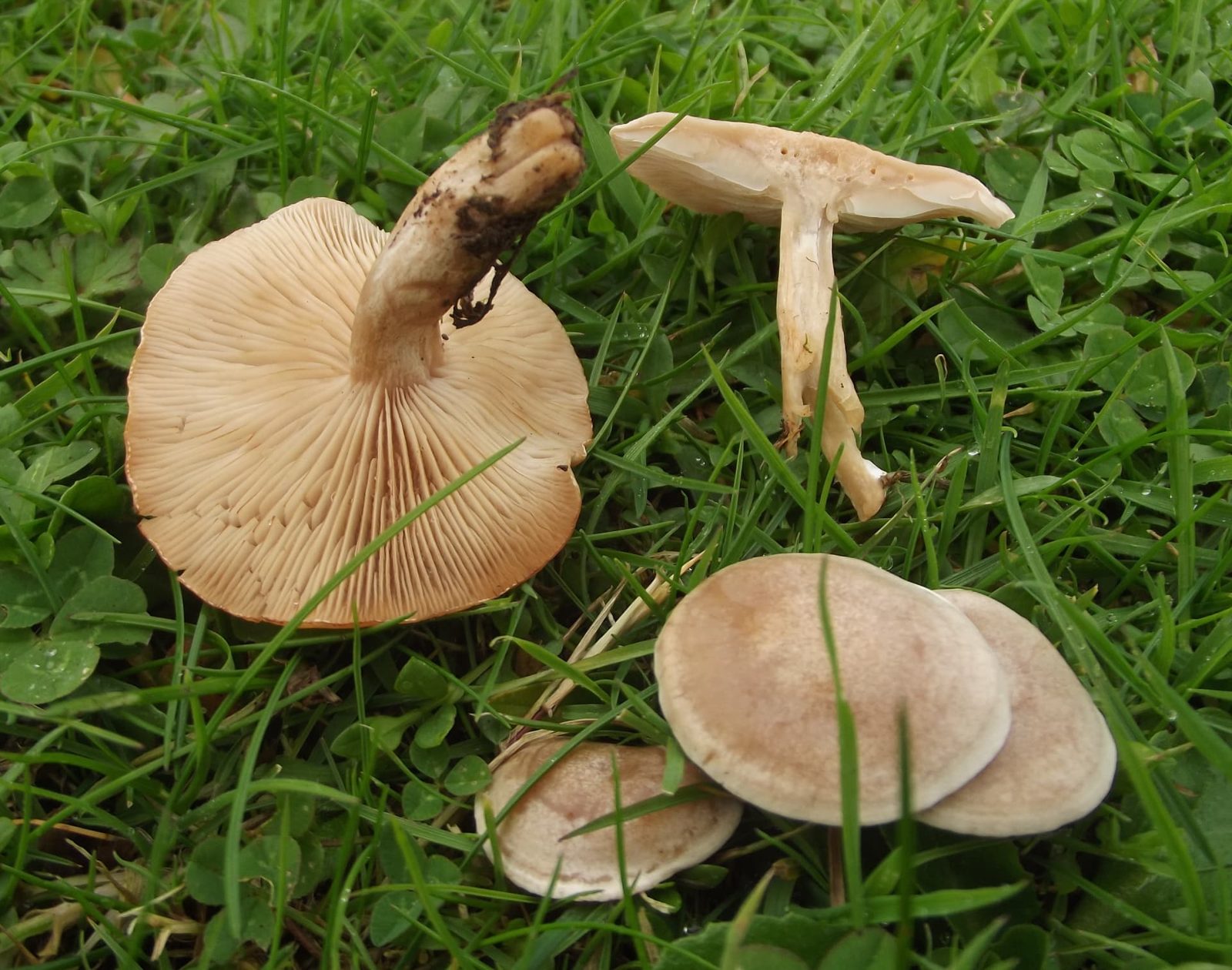
Three essential checks for Fool's Funnel.
No deadly species is named in this guide's linked comparisons. Other lookalikes still need checking: The Miller is the edible mushroom most often mixed up with Fool's Funnel: it grows in woodland, its gills turn pink, it gives a pink spore print and it smells strongly of flour. St George's Mushroom grows in similar grassy places in spring, but has a thicker cap, crowded gills that do not run down the stem, and a mealy smell. Fairy Ring Champignon forms rings in lawns too, but is tan with widely spaced gills that do not run down the stem. Snowy Waxcap also grows on lawns in autumn and is white, but its gills are thick, waxy and widely spaced rather than thin and crowded.
Poisonous. POISONOUS. Contains muscarine. Do not eat. Small pale mushrooms in grass should be treated with particular caution.
Read the full foraging safety guidance.
May to November
See what else is out in May, June, July, August, September, October and November.
The Miller is the edible mushroom most often mixed up with Fool's Funnel: it grows in woodland, its gills turn pink, it gives a pink spore print and it smells strongly of flour. St George's Mushroom grows in similar grassy places in spring, but has a thicker cap, crowded gills that do not run down the stem, and a mealy smell. Fairy Ring Champignon forms rings in lawns too, but is tan with widely spaced gills that do not run down the stem. Snowy Waxcap also grows on lawns in autumn and is white, but its gills are thick, waxy and widely spaced rather than thin and crowded.
St George's Mushroom vs Fool's Funnel
Is this white spring mushroom in grass safe?
The Funnel vs Fool's Funnel vs Tawny Funnel
How do I tell an edible funnel from the poisonous white funnels?
The Miller vs Fool's Funnel vs Livid Pinkgill
How do I tell The Miller from the poisonous Fool's Funnel?
Snowy Waxcap vs Fool's Funnel vs The Miller
How do I tell a Snowy Waxcap from a Fool's Funnel or The Miller?
St George's mushroom: identifying spring's classic edible
Named for its appearance around St George's Day on 23 April, Calocybe gambosa is one of the few good edible mushrooms in spring. Here's how to tell it from the deadly fibrecaps.
Fairy rings, and what grows in them
Rings in the lawn are not magic, they are mycelium growing outwards. Two of the mushrooms that make them are worth eating, and one of them is a muscarine poisoning waiting to happen.
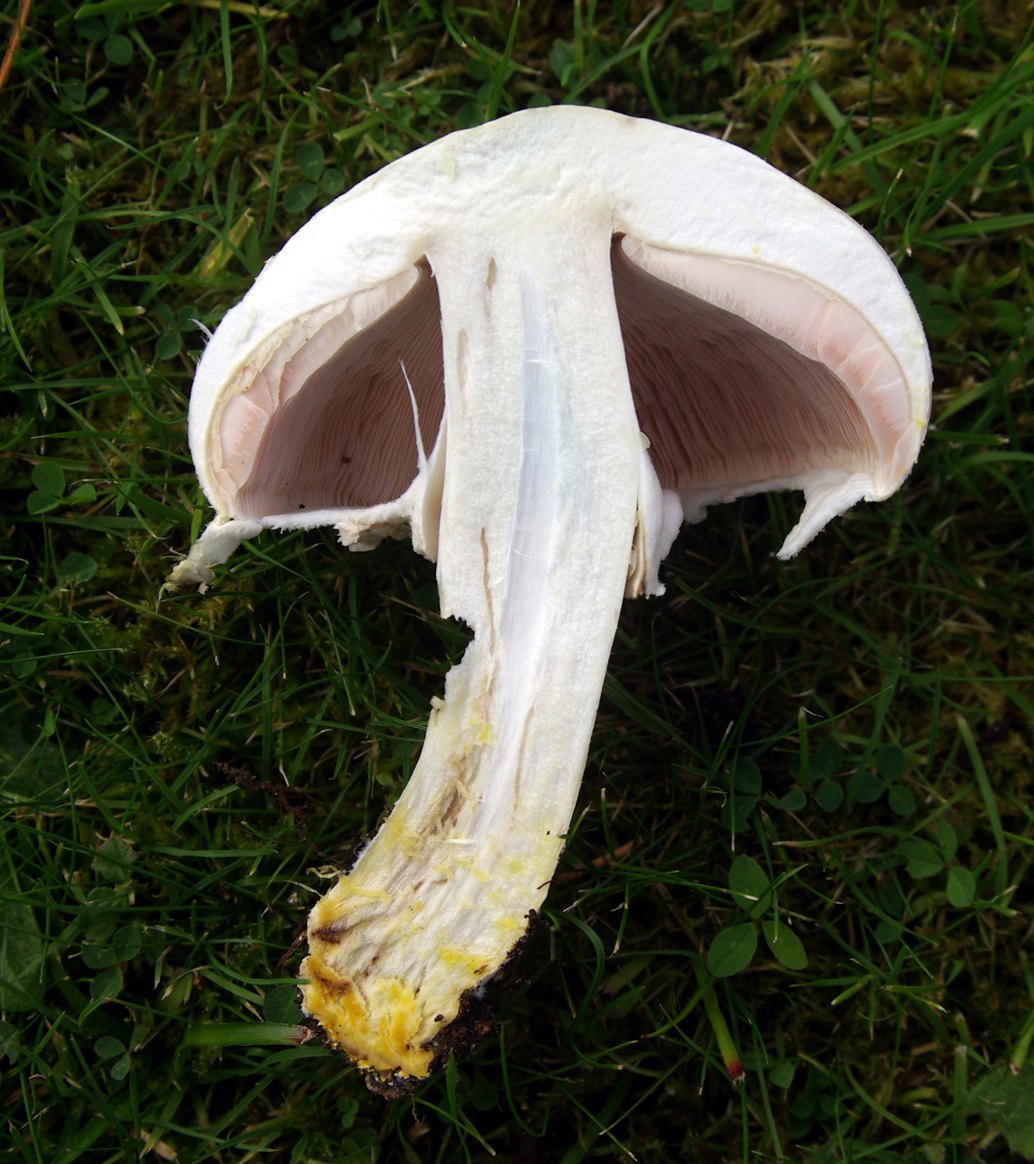
Agaricus xanthodermus
A field-mushroom lookalike that turns bright chrome yellow when cut and makes most people ill.
Hypholoma fasciculare
Dense sulphur-yellow clusters on stumps all year. Very common, very bitter, and toxic.
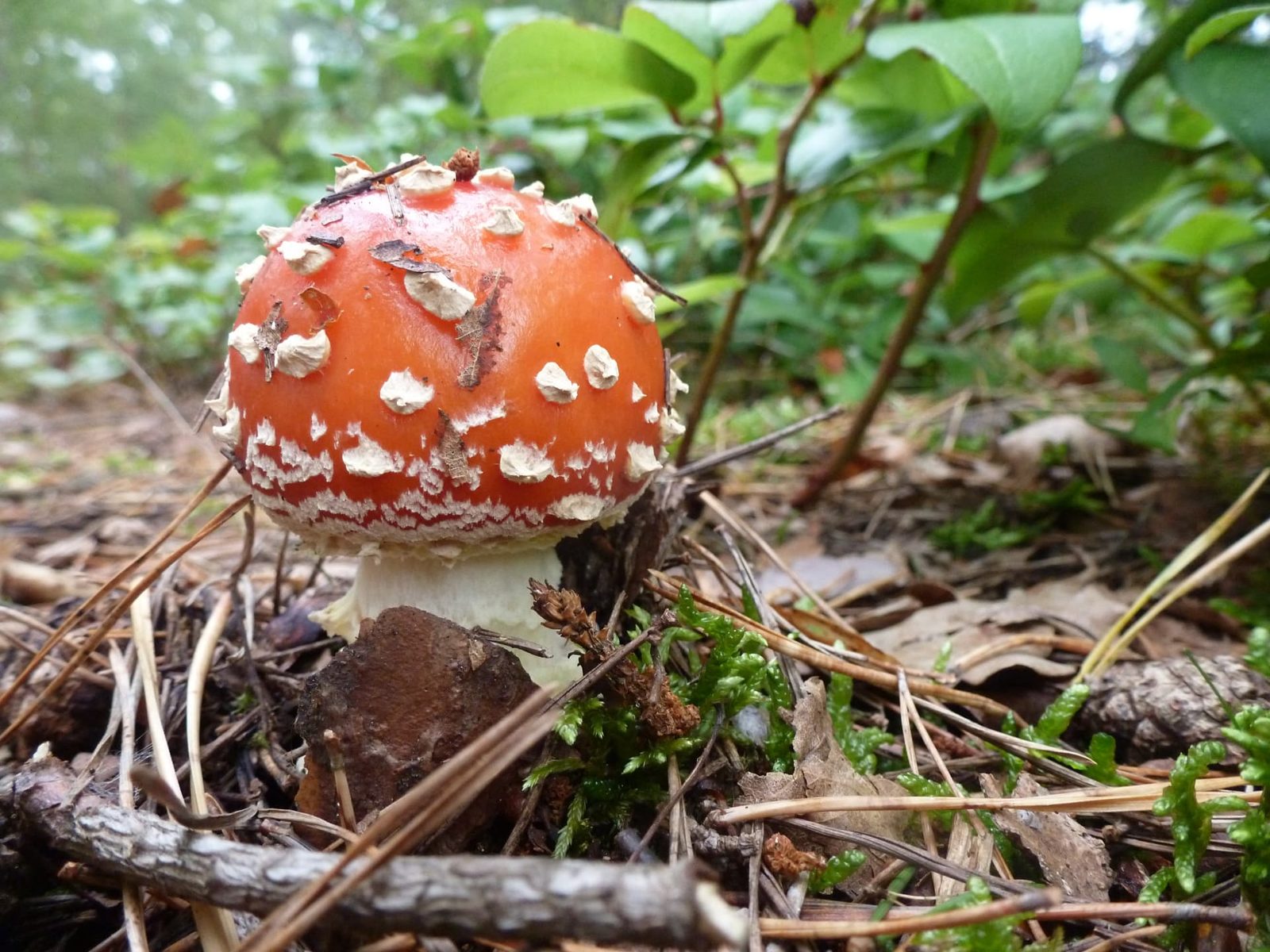
Amanita muscaria
The classic red and white toadstool. Hallucinogenic and poisonous. Admire it, do not eat it.