Wild Mushrooms Online
Species guideIn seasonLookalikesIdentifyRecipesArticlesMembers' findsCoursesForagers ClubSafety
Sign in
Sign inSpecies guideIn seasonLookalikesIdentifyRecipesArticlesMembers' findsCoursesForagers ClubSafety
Wild MushroomsOnline

A UK field guide and foragers club: species, seasons, recipes and the finds our members bring back from the woods.

Learn

Species guideForaging calendarLookalikes comparedRecipesArticles & field notesForaging safety

Take part

Members' findsCourses & eventsForagers ClubRecommended kit

About

About the siteSign in or join

Identification information is offered in good faith for education. Eating wild fungi is always at your own risk, and some species are deadly. Some links to kit are affiliate links, which help pay for the site at no extra cost to you. As an Amazon Associate I earn from qualifying purchases.

© 2026 Wild Mushrooms Online. All rights reserved.

← Species guide

Beechwood Sickener

Russula nobilis · Russulaceae

Also called formerly Russula mairei

Poisonous

A small, firm, scarlet brittlegill found only with beech. Chris photographed one on Headley Down in 2008. It is poisonous and fiercely peppery, and one of several red Russulas that should never be eaten.

From Chris's field notesRead Chris's field article: Field diary: the 4lb roadside cep →Chris's 2008 Headley Down and Haslemere diary, where this Beechwood Sickener turned up beside a monster cep.
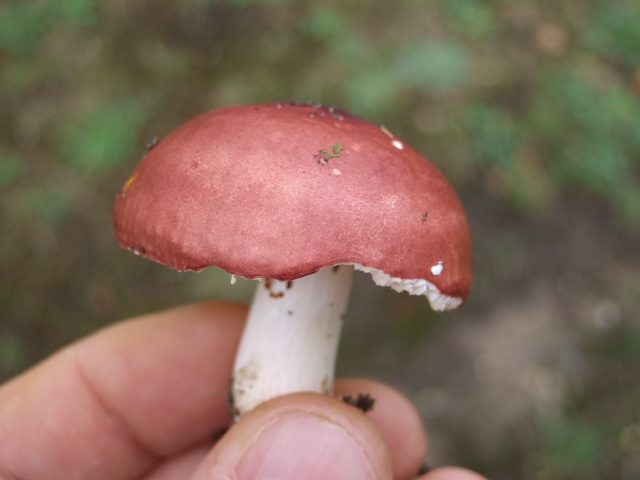
Beechwood Sickener, photograph 1 of 1
Original photograph · 1 of 1 · Photos alone cannot confirm identification

Poisonous. Poisonous: causes vomiting and diarrhoea. Never eat a red brittlegill, and never taste-test an unknown red mushroom, because a Fly Agaric with its spots washed off can look similar.

Read the full foraging safety guidance.

Season

July to November

J
F
M
A
M
J
J
A
S
O
N
D

Where it grows

  • Beech woodland
  • Broadleaf woodland

Identification

Cap
3-9cm, bright scarlet to cherry red, sometimes fading in patches; convex, then flat or slightly depressed. Skin peels about halfway to the centre.
Gills / pores
White to pale cream, brittle, fairly crowded.
Stem
2-6cm, short, firm and white, with no ring.
Flesh
White and firm, snapping cleanly like chalk.
Spore print
White.
Smell & taste
Faintly fruity, sometimes likened to coconut; taste burning hot.

Lookalikes

The Sickener (Russula emetica) is more fragile and grows under pines. A Fly Agaric whose white spots have washed off is also red with white gills, but it has a ring and a bulbous base.
Advertisement

Share Facebook X

Useful kit

Affiliate links
  • Opinel No.8 Mushroom Knife

    Curved blade with a boar bristle brush in the handle. The standard foraging knife for good reason.

    Around 20 GBP
  • Traditional Willow Basket

    Open weave so spores drop as you walk and nothing sweats into mush. A plastic bag ruins a haul.

    Around 35 GBP
  • Collins Fungi Guide

    The most complete British field guide in one volume. Heavy, but nothing else comes close for detail.

    Around 30 GBP

As an Amazon Associate I earn from qualifying purchases.

Found one?

Post a photo to the members' feed and let other foragers weigh in before you decide anything.

Post your find →

Also poisonous

Yellow Stainer in the field

Yellow Stainer

Agaricus xanthodermus

Poisonous

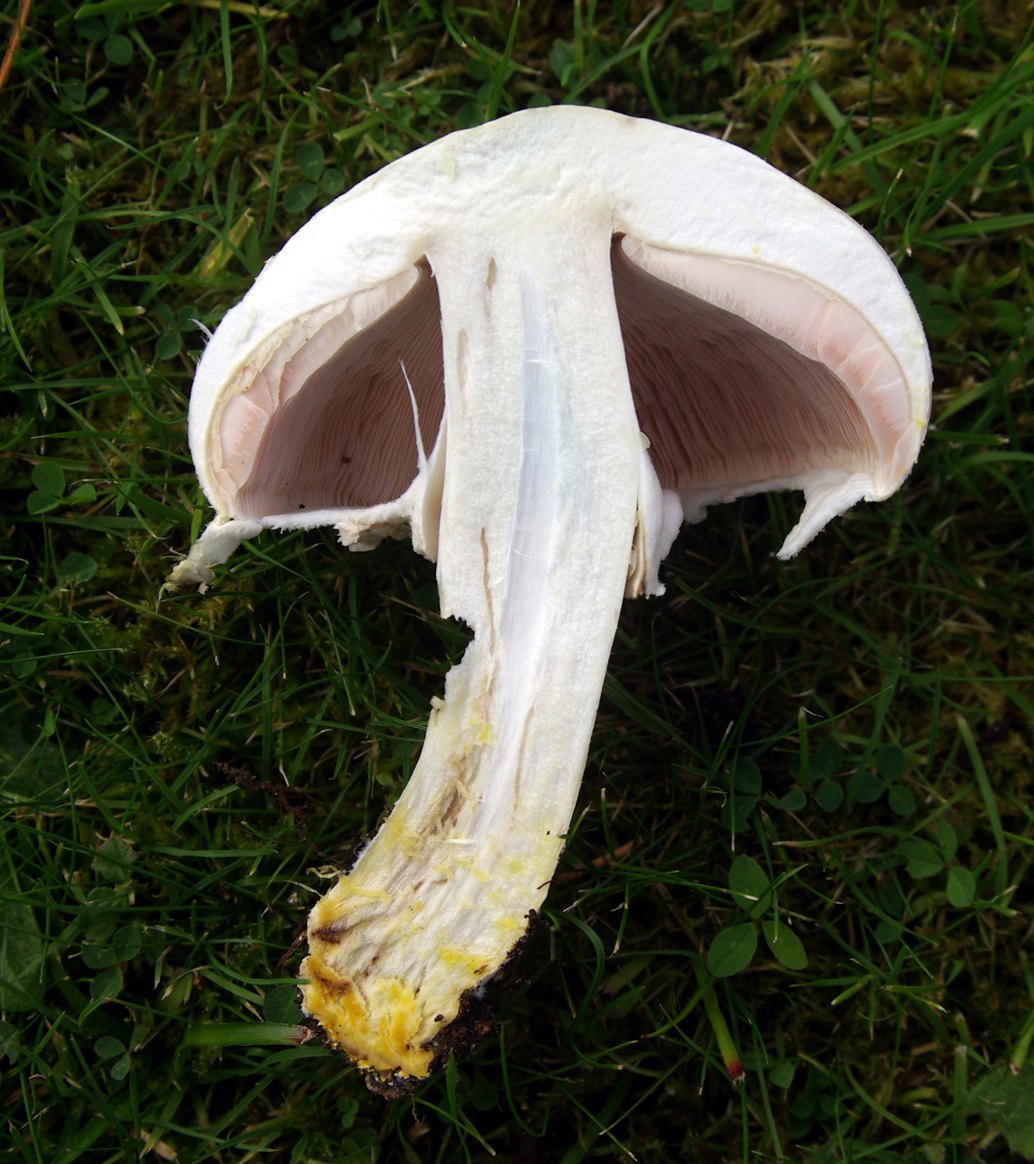
A field-mushroom lookalike that turns bright chrome yellow when cut and makes most people ill.

J
F
M
A
M
J
J
A
S
O
N
D

Sulphur Tuft

Hypholoma fasciculare

Poisonous

Dense sulphur-yellow clusters on stumps all year. Very common, very bitter, and toxic.
J
F
M
A
M
J
J
A
S
O
N
D
Fool's Funnel in the field

Fool's Funnel

Clitocybe rivulosa

Poisonous

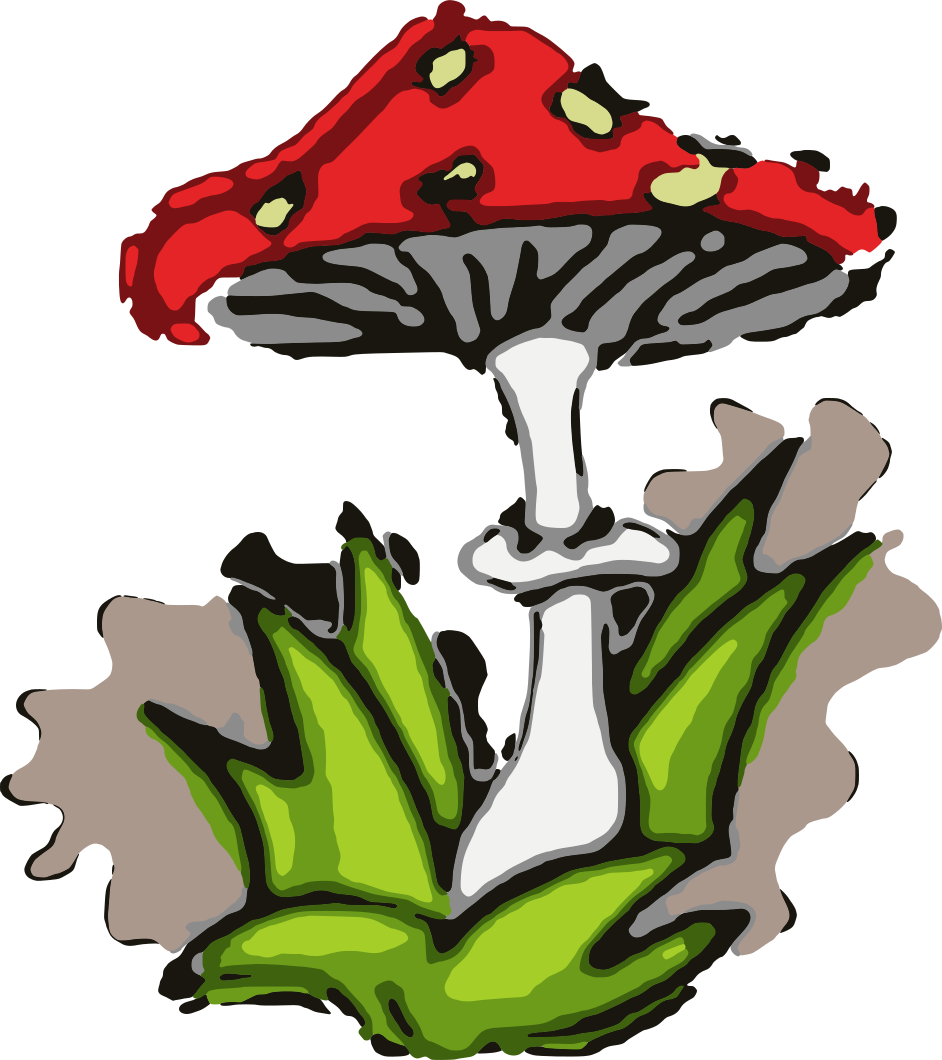
A small pale funnel-shaped grassland mushroom; an important poisonous lookalike of edible spring species.
J
F
M
A
M
J
J
A
S
O
N
D
Edit with