Fomitopsis betulina · Fomitopsidaceae
Also called Razor Strop Fungus; Birch Bracket; formerly Piptoporus betulinus
A smooth, pale, kidney-shaped bracket that grows only on birch, mostly on dead and dying trees. Fresh brackets appear from late summer and old ones stay on the tree all year. It is bitter and corky, so it is not eaten.
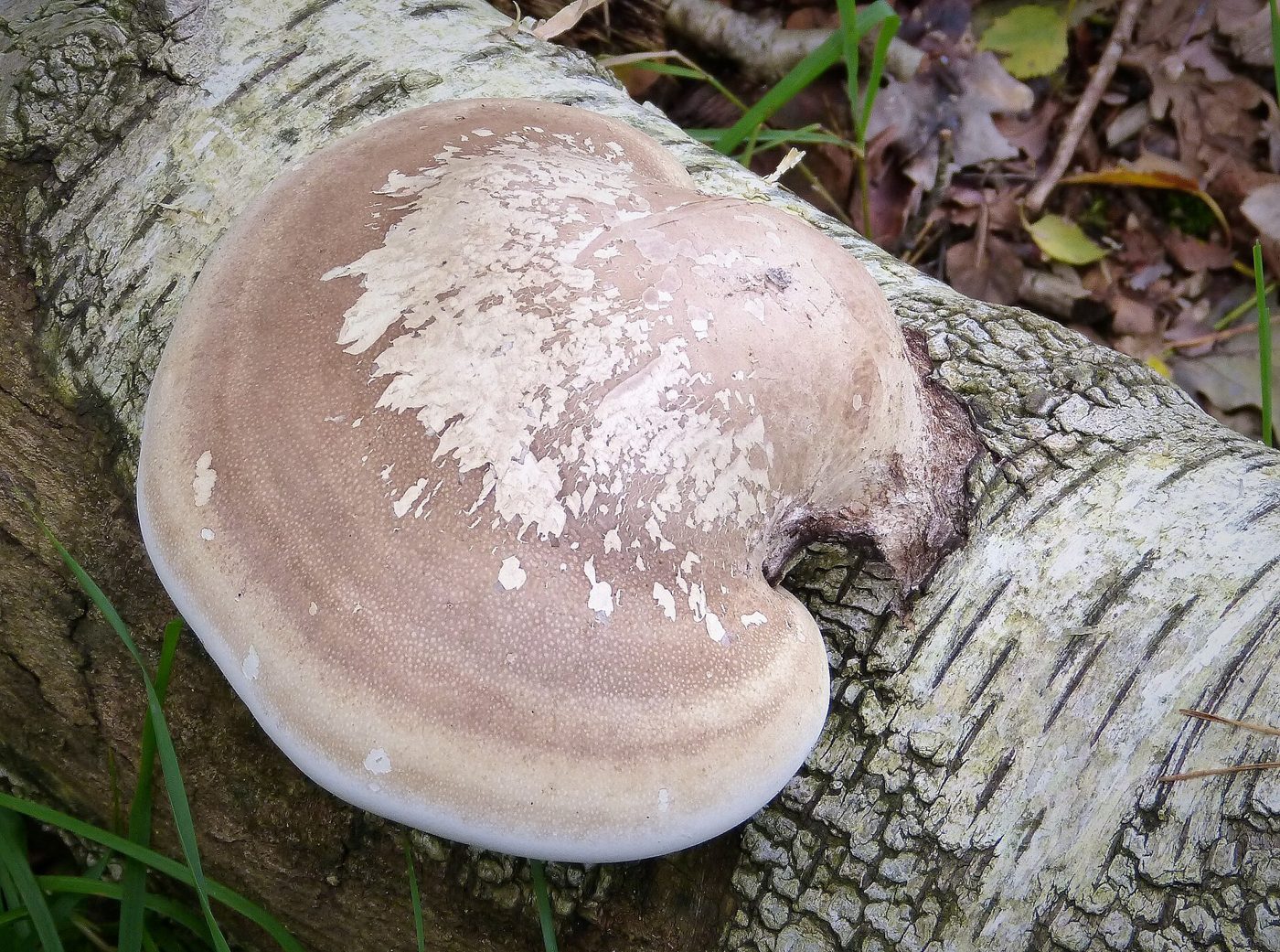
Inedible. Not edible: too bitter and corky to eat. It has a long history as tinder, as a razor strop and for mounting insects, and pieces were found with Ötzi the Iceman. It is also sold for teas and supplements, but this guide does not recommend making home remedies from wild brackets.
Read the full foraging safety guidance.
All year
See what else is out in January, February, March, April, May, June, July, August, September, October, November and December.
Tinder Fungus (Fomes fomentarius) also grows on birch, but it is hoof-shaped, grey and very hard, and builds up layers over many years. Blushing Bracket (Daedaleopsis confragosa) is thinner and banded, with pores that bruise pinkish. Birch Mazegill (Lenzites betulina) is thin, hairy and zoned like Turkey Tail, with gill-like plates underneath. Dryad's Saddle is covered in feathery brown scales and grows on sycamore, beech and elm rather than birch.
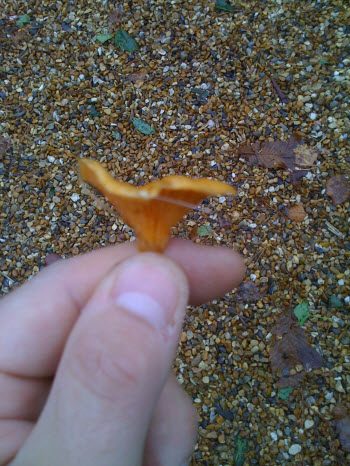
Paralepista flaccida
An orange-brown funnel that turns up in troops and rings in conifer and broadleaf litter from September into winter. Chris found dozens of them on Ludshott Common in November 2009. Not worth eating, but worth knowing so you can rule it out.
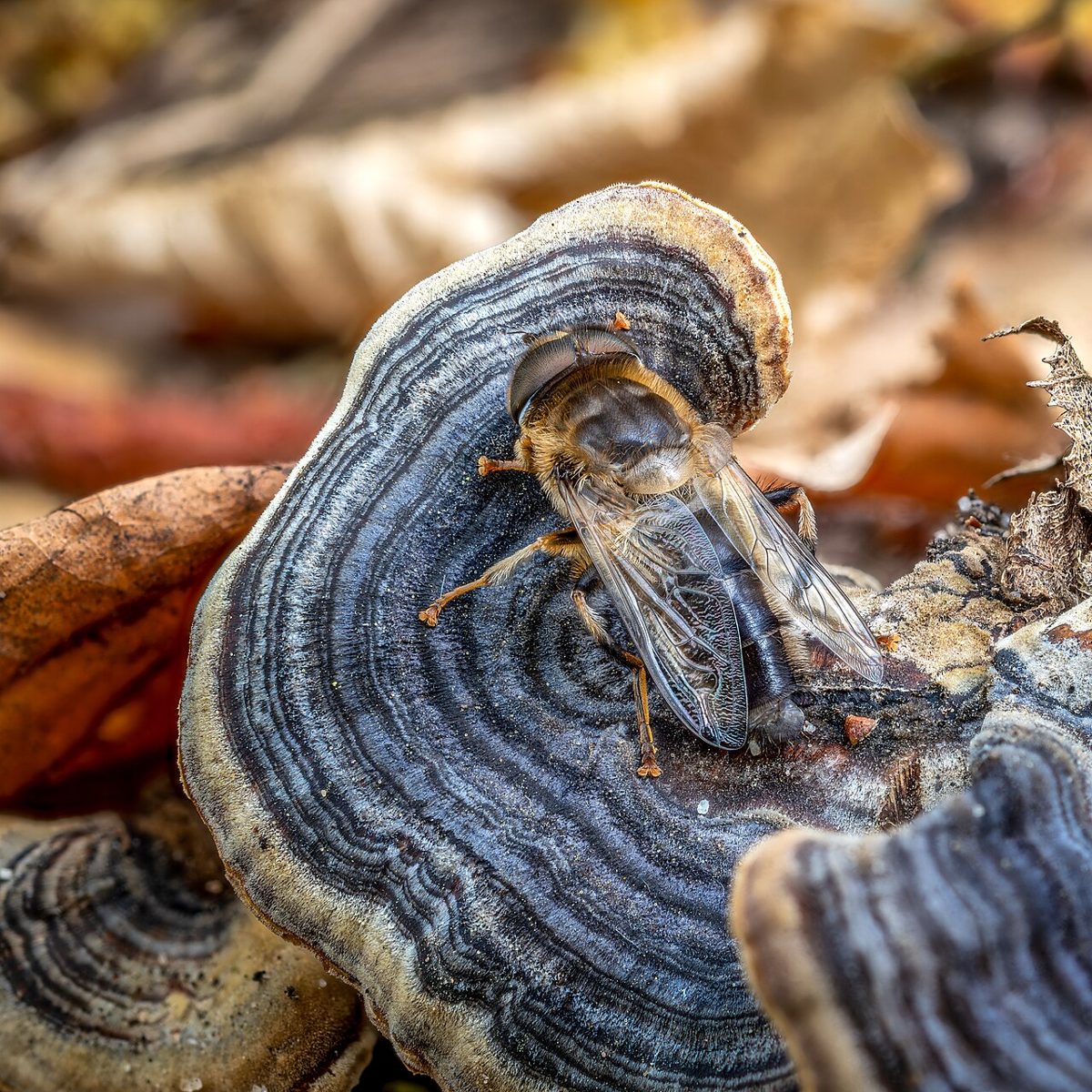
Trametes versicolor
Thin, leathery brackets in overlapping tiers, banded in browns, greys and blues like a fanned turkey tail, on dead wood all year round. One of the most common fungi in Britain, but far too tough to eat.