Saffron Milkcap vs Other Pine Milkcaps
Orange milkcaps in pine woods are a prize, but the group splits on one test: the colour of the milk. Carrot-orange milk that stains green is the Saffron Milkcap. White milk means a different species, and some of those will make you ill.
The test that decides it
Nick a gill and watch the milk. Carrot-orange milk that slowly stains green, concentric rings on the cap, orange pits on the stem and pines overhead - that is the Saffron Milkcap. White milk, a shaggy cap edge or blood-red milk means a different milkcap.
Saffron Milkcap
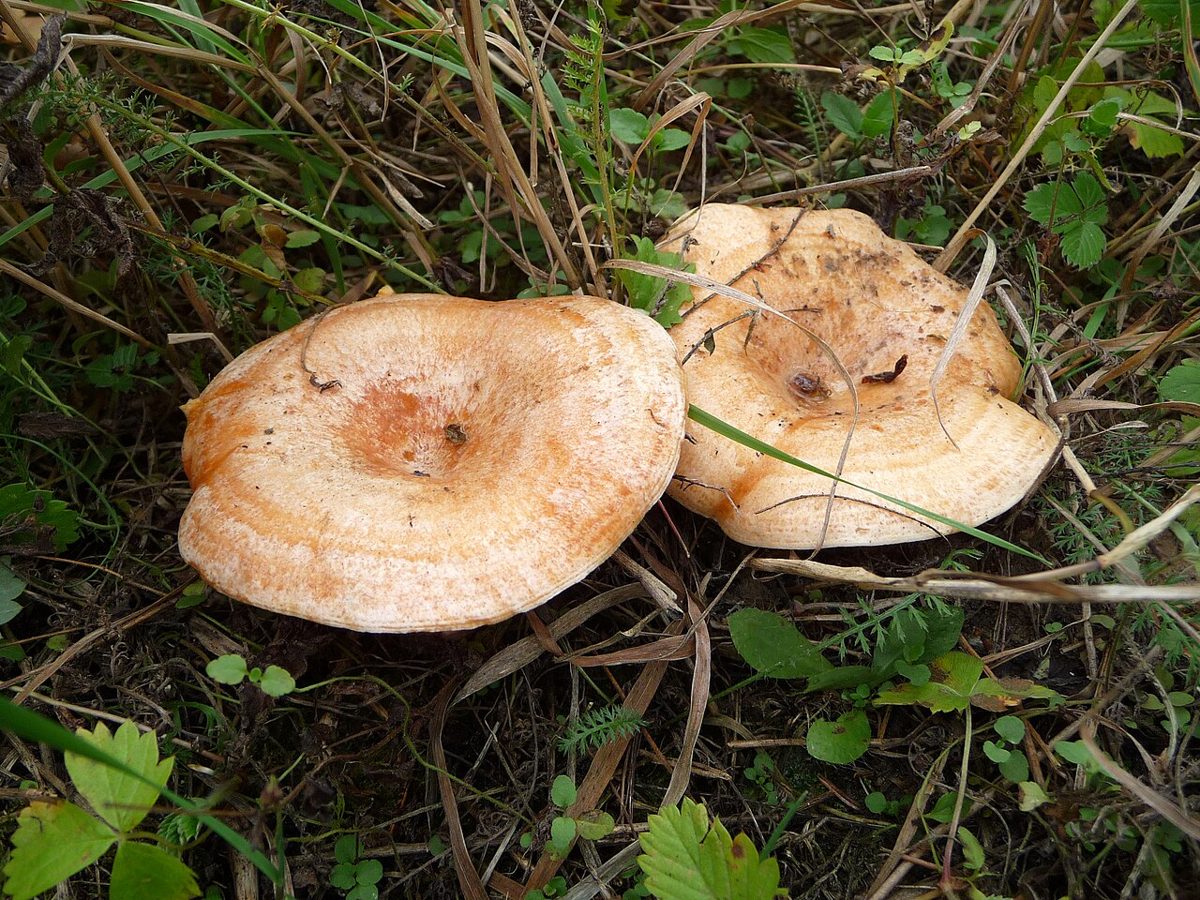
Lactarius deliciosus
- Carrot-orange milk that stains green as it dries
- Concentric rings on an orange cap, dull green patches with age
- Stem shallowly pitted with darker orange marks
- Always with pines, usually on sandy or acid ground
Full species guide →
Woolly Milkcap
Lactarius torminosus
- Milk is white and hot acrid to the taste
- Cap edge strongly shaggy, the fringe extending in towards the stem
- Acid ground, often with birch as well as conifers
- Causes stomach upset - not edible
Bloody Milkcap
Lactarius semisanguifluus
- Milk is blood-red, not carrot-orange
- Stains green with age, just like the Saffron Milkcap
- Also under pines, so the milk colour is the only sure difference
- Recorded as edible but inferior - do not eat it on the strength of a photo
False Saffron Milkcap
Lactarius deterrimus
- Orange milk that turns wine-red, then green
- Usually under spruce rather than Scots pine
- Cap less clearly ringed
- Edible but distinctly inferior
Feature by feature
| Feature | Saffron Milkcap | Woolly Milkcap | Bloody Milkcap | False Saffron Milkcap |
|---|---|---|---|---|
| Milk when a gill is cut | Carrot-orange, slowly staining green | White, hot and acrid | Blood-red | Orange, turning wine-red then green |
| Cap edge and surface | Concentric rings, smooth to granular, inrolled when young | Strongly shaggy fringe extending inwards | Concentric rings with a finely downy edge | Faintly zoned and smooth |
| Green staining | Yes - dull pistachio patches on old caps and cut flesh | No | Yes, with age | Yes, but slowly |
| Tree overhead | Scots pine on sandy or acid soil | Birch and conifers on acid ground | Pine | Spruce, occasionally pine |
| Stem | Orange, shallowly pitted with darker marks | Pale, finely hairy | Orange-red and pitted | Orange, paler and mealy |
Never eat a wild mushroom on the strength of a website alone. Some deadly species look very like good edibles. Check every feature, and get an expert opinion if there is any doubt at all.
Read the full foraging safety guidance.
Common questions
- What if the milk does not change colour?
- Then it is not the Saffron Milkcap. Carrot-orange milk that dulls and greens is the signature. Milk that stays white, or that is hot and acrid on the tongue, points to a species you should leave alone.
- Can I trust the orange cap colour alone?
- No. Several milkcaps are orange, and old Saffron Milkcaps fade and go greenish. Cut a gill, look at the milk, and check the tree overhead before you pick anything.
- Is it safe to eat a large meal of Saffron Milkcaps?
- Cook them thoroughly and eat in moderation. A large meal can turn your urine reddish-orange, which is harmless, but raw or undercooked milkcaps upset some stomachs.
Checked against
- Wild Food UK: Saffron Milkcap - distribution and possible confusion
- NatureSpot: Saffron Milkcap - pine association and similar species
- Foragers Log: the milk colour test under pines
- Index Fungorum / Species Fungorum current names