Mushrooms in season in June
19 species in our guide fruit in June. 7 are edible and 3 are poisonous or deadly — learn those first.
Choosing a region puts species of beech, oak and chalk grassland at the top. Save as PDF from the print window to keep it on your phone.
Edibles to look for in June
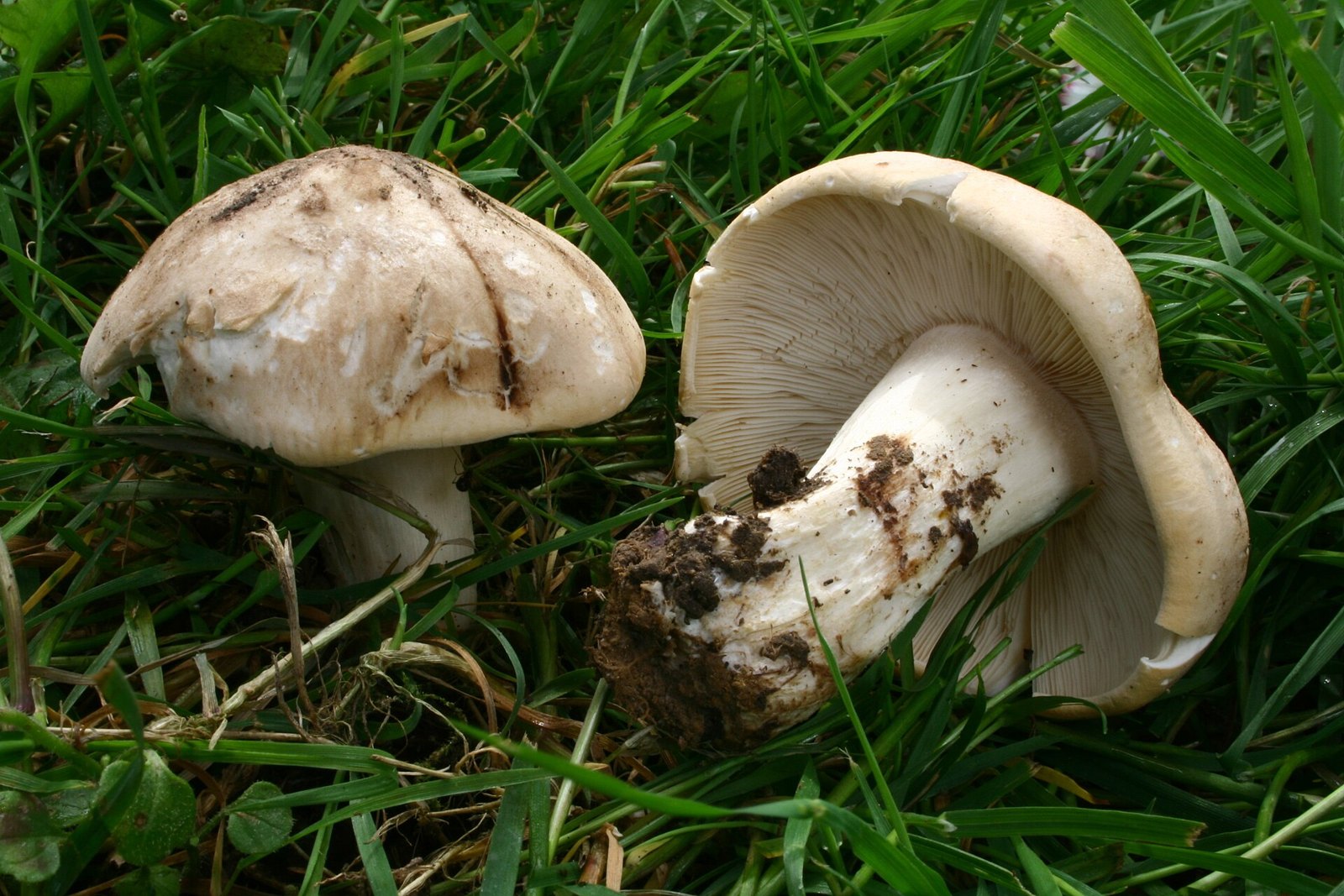
St Georges Mushroom
Calocybe gambosa
A solid white spring mushroom of grassland, traditionally appearing around St Georges Day.
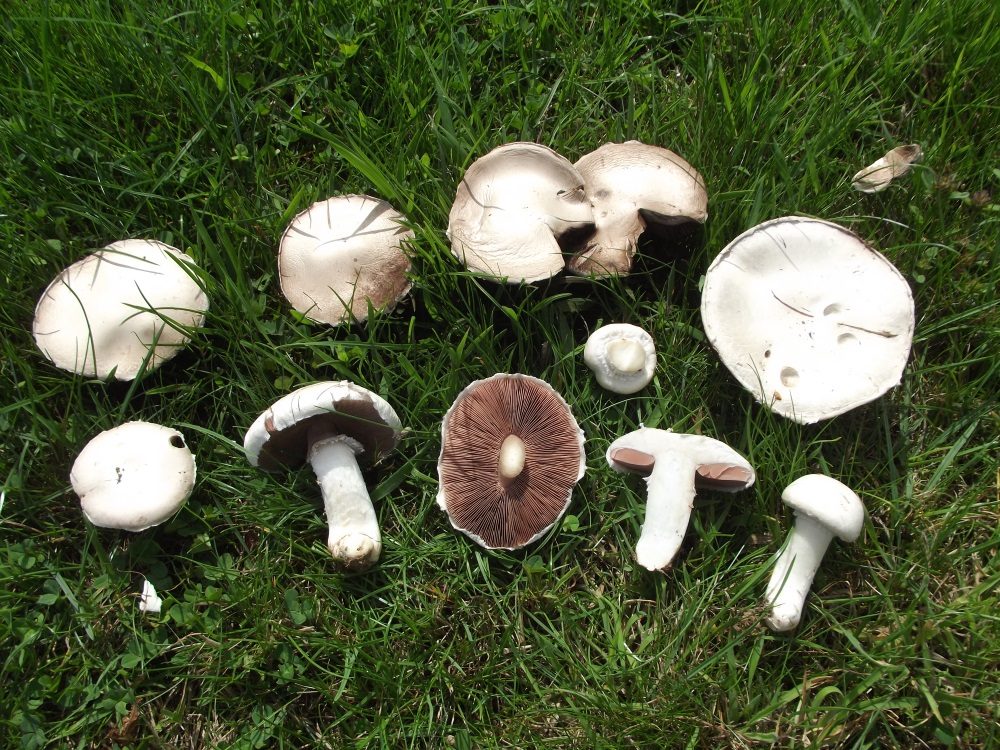
Field Mushroom
Agaricus campestris
The classic mushroom of unimproved pasture: white cap, pink gills darkening to brown, and a clean mushroomy smell.
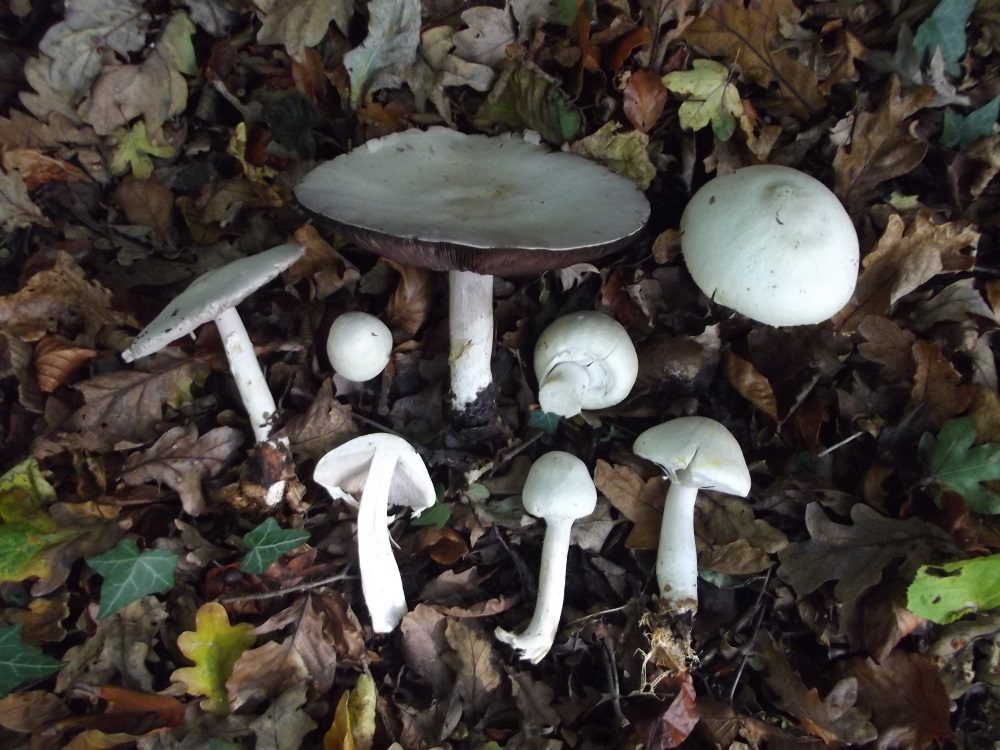
Horse Mushroom
Agaricus arvensis
A large relative of the field mushroom, smelling of aniseed and bruising slowly yellow in a harmless way.
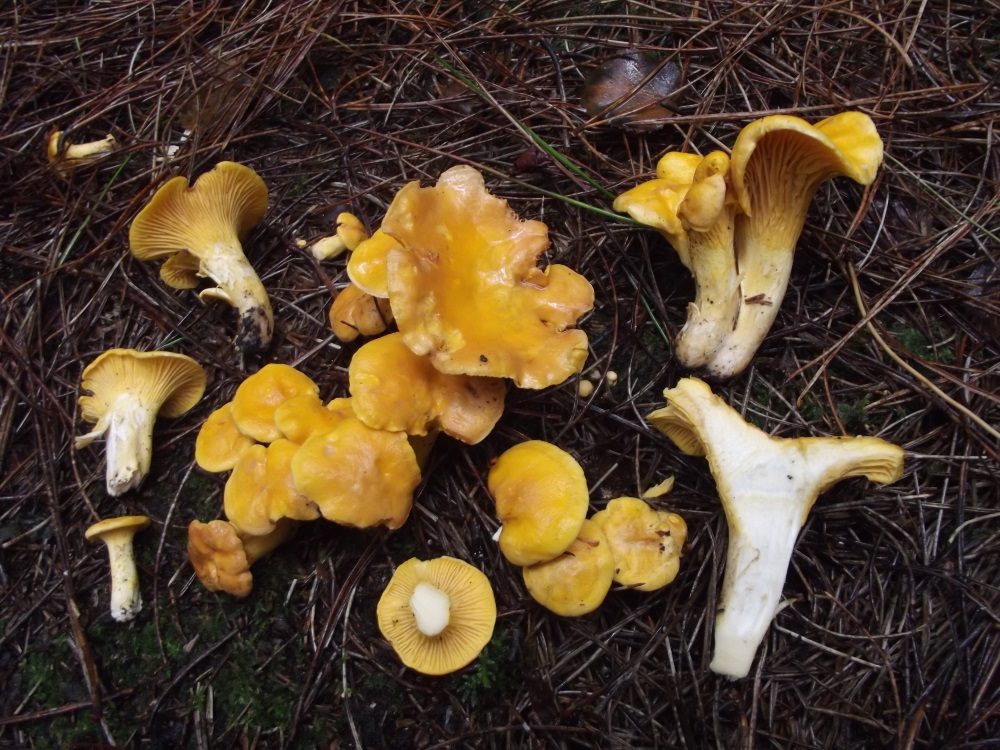
Chanterelle
Cantharellus cibarius
Egg-yolk yellow, trumpet-shaped and smelling faintly of apricots. One of the safest and finest edibles once learned.
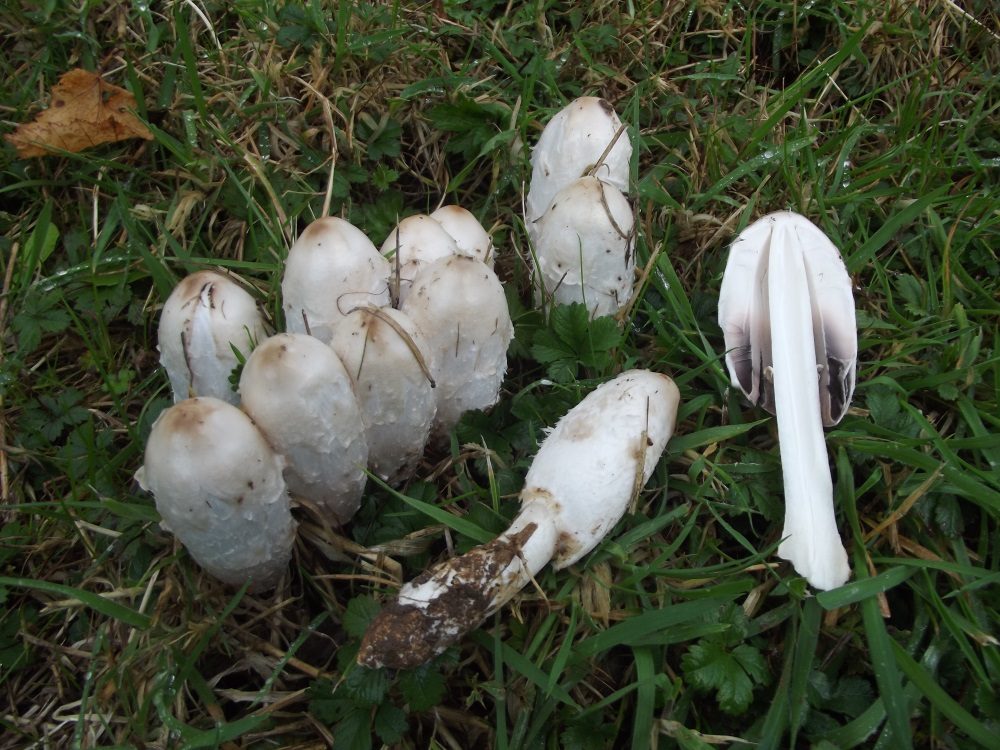
Shaggy Inkcap
Coprinus comatus
A shaggy white column that dissolves itself into black ink within a day of opening.
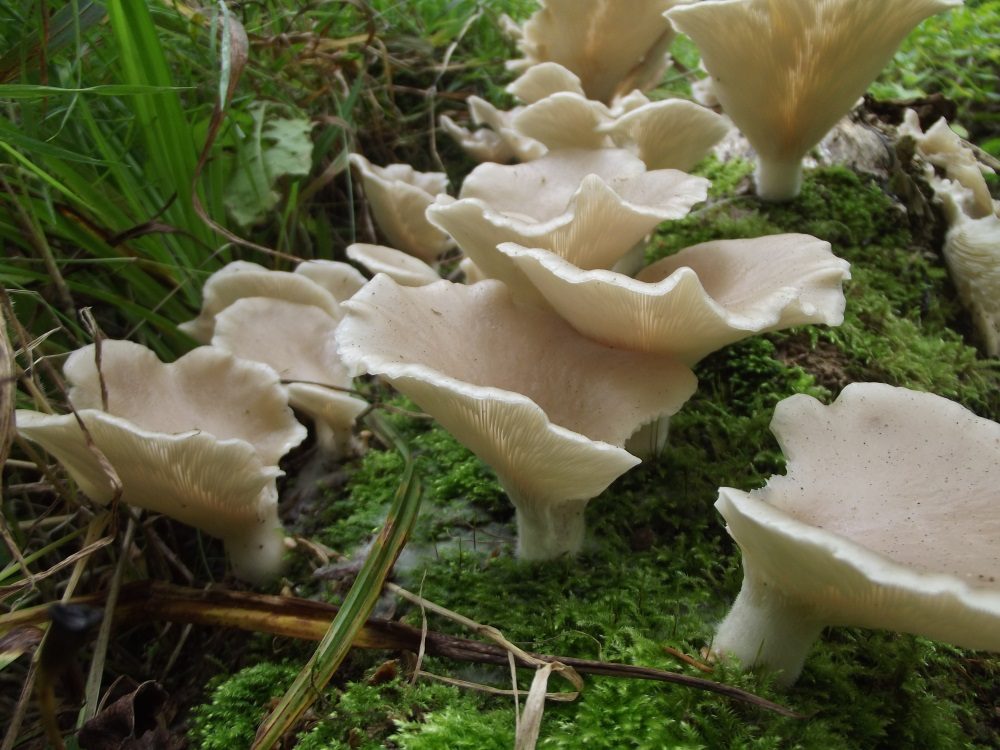
Oyster Mushroom
Pleurotus ostreatus
Shell-shaped tiers on dead broadleaf wood, often after the first cold snap.
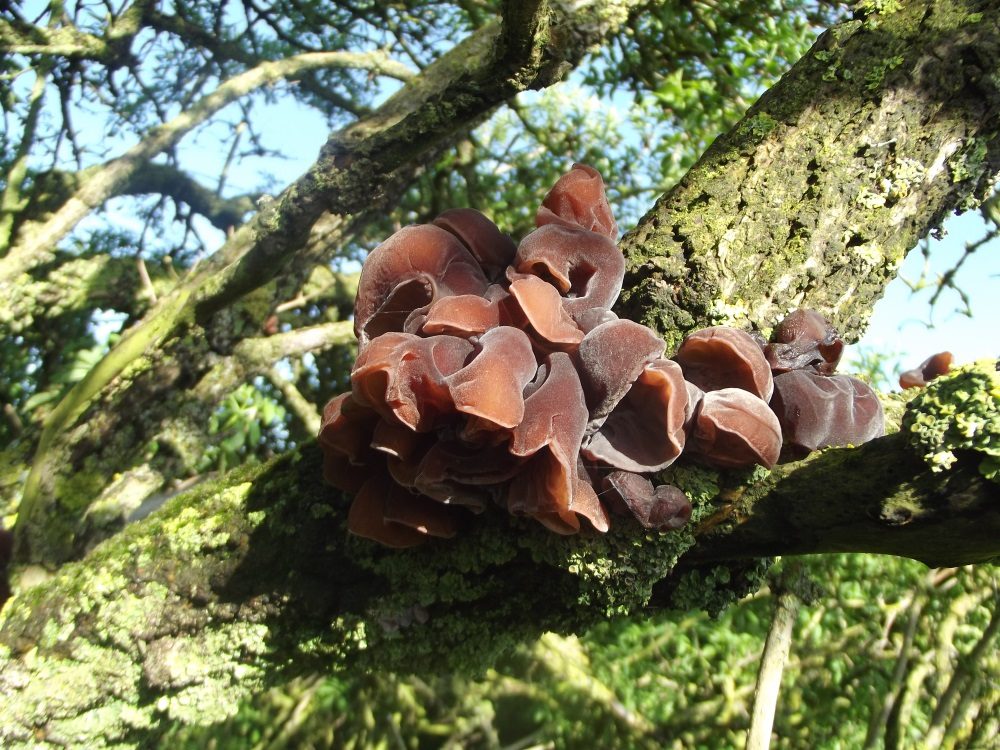
Jelly Ear
Auricularia auricula-judae
Rubbery brown ears growing on elder all year round. The same species sold dried in Chinese cookery.
Dangerous species out in June
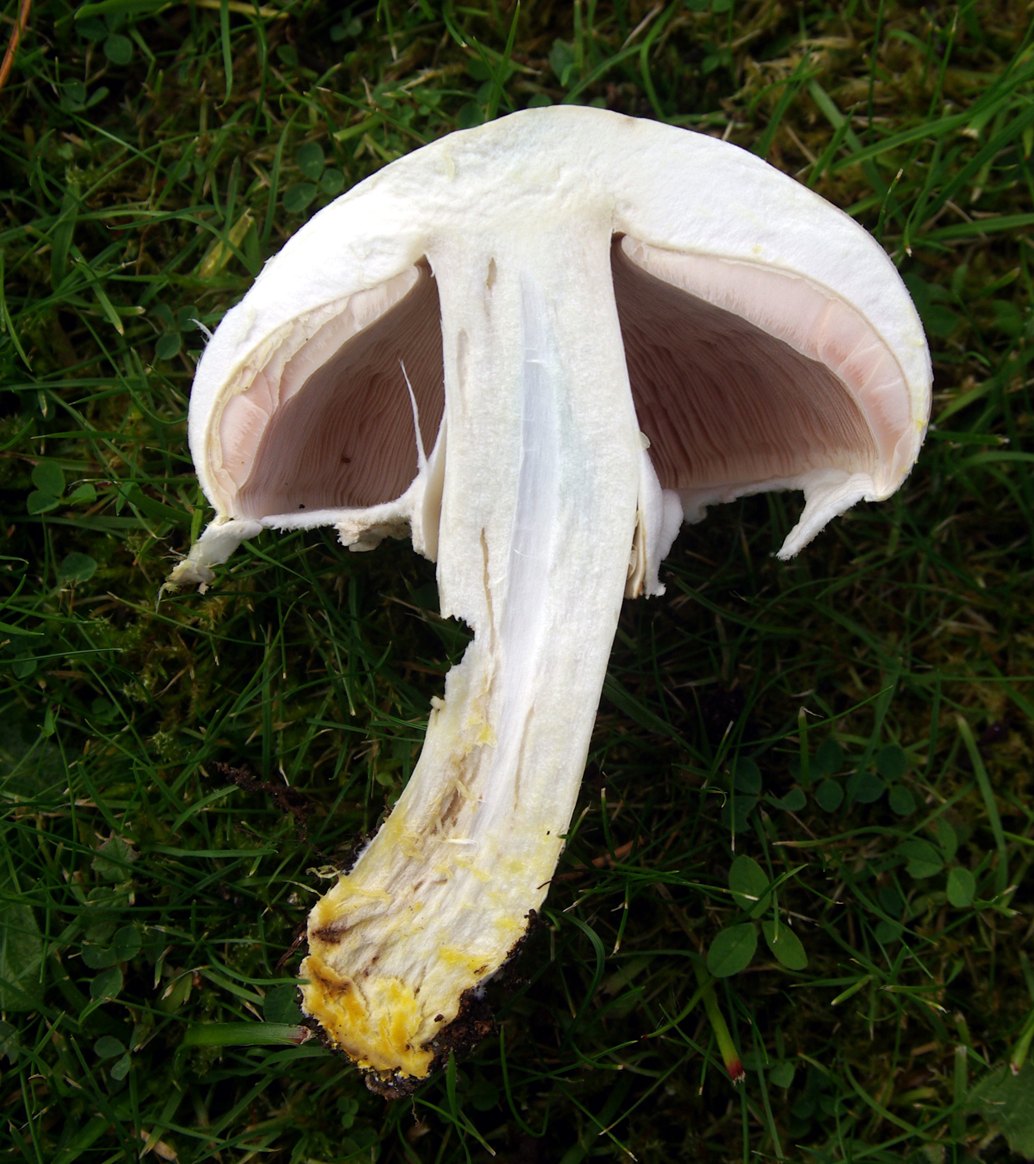
Yellow Stainer
Agaricus xanthodermus
A field-mushroom lookalike that turns bright chrome yellow when cut and makes most people ill.
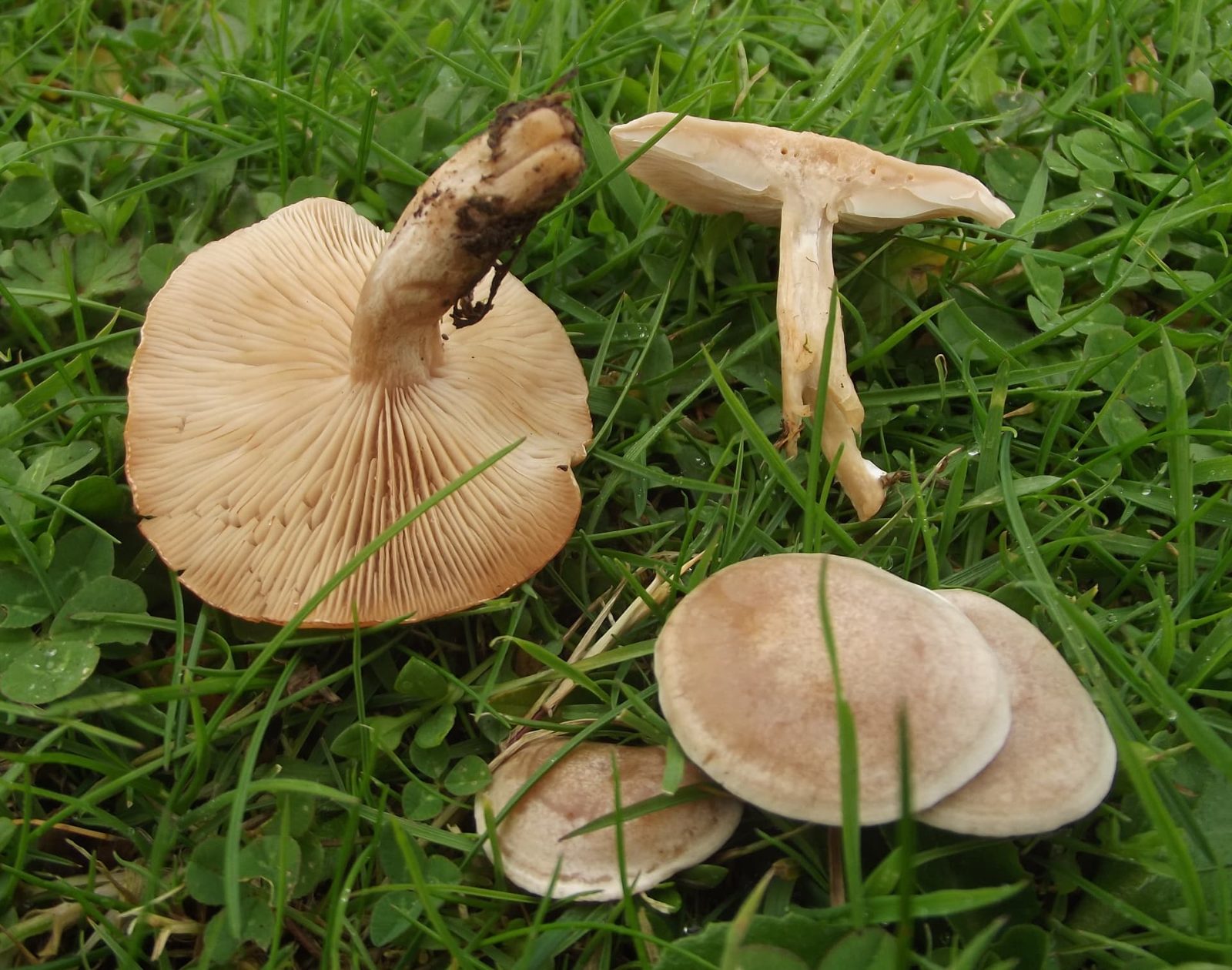
Fool's Funnel
Clitocybe rivulosa
A small pale funnel-shaped grassland mushroom; an important poisonous lookalike of edible spring species.
Sulphur Tuft
Hypholoma fasciculare
Dense sulphur-yellow clusters on stumps all year. Very common, very bitter, and toxic.
Also fruiting
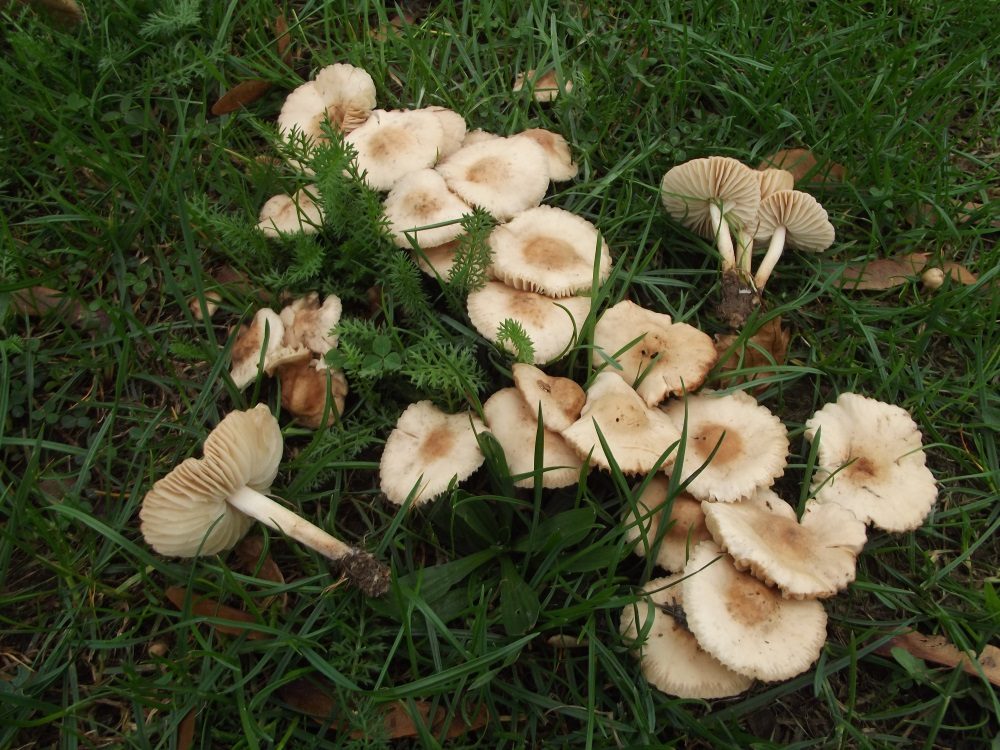
Fairy Ring Champignon
Marasmius oreades
A small grassland mushroom that can form rings or arcs. Many unrelated mushrooms also form fairy rings.
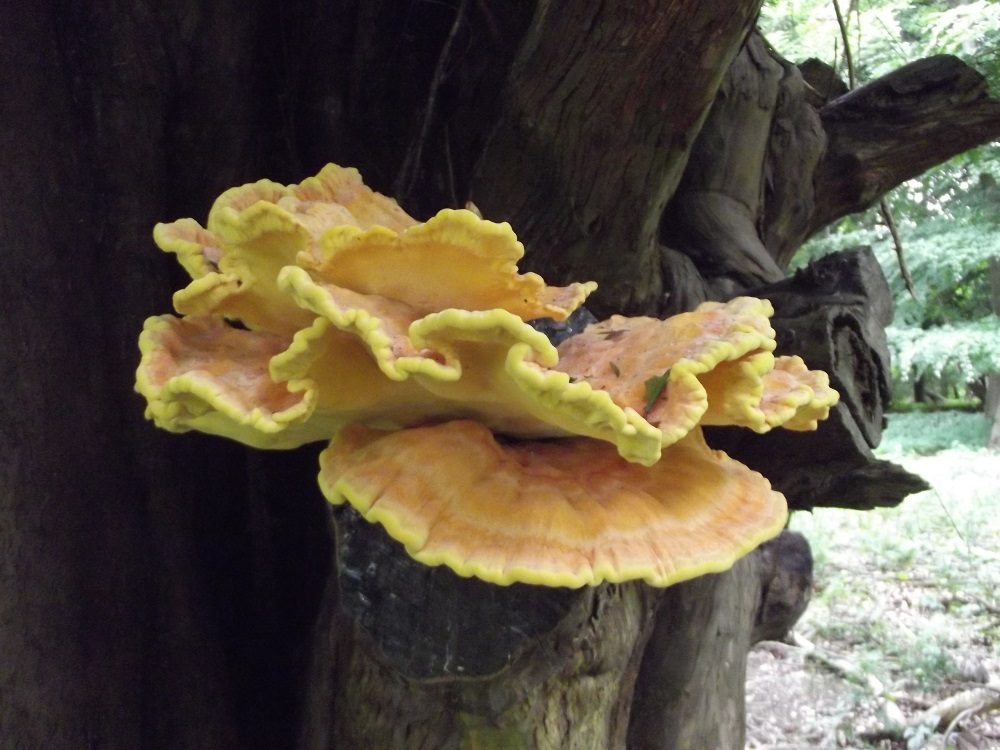
Chicken of the Woods
Laetiporus sulphureus
Vivid sulphur-yellow and orange brackets on standing trees, with a texture famously like chicken breast.
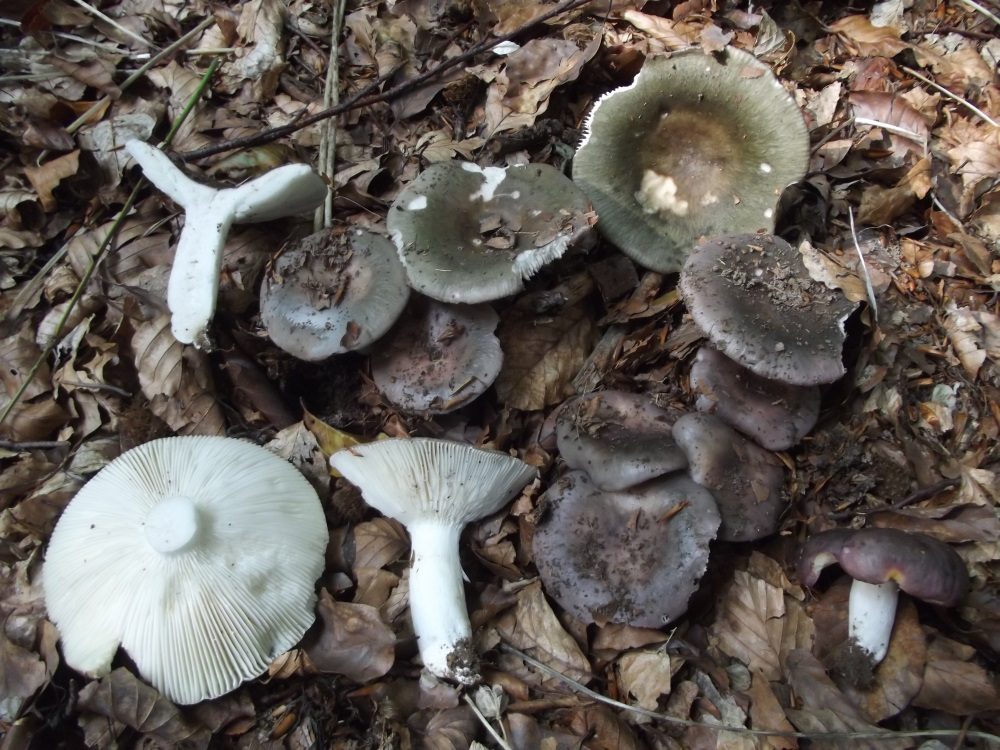
Charcoal Burner
Russula cyanoxantha
A variable-coloured woodland brittlegill; cap colour alone is not a reliable identification feature.
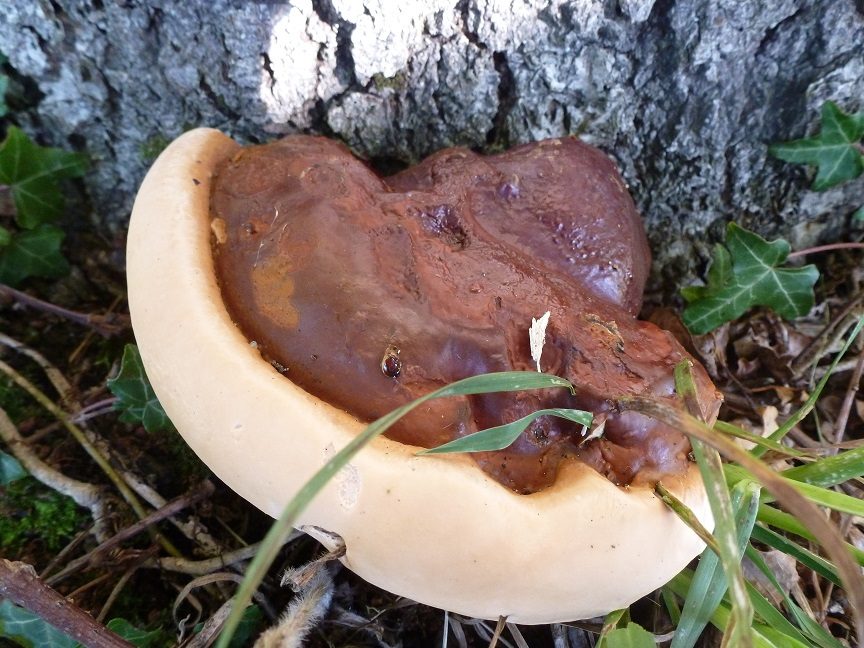
Reishi / Lacquered Bracket
Ganoderma lucidum
A glossy reddish-brown bracket fungus; species within this group need specialist identification.
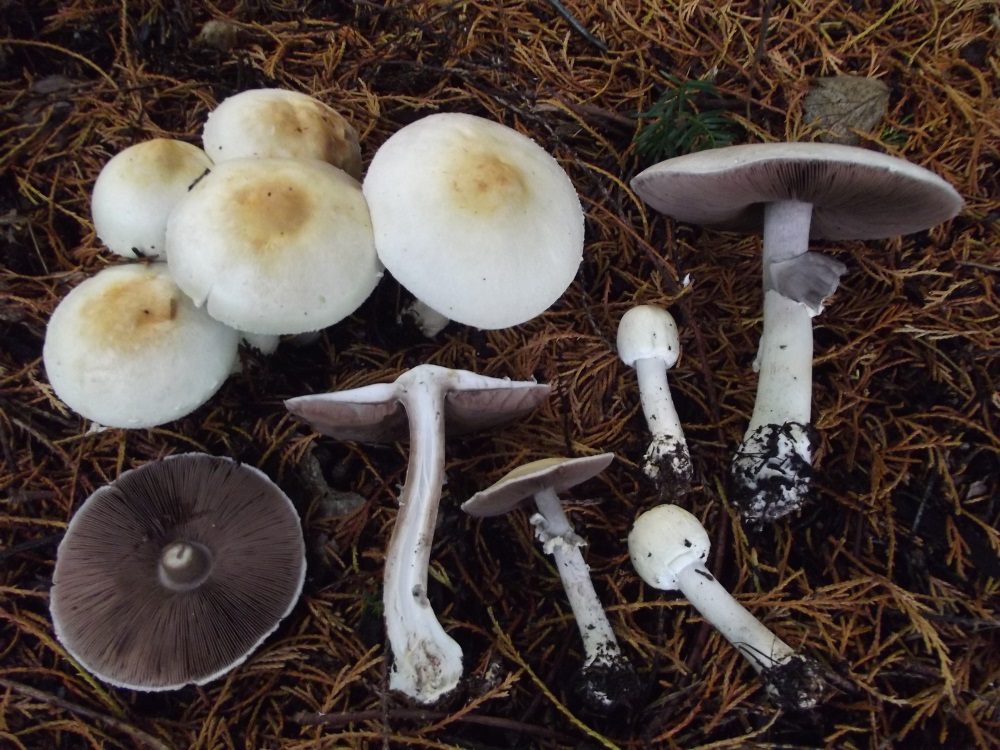
Wood Mushroom
Agaricus sylvicola
A pale woodland Agaricus that may smell of aniseed.
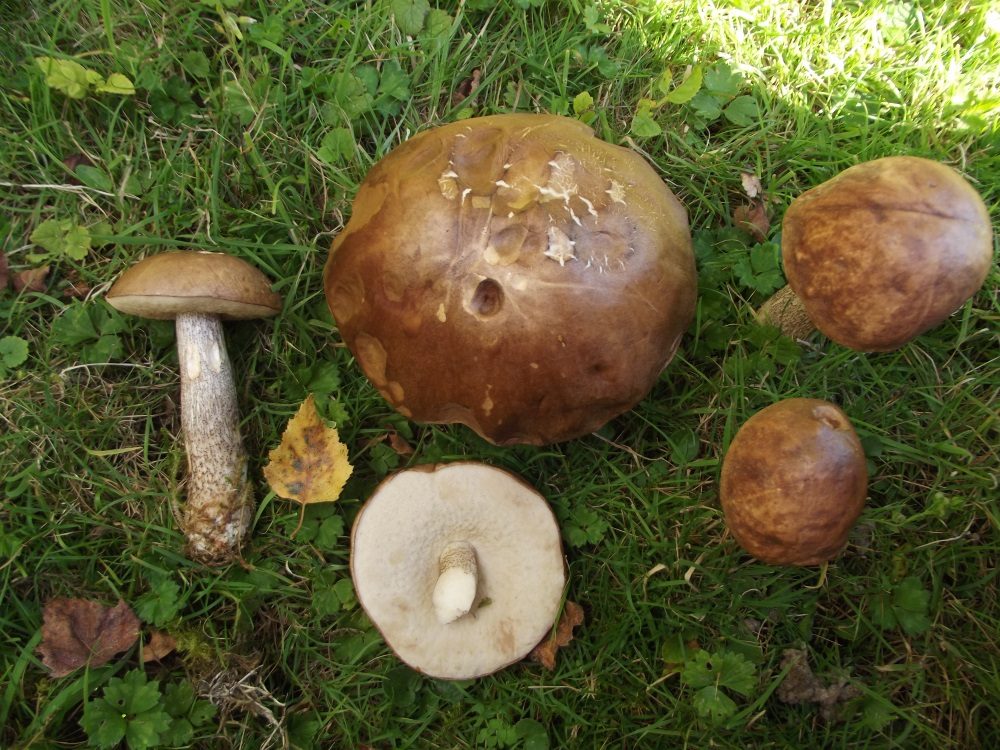
Brown Birch Bolete
Leccinum scabrum
A brown-capped bolete associated with birch, often with dark scabers on the stem.
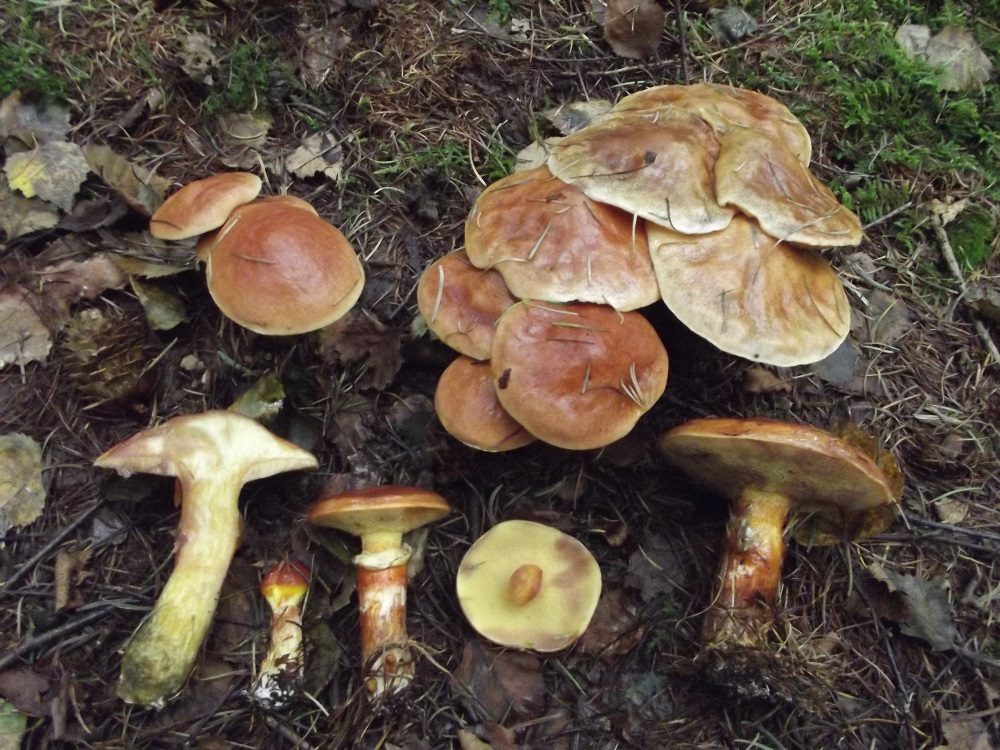
Larch Bolete
Suillus grevillei
A yellow-brown bolete associated with larch trees. The cap can be sticky in wet weather.
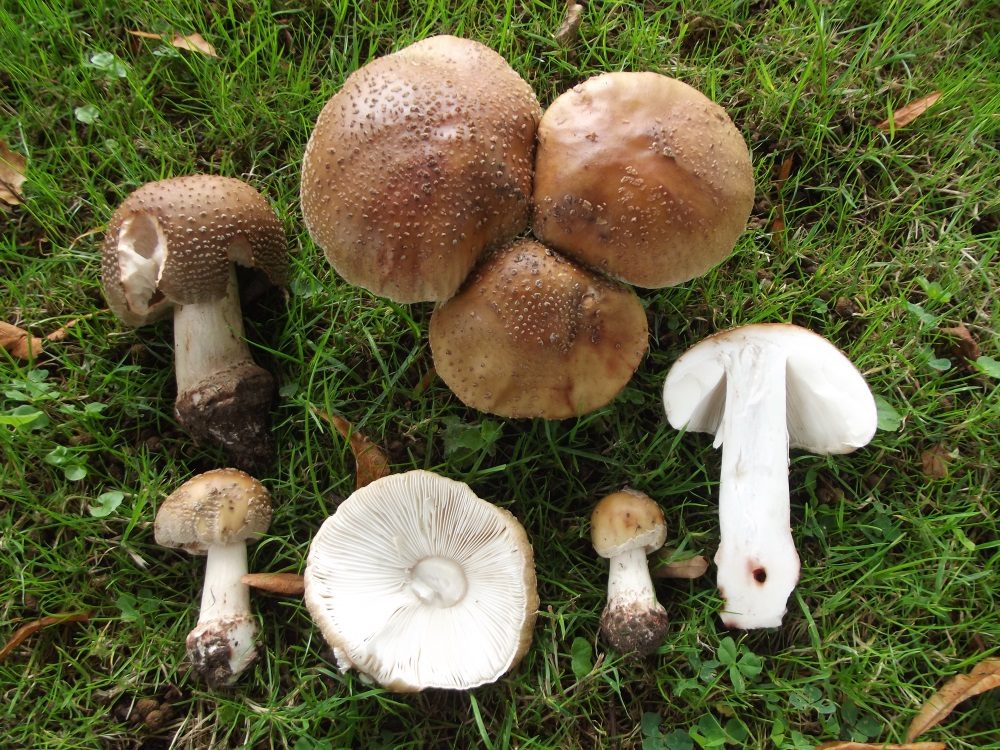
The Blusher
Amanita rubescens
An Amanita that can show reddish bruising. Identification requires a complete intact specimen.
Common Inkcap
Coprinopsis atramentaria
Edible in itself, but it causes a violent reaction with alcohol taken up to three days later.
Never eat a wild mushroom on the strength of a website alone. Some deadly species look very like good edibles. Check every feature, and get an expert opinion if there is any doubt at all.
Read the full foraging safety guidance.