Lycoperdon perlatum
A small whitish puffball with a spiny outer surface, found on woodland floors and grassland.
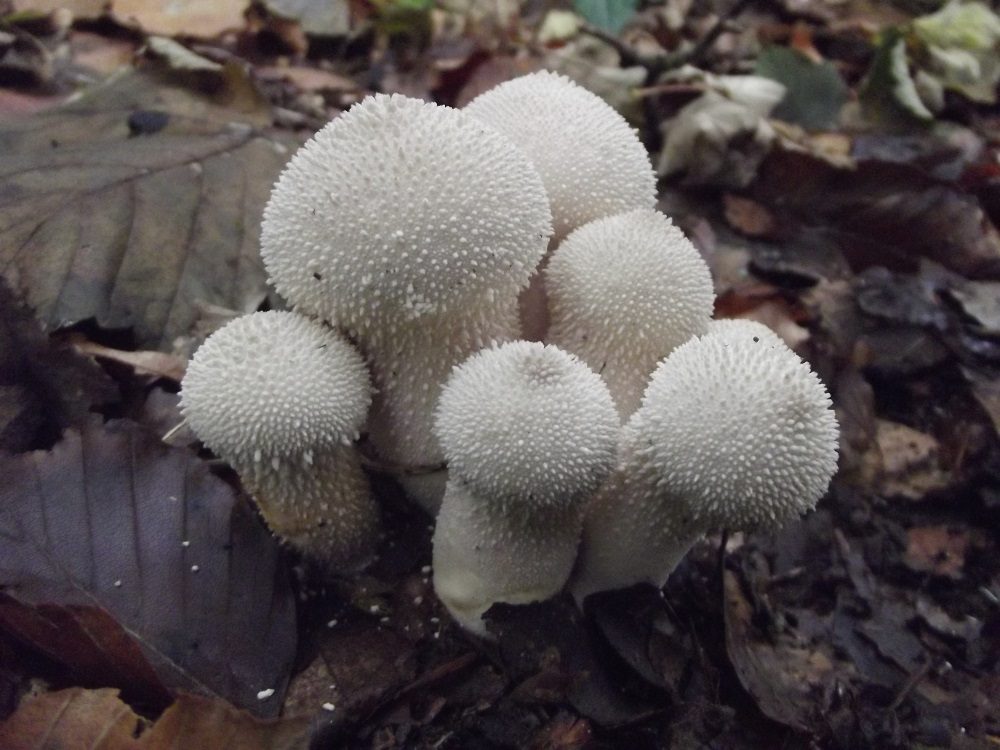
Three essential checks for Common Puffball.
Rule out these deadly or potentially life-threatening lookalikes in similar habitats:
Death Cap (Amanita phalloides)
Emerges from a white bag (volva) at the stem base - dig, do not pull
Compare: Field Mushroom vs Yellow Stainer vs Death Cap; Stinkhorn Egg vs Puffballs, Earthballs and Death Cap Buttons; False Death Cap vs Death Cap vs Destroying Angel
Edible with caution. Never identify a young puffball by its outside alone: cut lengthways and check for the outline of a developing mushroom. Do not eat if not completely sure.
Read the full foraging safety guidance.
July to November
See what else is out in July, August, September, October and November.
Common Earthball is hard and purple-black inside. Stinkhorn eggs have a layer of clear jelly under the skin. Young Amanitas in the egg stage, including the deadly Death Cap, show the outline of a tiny mushroom when sliced top to bottom. Only a puffball that is pure white all the way through is the right one.
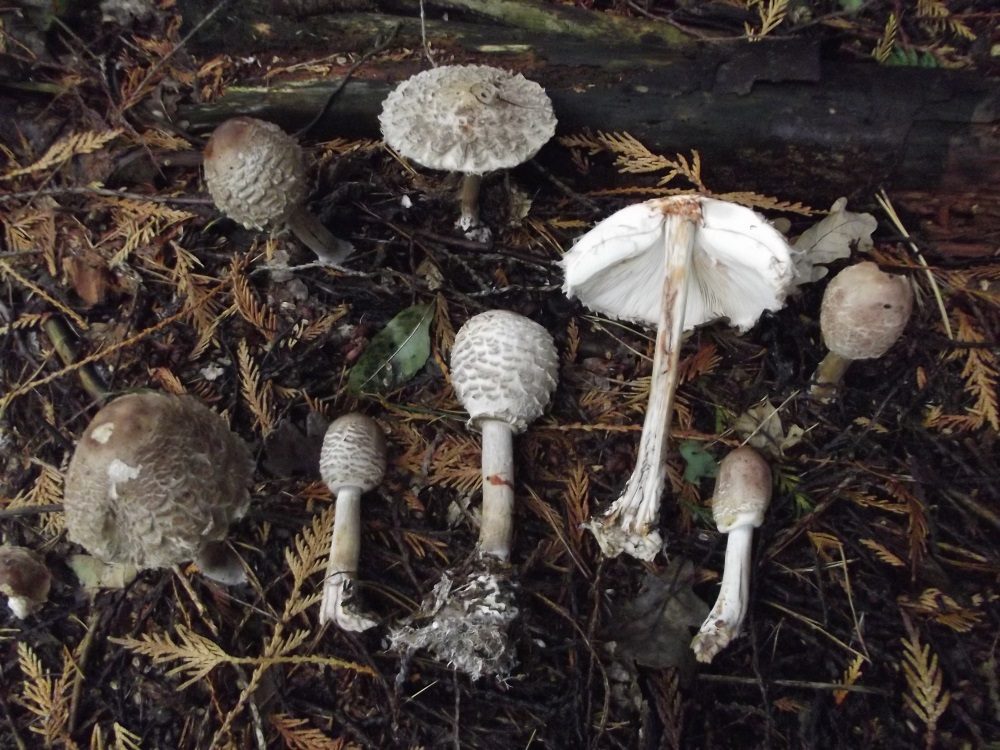
Chlorophyllum olivieri
A shaggy parasol-like mushroom in coniferous woodland. Several similar species require careful separation.
Lepista saeva
A pasture mushroom with a dull buff cap and an unmistakable violet-blue stem.
Coprinopsis atramentaria
Edible in itself, but it causes a violent reaction with alcohol taken up to three days later.