Stinkhorn Egg vs Puffballs, Earthballs and Death Cap Buttons
Before it opens, a Stinkhorn is a soft white "egg" half-buried in leaf litter. Puffballs, the Common Earthball and a young Death Cap still inside its white bag can all look much the same from above. One is a good edible, one is poisonous and one can kill. The only reliable check is to cut each one in half from top to bottom and look inside.
The test that decides it
Never pick or eat a white "egg" or "puffball" without cutting it in half from top to bottom first. Pure white all the way through suggests a puffball. Jelly means a stinkhorn, purple-black means an earthball, and any outline of a mushroom means an Amanita, which could be a Death Cap. If you see any outline at all, throw it away and wash your hands.
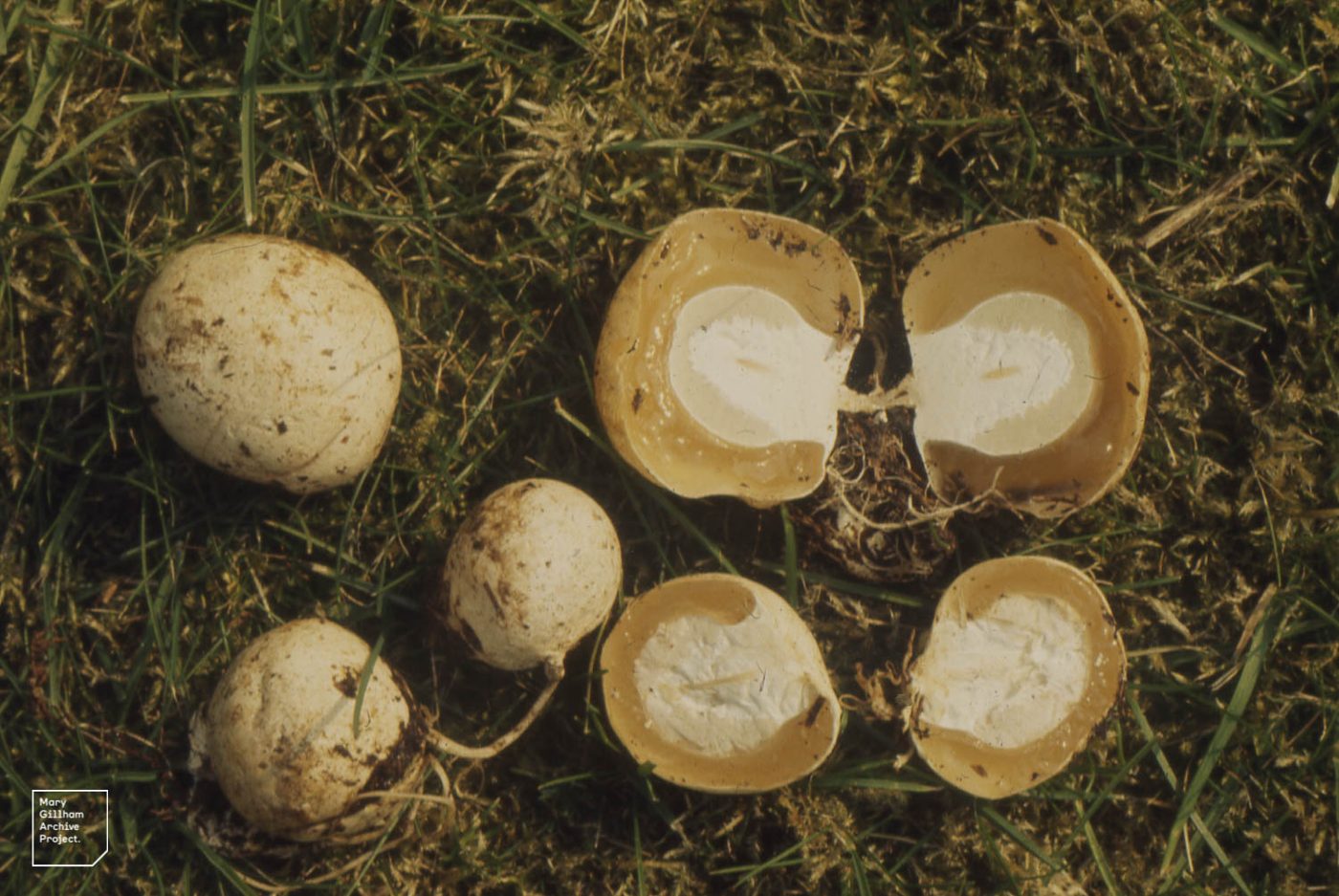
Stinkhorn (egg)
Phallus impudicus
- Soft, rubbery white egg joined to the ground by a white cord
- Cut in half: a layer of clear jelly around a dark olive layer and a white core
- Often near open stinkhorns that smell of rotting meat
- Not recommended to eat
Full species guide →
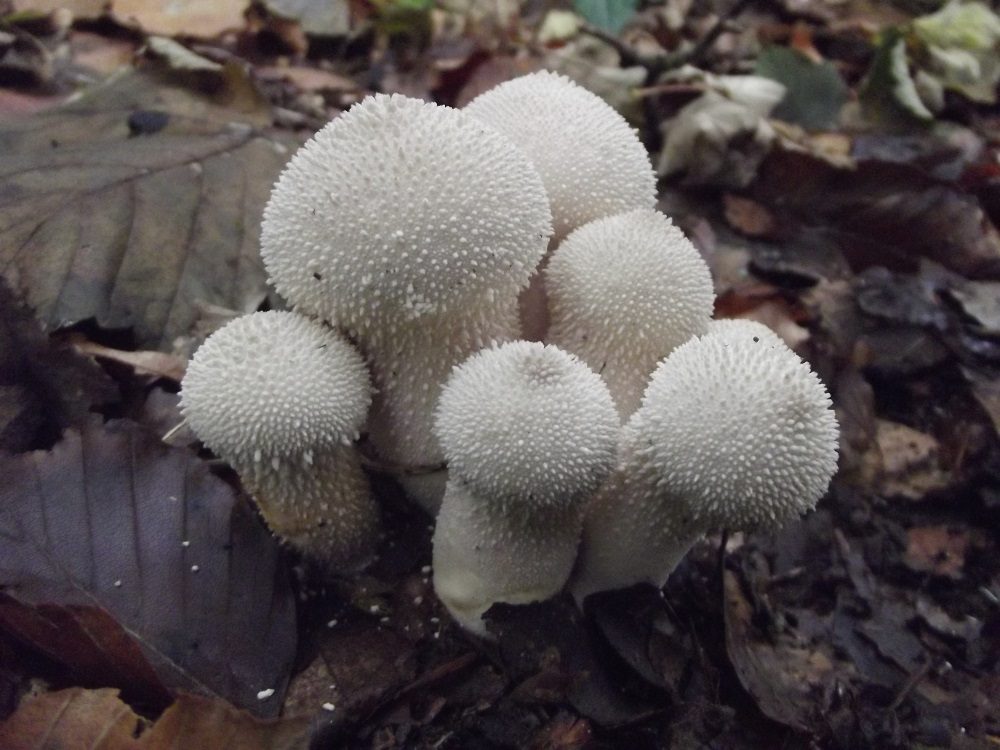
Common Puffball
Lycoperdon perlatum
- Covered in tiny spines or warts that rub off
- Cut in half: pure white and even all the way through, like marshmallow
- No jelly, no outline of a mushroom inside
- Edible only while pure white inside
Full species guide →
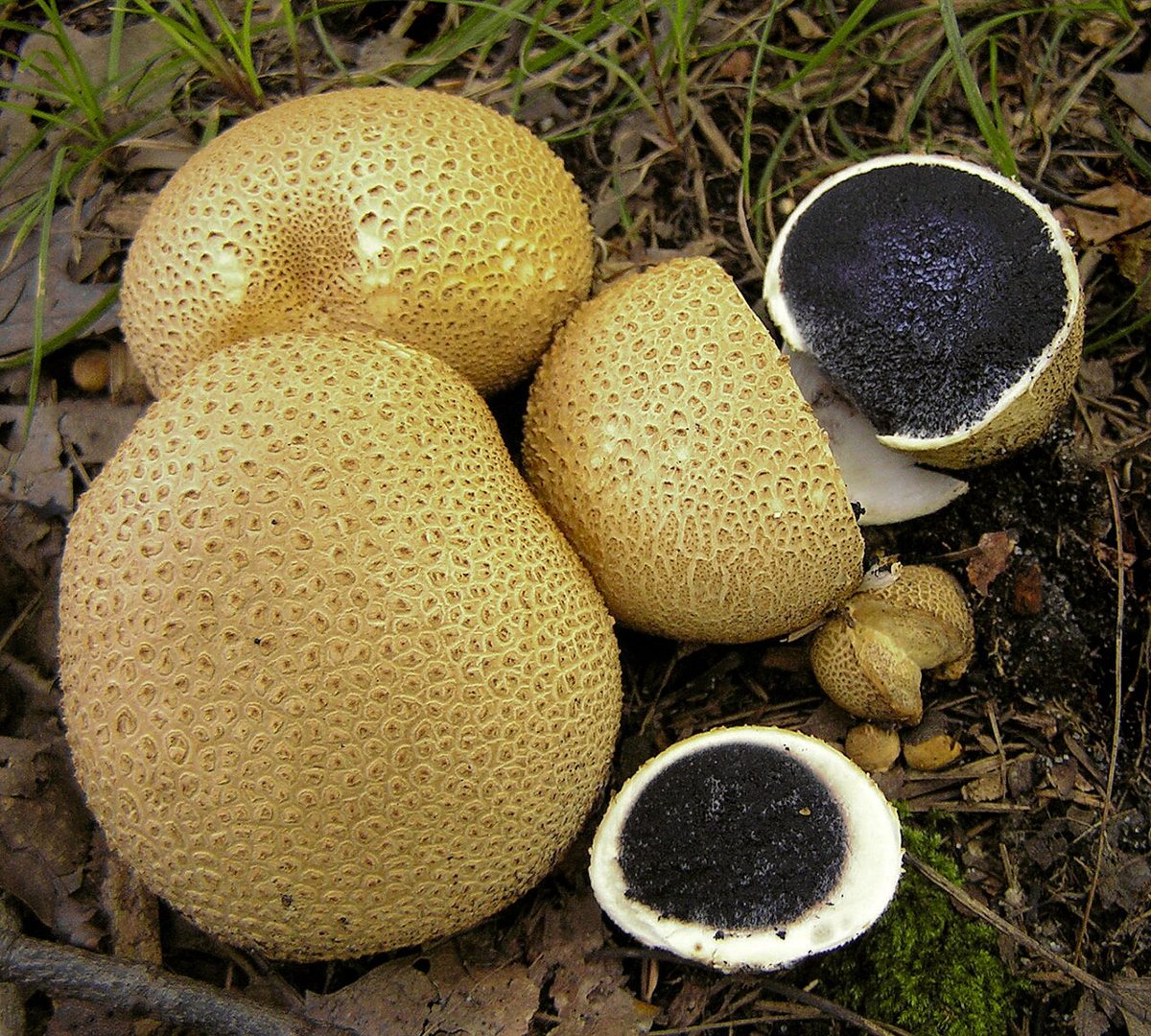
Common Earthball
Scleroderma citrinum
- Yellowish-brown with a thick, tough, scaly skin
- Hard and firm to squeeze
- Cut in half: purple-black inside, marbled with white
- Poisonous
Full species guide →
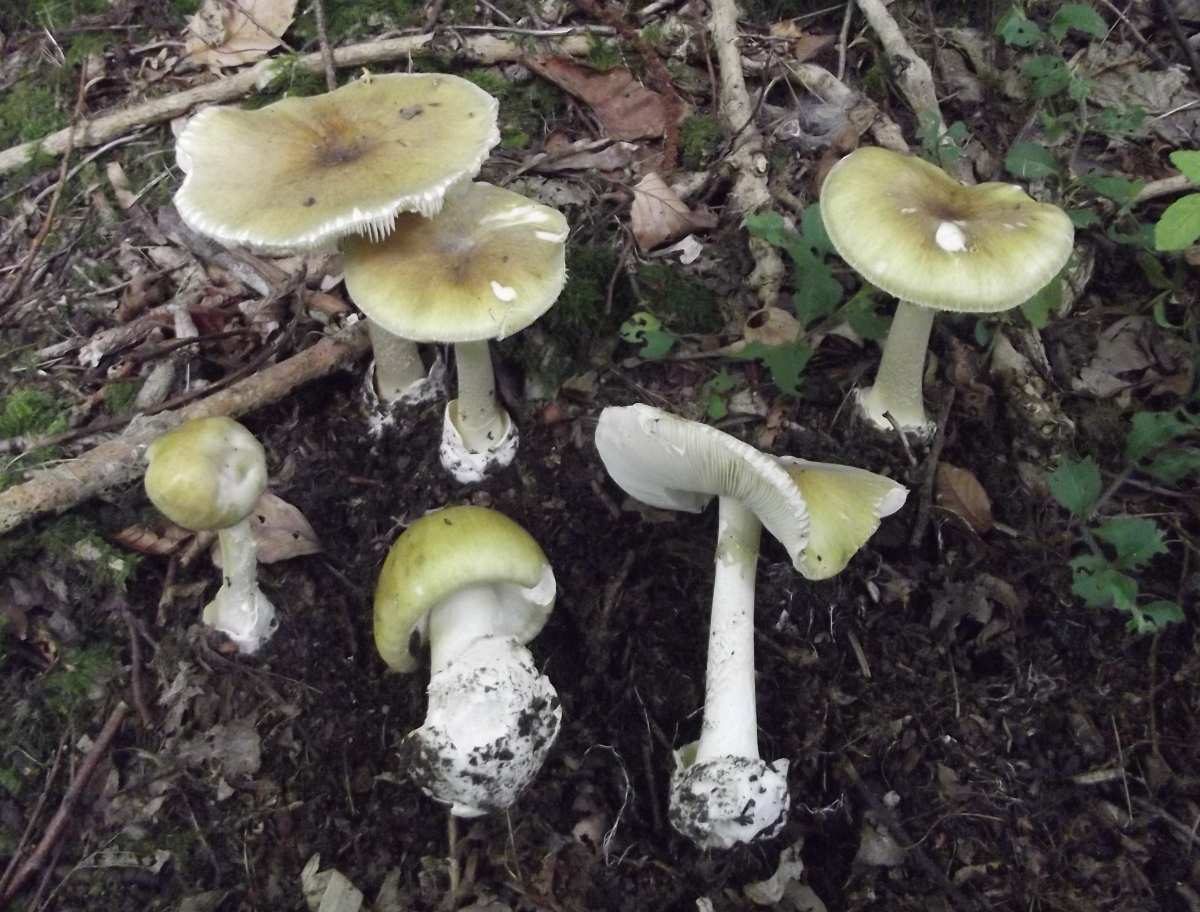
Death Cap (button)
Amanita phalloides
- Smooth white egg inside a cup-like bag
- Cut in half: the outline of a tiny mushroom with cap, gills and stem
- Under oak and beech
- Deadly: one cap can kill
Full species guide →
Feature by feature
| Feature | Stinkhorn (egg) | Common Puffball | Common Earthball | Death Cap (button) |
|---|---|---|---|---|
| Outside | White to off-white, soft, with a white cord at the base | White, covered in small spines or warts | Yellowish-brown, thick scaly skin | Smooth and white, in a cup-like bag |
| Feel | Jelly-like and wobbly | Soft and spongy | Hard and firm | Firm |
| Cut top to bottom | Clear jelly around a dark olive layer and white core | Pure white and even throughout | Purple-black, marbled with white | Outline of a tiny mushroom: cap, gills and stem |
| Smell | Mild; open stinkhorns nearby smell of rotting meat | Pleasant, mushroomy | Unpleasant, rubbery | Faint; sickly-sweet when older |
| Where | Woodland and woodchip, from summer to late autumn | Woodland floors and paths, in groups | Acid soil under birch and oak | Under oak and beech |
Never eat a wild mushroom on the strength of a website alone. Some deadly species look very like good edibles. Check every feature, and get an expert opinion if there is any doubt at all.
Read the full foraging safety guidance.
Common questions
- Can you eat stinkhorn eggs?
- They are eaten in parts of Europe and some UK guides list them as edible, but we do not recommend it. From the outside they look exactly like a Death Cap button, and the jelly is the only easy clue.
- Why must I cut puffballs top to bottom?
- A slice across the middle can miss the outline of a young Amanita. Cutting from top to bottom shows the cap, gills and stem if they are there.
- What should I do if someone has eaten a Death Cap?
- Call NHS 111 or 999 straight away, even if they feel well: symptoms can take 6 to 24 hours to start. Keep a sample of the mushroom.
Checked against
- Woodland Trust: Stinkhorn
- Wild Food UK: Stinkhorn
- First Nature: Phallus impudicus
- NHS guidance on mushroom poisoning
- Index Fungorum / Species Fungorum current names