Suillus grevillei
A yellow-brown bolete associated with larch trees. The cap can be sticky in wet weather.
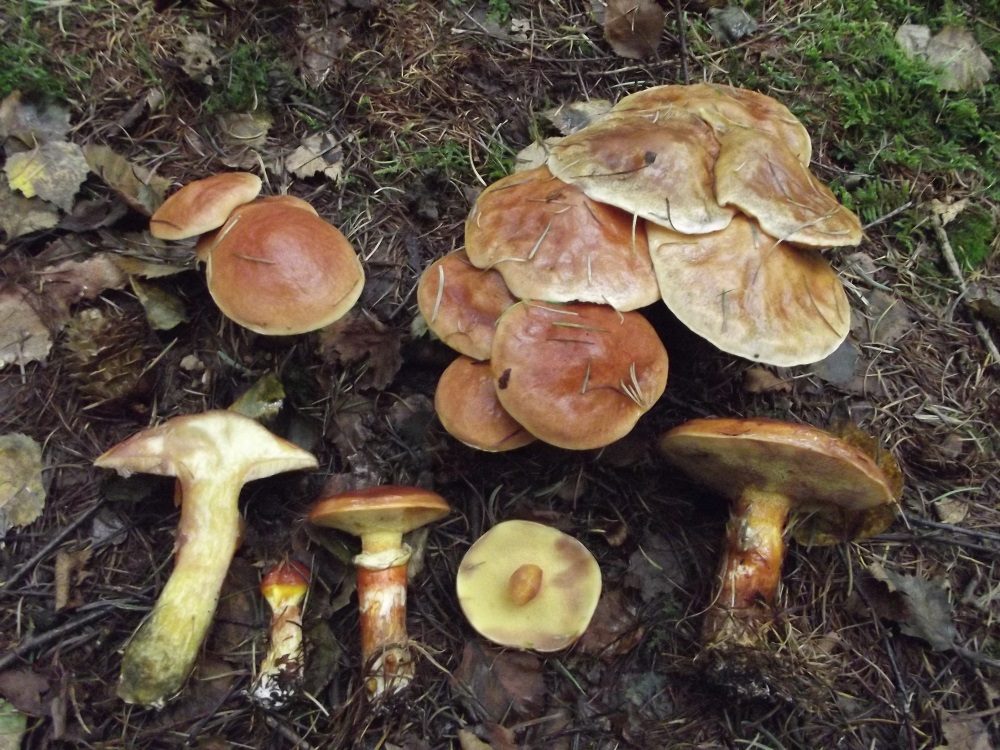
Three essential checks for Larch Bolete.
No deadly species is named in this guide's linked comparisons. Other lookalikes still need checking: Slippery Jack has a similar ring and slimy cap but is chestnut-brown, with a purplish ring, and grows under pine rather than larch. Cow Bolete is buff to orange-brown with no ring. Weeping Bolete (Suillus granulatus) has no ring and grows under pine.
Edible with caution. Confirm the host tree, pores and stem with an experienced identifier; some people react to Suillus species.
Read the full foraging safety guidance.
June to November
See what else is out in June, July, August, September, October and November.
Slippery Jack has a similar ring and slimy cap but is chestnut-brown, with a purplish ring, and grows under pine rather than larch. Cow Bolete is buff to orange-brown with no ring. Weeping Bolete (Suillus granulatus) has no ring and grows under pine.
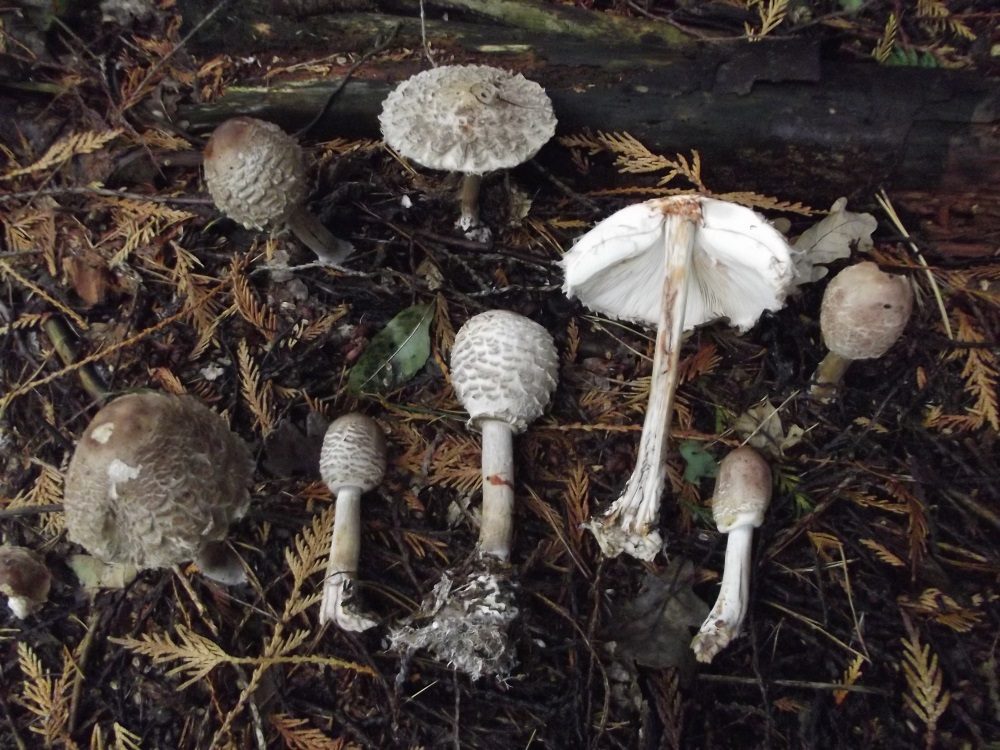
Chlorophyllum olivieri
A shaggy parasol-like mushroom in coniferous woodland. Several similar species require careful separation.
Lepista saeva
A pasture mushroom with a dull buff cap and an unmistakable violet-blue stem.
Coprinopsis atramentaria
Edible in itself, but it causes a violent reaction with alcohol taken up to three days later.