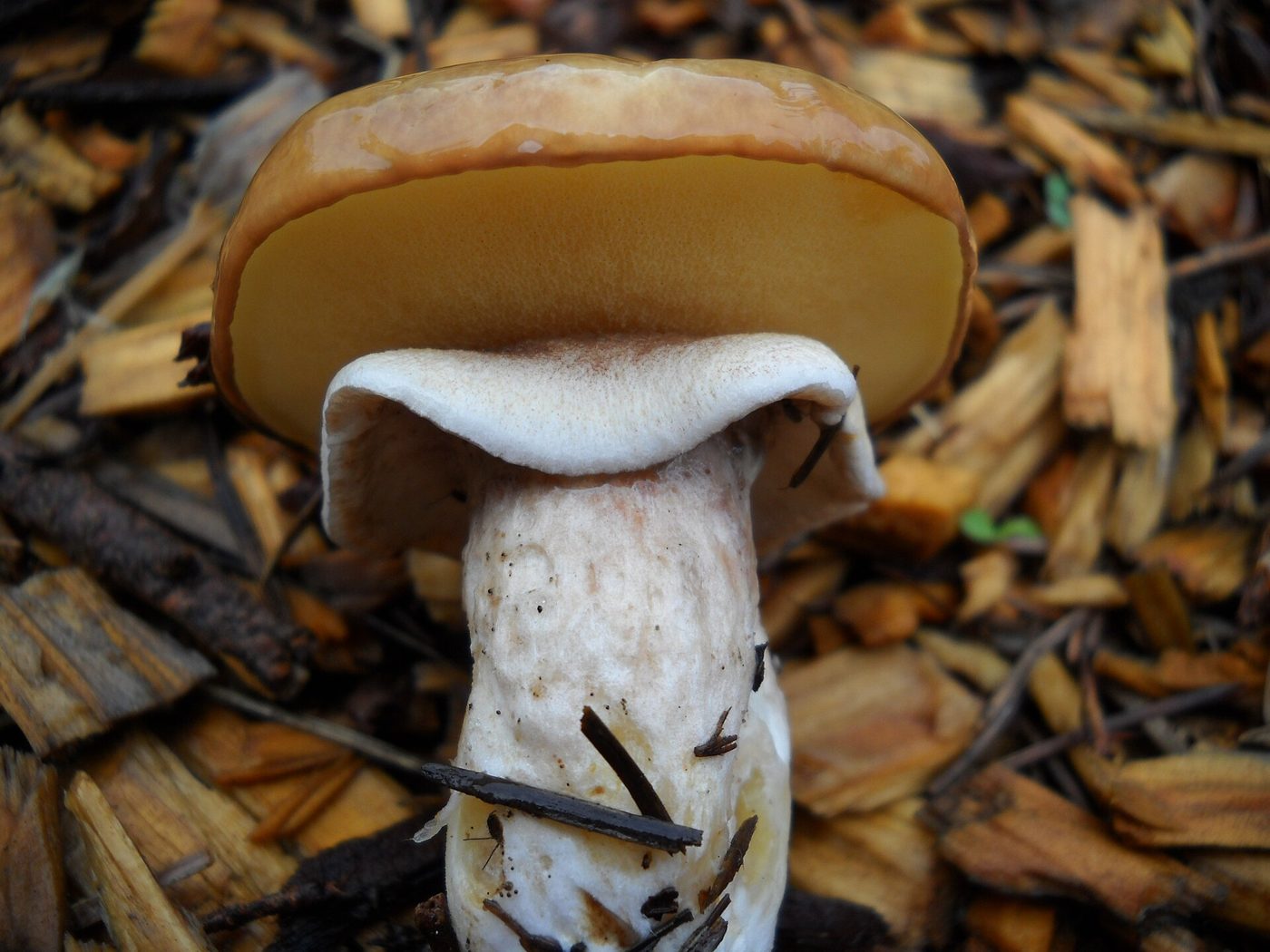
Suillus luteus · Suillaceae
Also called Sticky Bun
A chestnut-brown bolete with a cap like wet glue, yellow pores and a big floppy ring on the stem, found only under pines in late summer and autumn. A popular edible once the slimy skin is peeled off, though it disagrees with some people.
Edible with caution. Edible with care. Always peel off the slimy cap skin, which upsets some people's stomachs, and remove the spongy pores from older caps. A few people react to it even when peeled, so try a small amount first. Handling it can cause a skin rash in sensitive people.
Read the full foraging safety guidance.
August to November
See what else is out in August, September, October and November.
Larch Bolete (Suillus grevillei) also has a ring and a slimy cap, but it is bright yellow to orange and grows only under larch. Cow Bolete (Suillus bovinus) grows under pine too but has no ring, a buff to orange-brown cap and large, angular pores. Weeping Bolete (Suillus granulatus) has no ring and its young pores weep milky droplets. Bay Bolete has a dry, velvety cap, no ring, and pores that bruise blue. No British bolete is known to be deadly, but always check every feature.
Peel the cap, remove soggy pores, then slice and fry until any moisture has cooked off. Best young; good dried and in soups and stews.
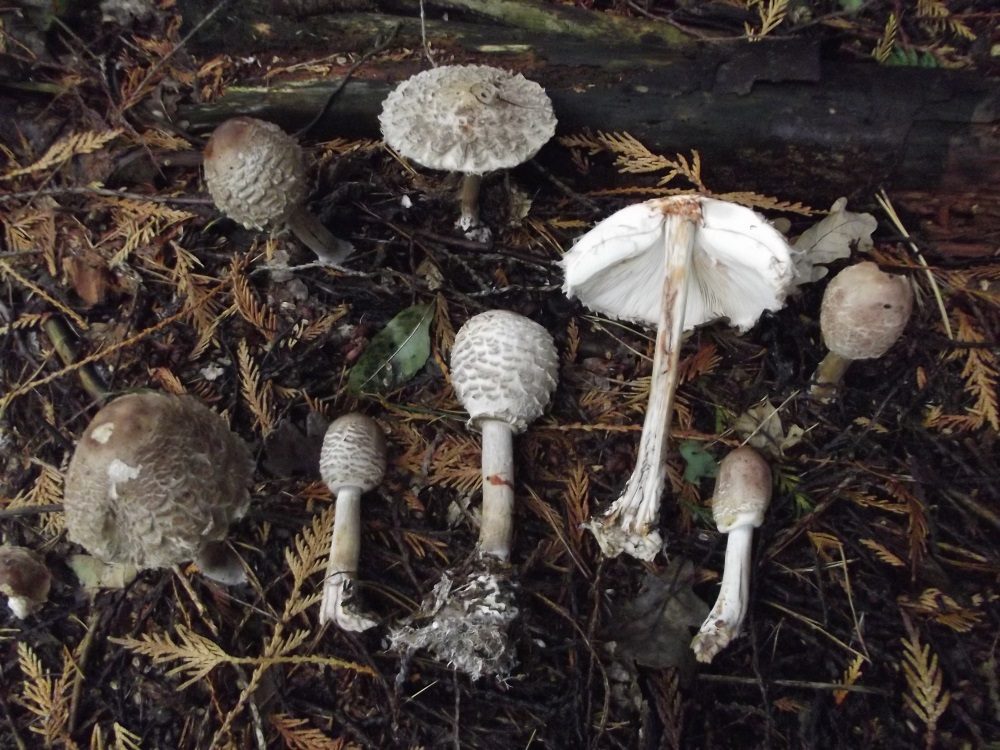
Chlorophyllum olivieri
A shaggy parasol-like mushroom in coniferous woodland. Several similar species require careful separation.
Lepista saeva
A pasture mushroom with a dull buff cap and an unmistakable violet-blue stem.
Coprinopsis atramentaria
Edible in itself, but it causes a violent reaction with alcohol taken up to three days later.