Slippery Jack vs Larch Bolete vs Cow Bolete
Three slimy-capped boletes grow in British conifer woods in autumn. None is dangerous, but they differ in how good they are to eat and how they should be prepared. Two checks sort them out quickly: is there a ring on the stem, and which tree is it growing under?
The test that decides it
Look at the stem and the tree. A purplish-brown ring under pine is a Slippery Jack. A ring under larch with a bright yellow-orange cap is a Larch Bolete. No ring at all, with big angular pores, is a Cow Bolete. Whichever you have, peel the slimy skin before cooking and try a small amount first.
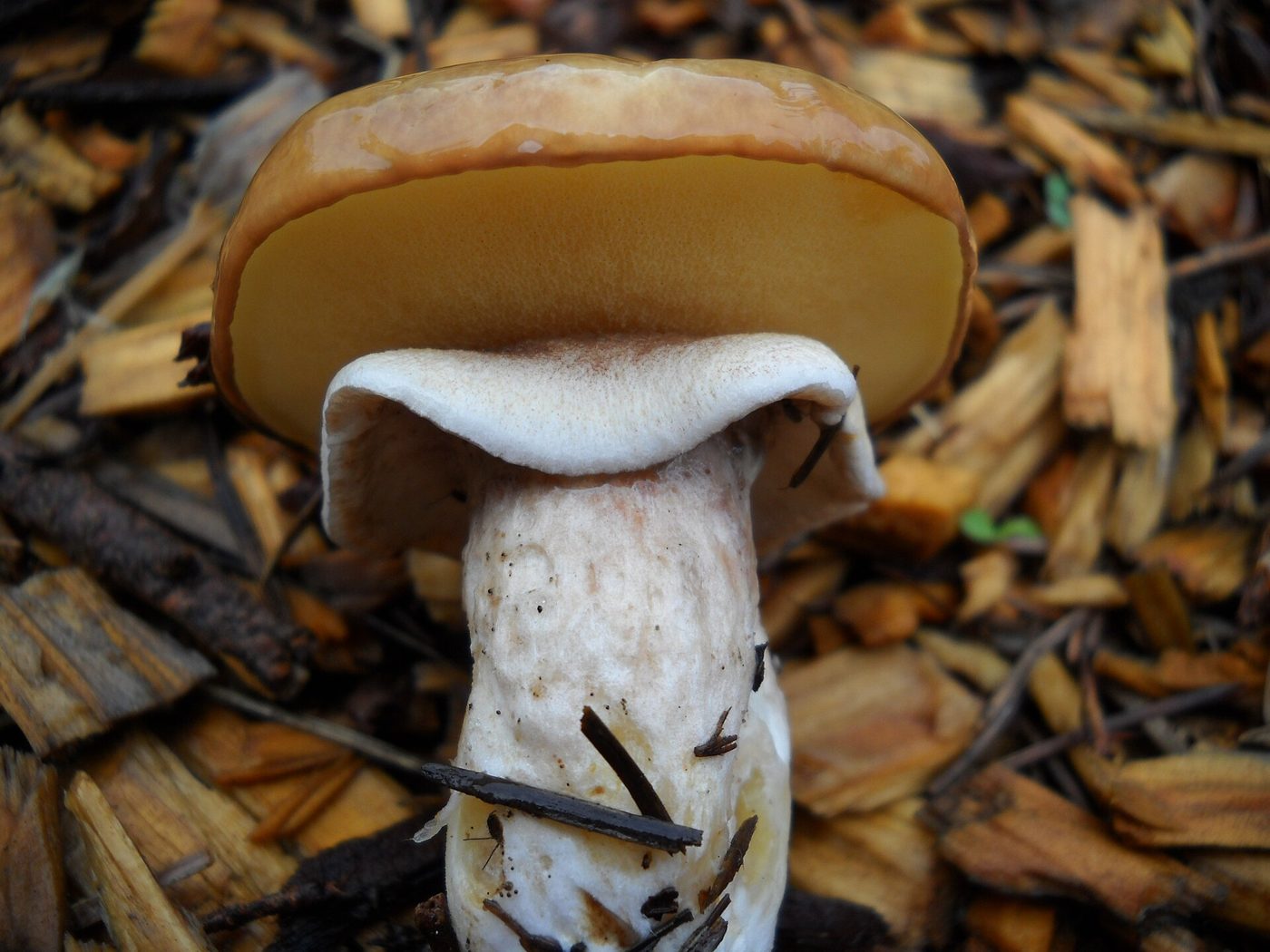
Slippery Jack
Suillus luteus
- Chestnut to chocolate-brown, very slimy cap
- Large, floppy ring that turns purplish-brown underneath
- Small yellow pores
- Only under pine
- Edible once the slimy skin is peeled
Full species guide →
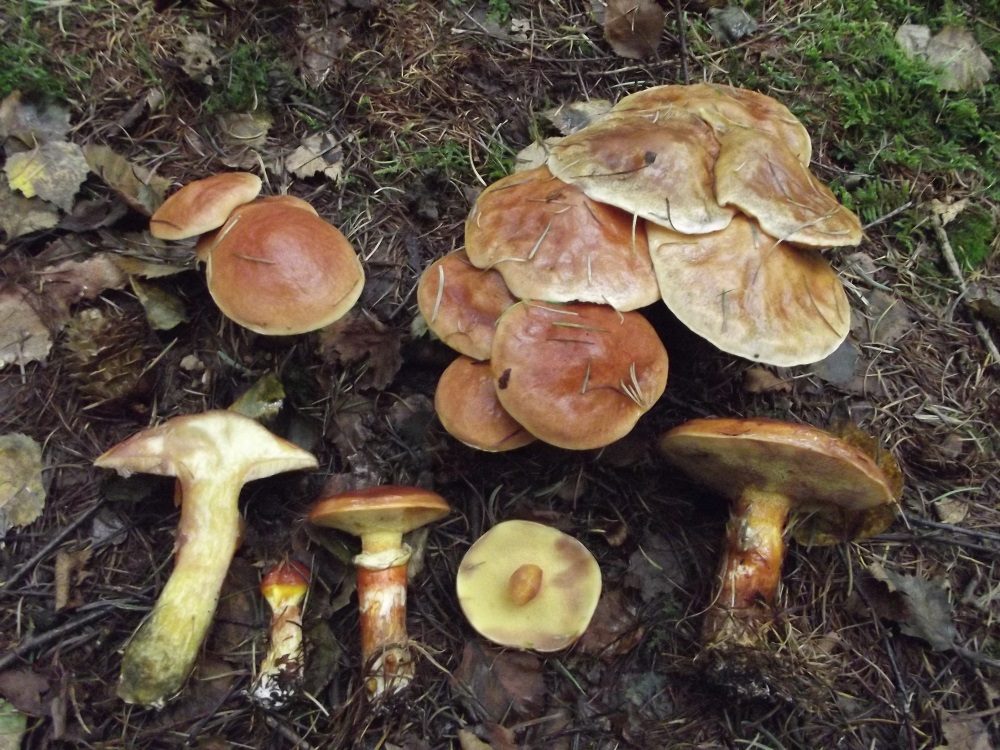
Larch Bolete
Suillus grevillei
- Bright yellow to orange, slimy cap
- Whitish to yellow ring on the stem
- Yellow pores, browning when bruised
- Only under larch
- Edible once the slimy skin is peeled
Full species guide →
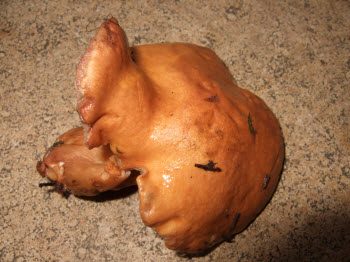
Cow Bolete
Suillus bovinus
- Buff to orange-brown cap, sticky when wet
- No ring on the stem
- Large, angular, olive-yellow pores
- Under pine, often on heaths
- Rubbery and bland; edible but not highly rated
Full species guide →
Feature by feature
| Feature | Slippery Jack | Larch Bolete | Cow Bolete |
|---|---|---|---|
| Cap | Chestnut to chocolate-brown, very slimy | Bright yellow to orange, slimy | Buff to orange-brown, sticky |
| Ring | Large and floppy, purplish-brown underneath | Whitish to yellow | None |
| Pores | Small, yellow | Small, yellow, bruising brown | Large and angular, olive-yellow |
| Tree | Pine | Larch | Pine |
| Season | August to November | June to November | August to November |
Never eat a wild mushroom on the strength of a website alone. Some deadly species look very like good edibles. Check every feature, and get an expert opinion if there is any doubt at all.
Read the full foraging safety guidance.
Common questions
- Do I have to peel Slippery Jacks?
- Yes. The slimy skin causes stomach upsets in some people and makes the dish gluey. Peel it in the woods, where it comes off most easily.
- Are there any deadly lookalikes?
- No British bolete is known to be deadly, but the slimy-capped boletes upset some people, so try a small amount first.
- Why does it matter which tree it grows under?
- These boletes partner with particular trees: Slippery Jack and Cow Bolete with pine, Larch Bolete only with larch. The tree is one of the quickest clues.
Checked against
- First Nature: Suillus luteus
- Wild Food UK: Slippery Jack
- Index Fungorum / Species Fungorum current names