Amanita citrina · Amanitaceae
Also called Citron Amanita, False Deathcap
A common pale lemon-yellow or white Amanita of beech, oak and pine woods, with a ring, white gills and a big rounded bulb at the base. It is not deadly, but it is a close relative of the Death Cap and easy to mix up with it, so it should never be picked for the table.
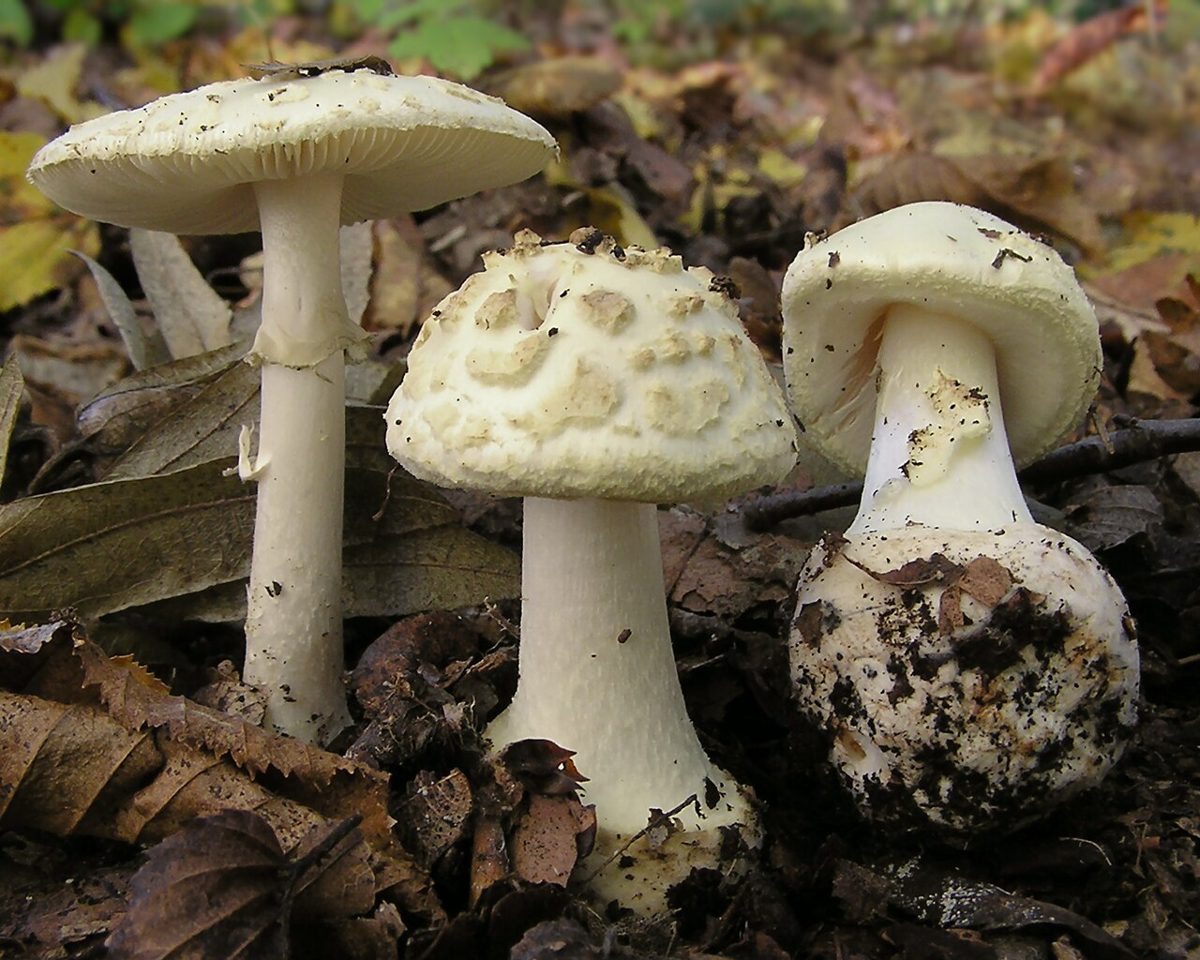
Inedible. Not edible. It is not one of the deadly species, but it contains bufotenine, tastes unpleasant, and is so similar to the Death Cap that eating it would mean risking a fatal mistake. Learn it to recognise it, not to eat it.
Read the full foraging safety guidance.
July to November
See what else is out in July, August, September, October and November.
Death Cap (Amanita phalloides) is deadly: its cap is usually olive-green and streaky, the base is a loose, floppy white bag (volva) rather than a rimmed bulb, and it smells sickly-sweet with age rather than of potato. Destroying Angel is pure white all over with a bag at the base and can be confused with the white form of False Death Cap. The Blusher and Panther Cap are brownish with warts on the cap. Telling these apart takes experience: treat every pale Amanita as potentially deadly.
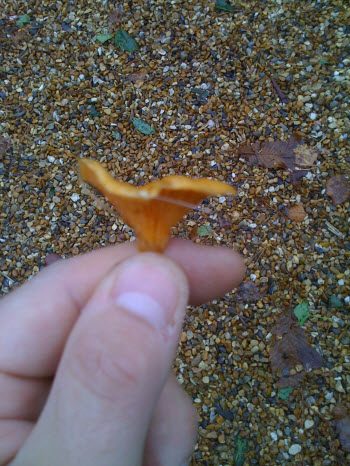
Paralepista flaccida
An orange-brown funnel that turns up in troops and rings in conifer and broadleaf litter from September into winter. Chris found dozens of them on Ludshott Common in November 2009. Not worth eating, but worth knowing so you can rule it out.
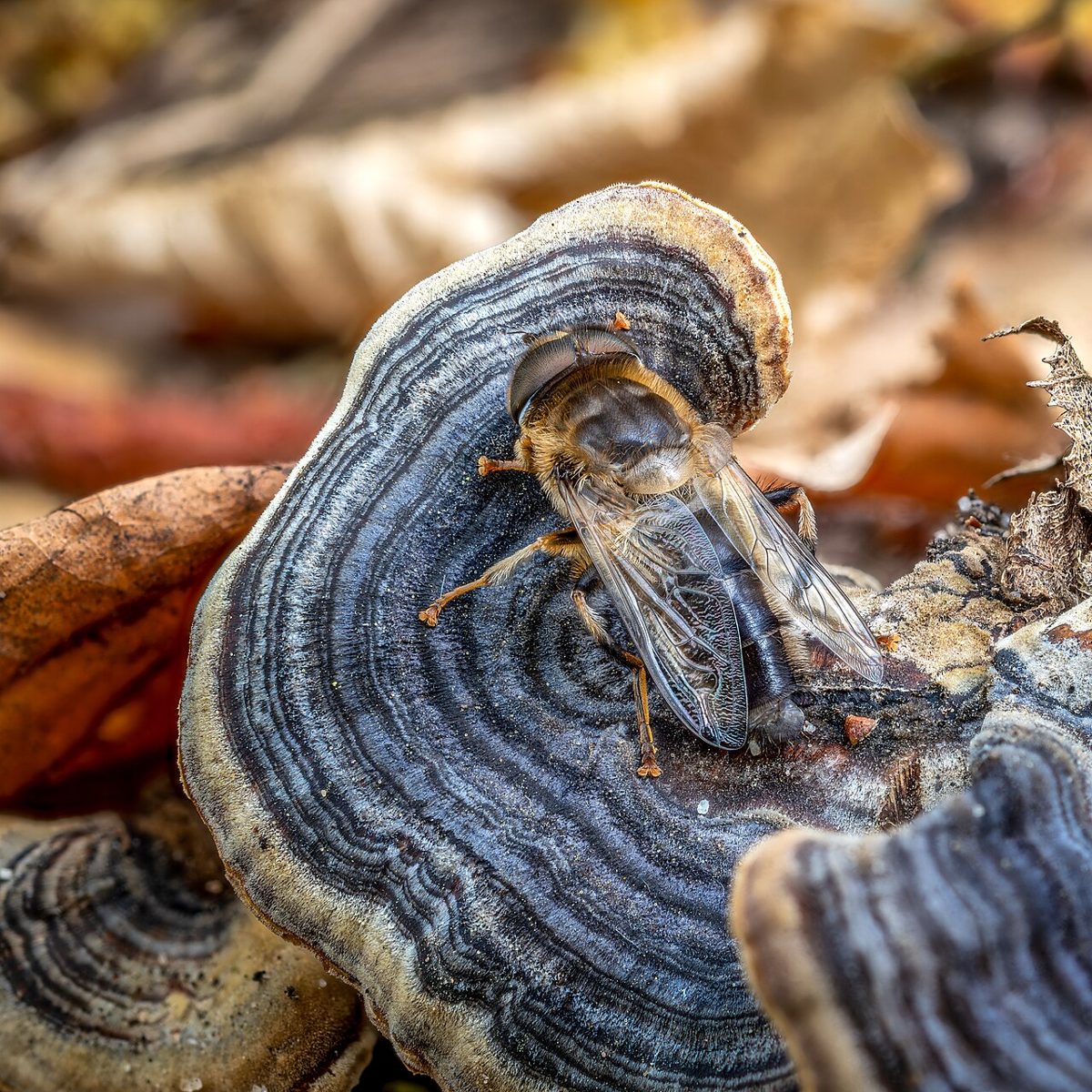
Trametes versicolor
Thin, leathery brackets in overlapping tiers, banded in browns, greys and blues like a fanned turkey tail, on dead wood all year round. One of the most common fungi in Britain, but far too tough to eat.
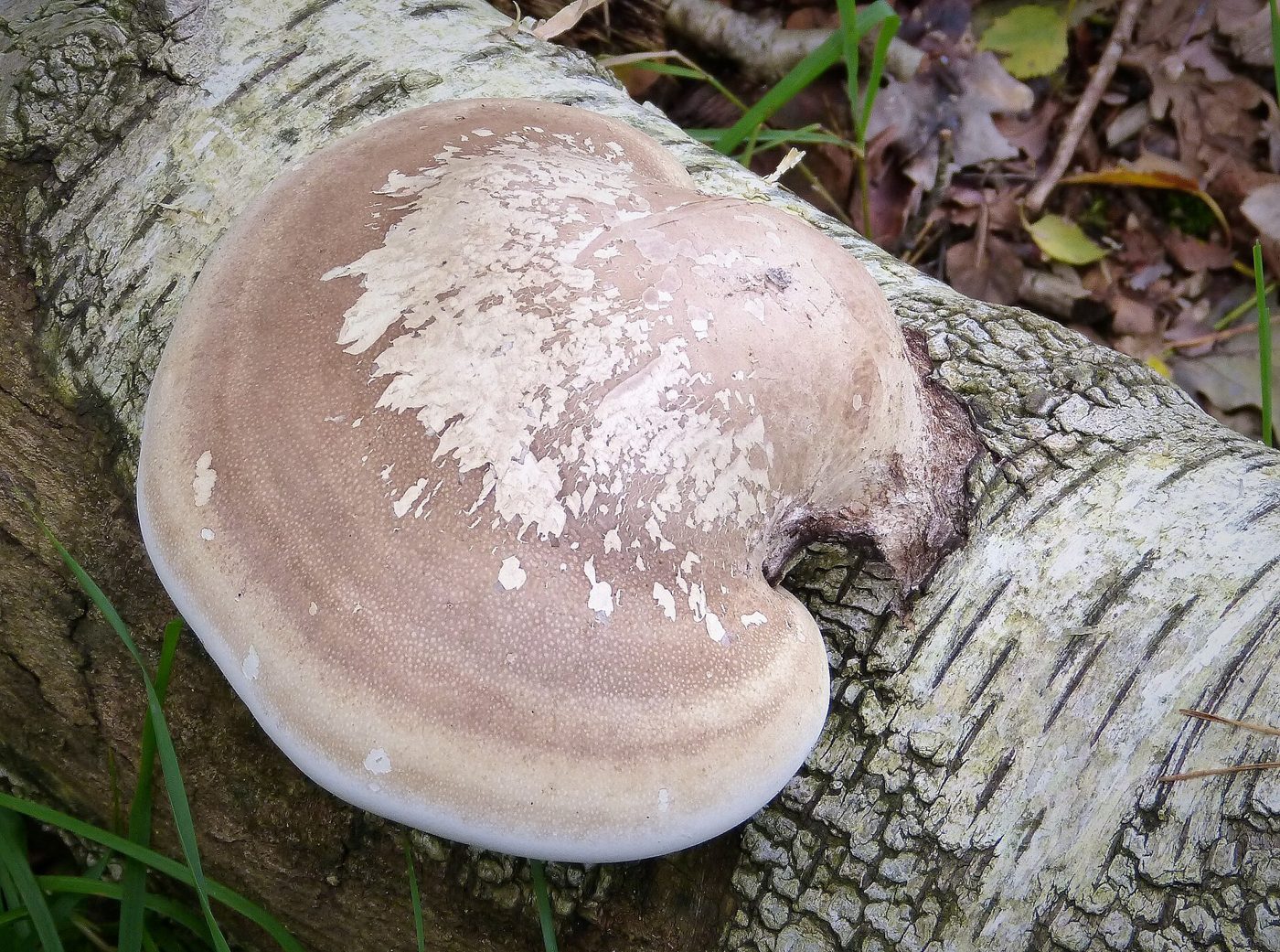
Fomitopsis betulina
A smooth, pale, kidney-shaped bracket that grows only on birch, mostly on dead and dying trees. Fresh brackets appear from late summer and old ones stay on the tree all year. It is bitter and corky, so it is not eaten.