UK species guide
68 British fungi, written up the way you actually use them in the field: what it looks like, when it appears, where it grows, and what dangerous species it can be mistaken for.
Never eat a wild mushroom on the strength of a website alone. Some deadly species look very like good edibles. Check every feature, and get an expert opinion if there is any doubt at all.
Read the full foraging safety guidance.
Checking the weather across the UK…
Showing 28 of 68 species
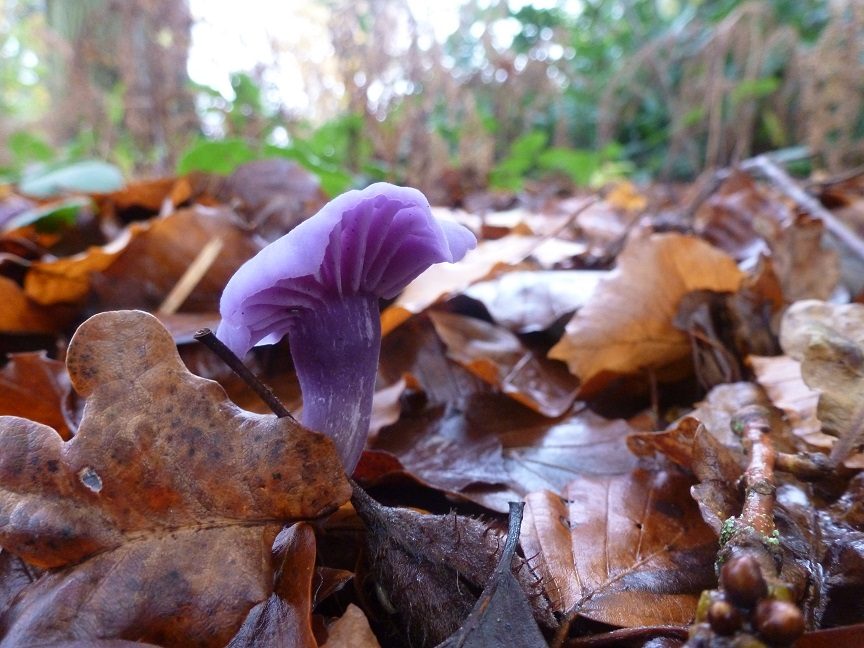
Amethyst Deceiver
Laccaria amethystina
A small brilliant violet mushroom of leaf litter, edible but slight and known to take up arsenic.
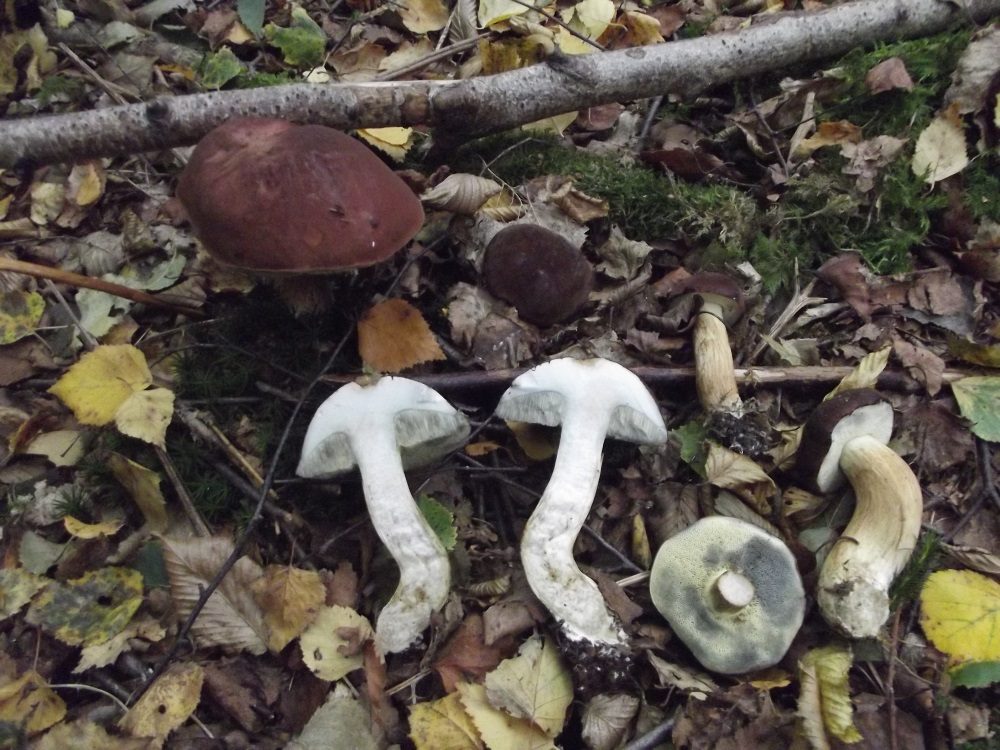
Bay Bolete
Imleria badia
A reliable and common bolete: rich bay-brown cap and pores that bruise blue-green at a touch.
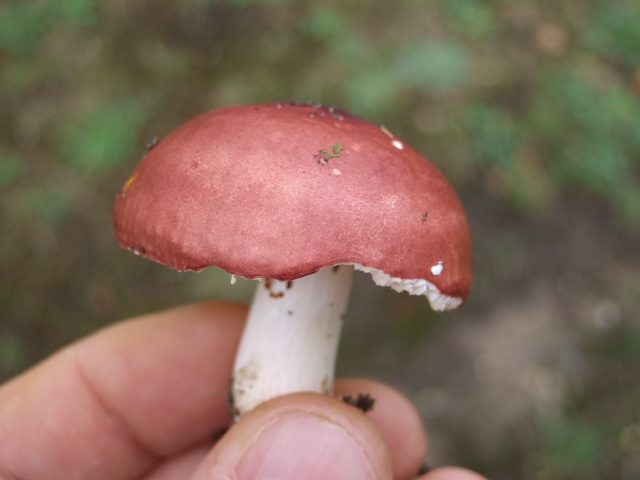
Beechwood Sickener
Russula nobilis
A small, firm, scarlet brittlegill found only with beech. Chris photographed one on Headley Down in 2008. It is poisonous and fiercely peppery, and one of several red Russulas that should never be eaten.
Brown Rollrim
Paxillus involutus
Once eaten widely in Europe, now known to cause a fatal immune reaction that builds up over repeated meals.
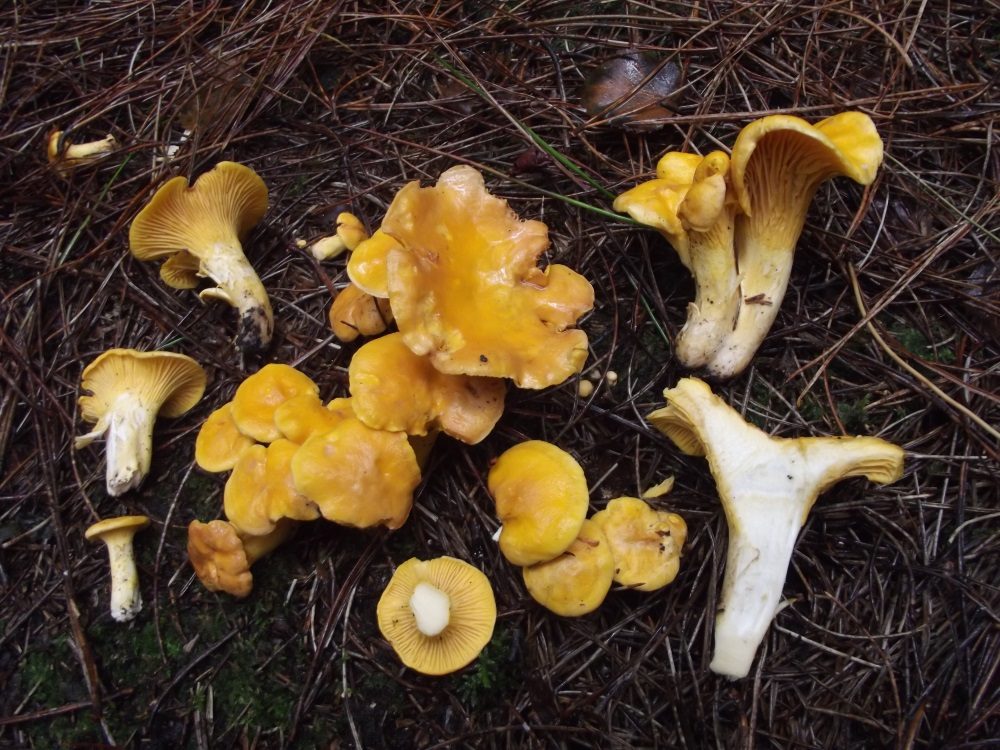
Chanterelle
Cantharellus cibarius
Egg-yolk yellow, trumpet-shaped and smelling faintly of apricots. One of the safest and finest edibles once learned.
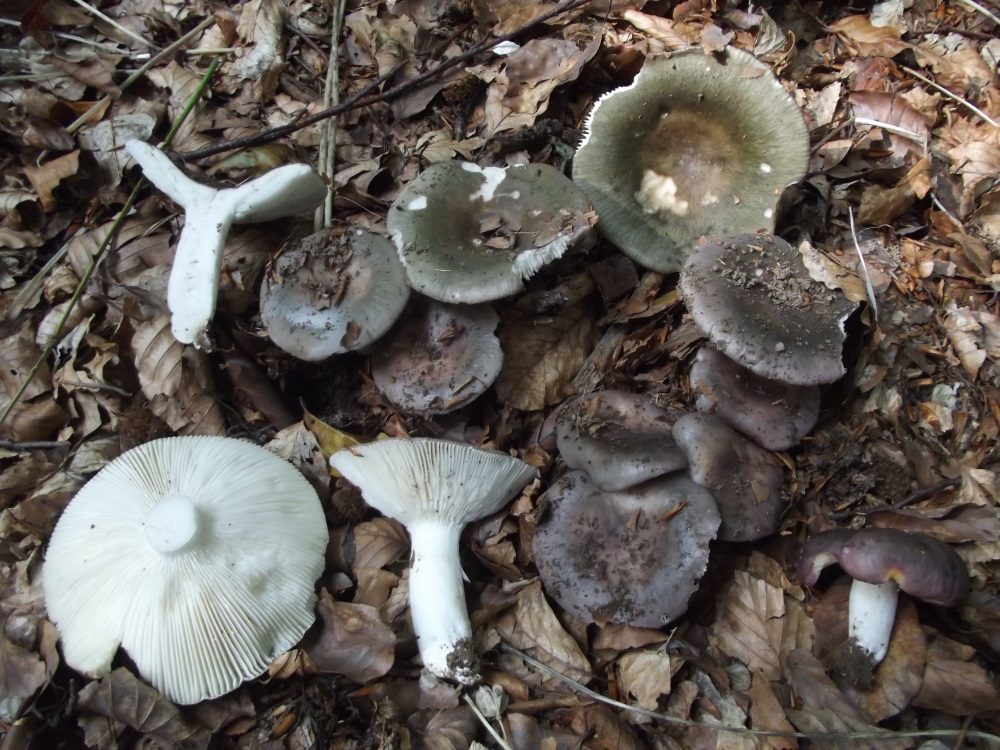
Charcoal Burner
Russula cyanoxantha
A variable-coloured woodland brittlegill; cap colour alone is not a reliable identification feature.
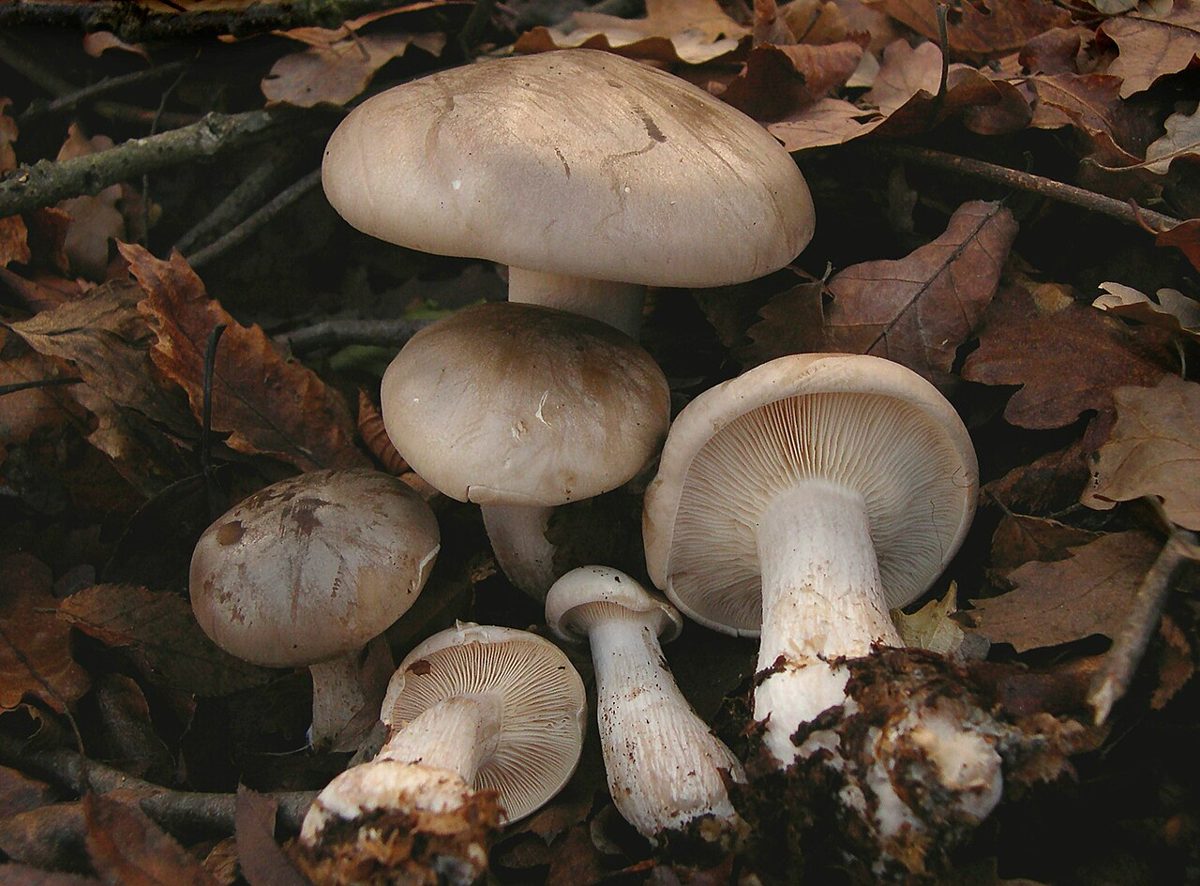
Clouded Funnel
Clitocybe nebularis
A big, fleshy grey mushroom of late autumn leaf litter, often in rings of dozens. Once widely eaten, it is now treated as poisonous by most UK guides because it causes stomach upsets in a significant share of people, even when cooked. It is also the only host of the strange Piggyback Rosegill.
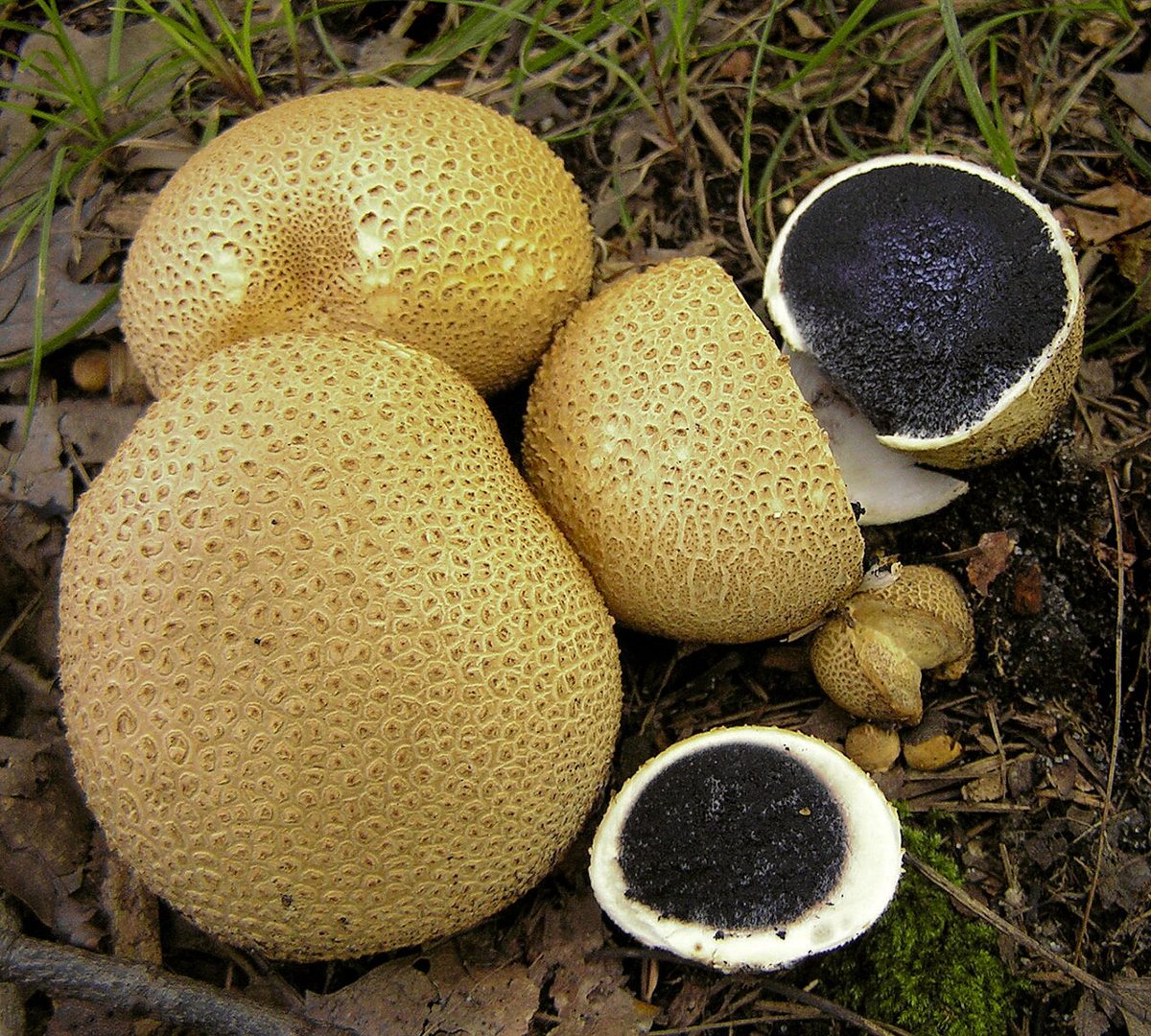
Common Earthball
Scleroderma citrinum
A potato-like yellowish ball with cracked, scaly skin, common on acid soils in woods and heaths. It is the poisonous mushroom most often mistaken for an edible puffball, but a single cut shows the difference.
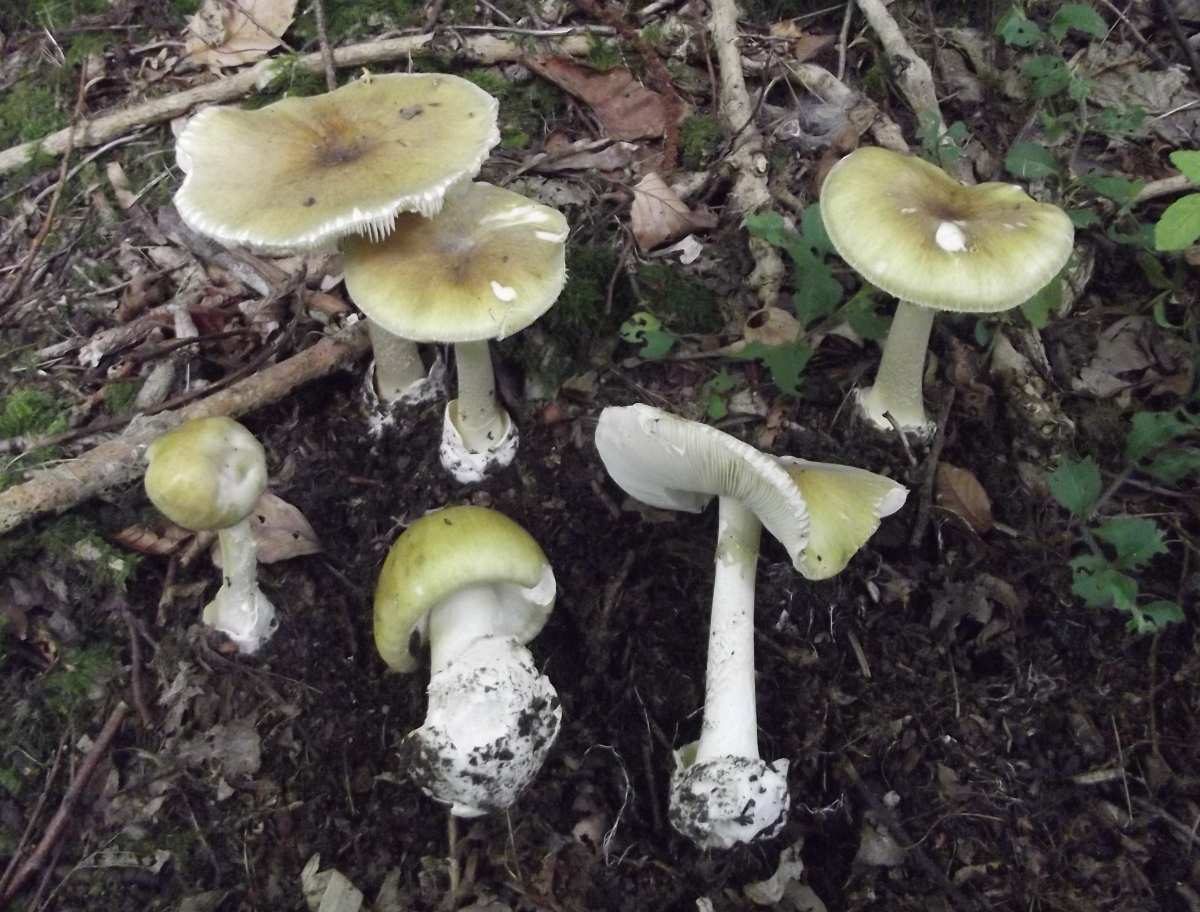
Death Cap
Amanita phalloides
Responsible for the great majority of fatal mushroom poisonings worldwide. Learn this one before anything else.
Destroying Angel
Amanita virosa
Pure white, elegant and lethal. The one to check for whenever you pick a white mushroom.
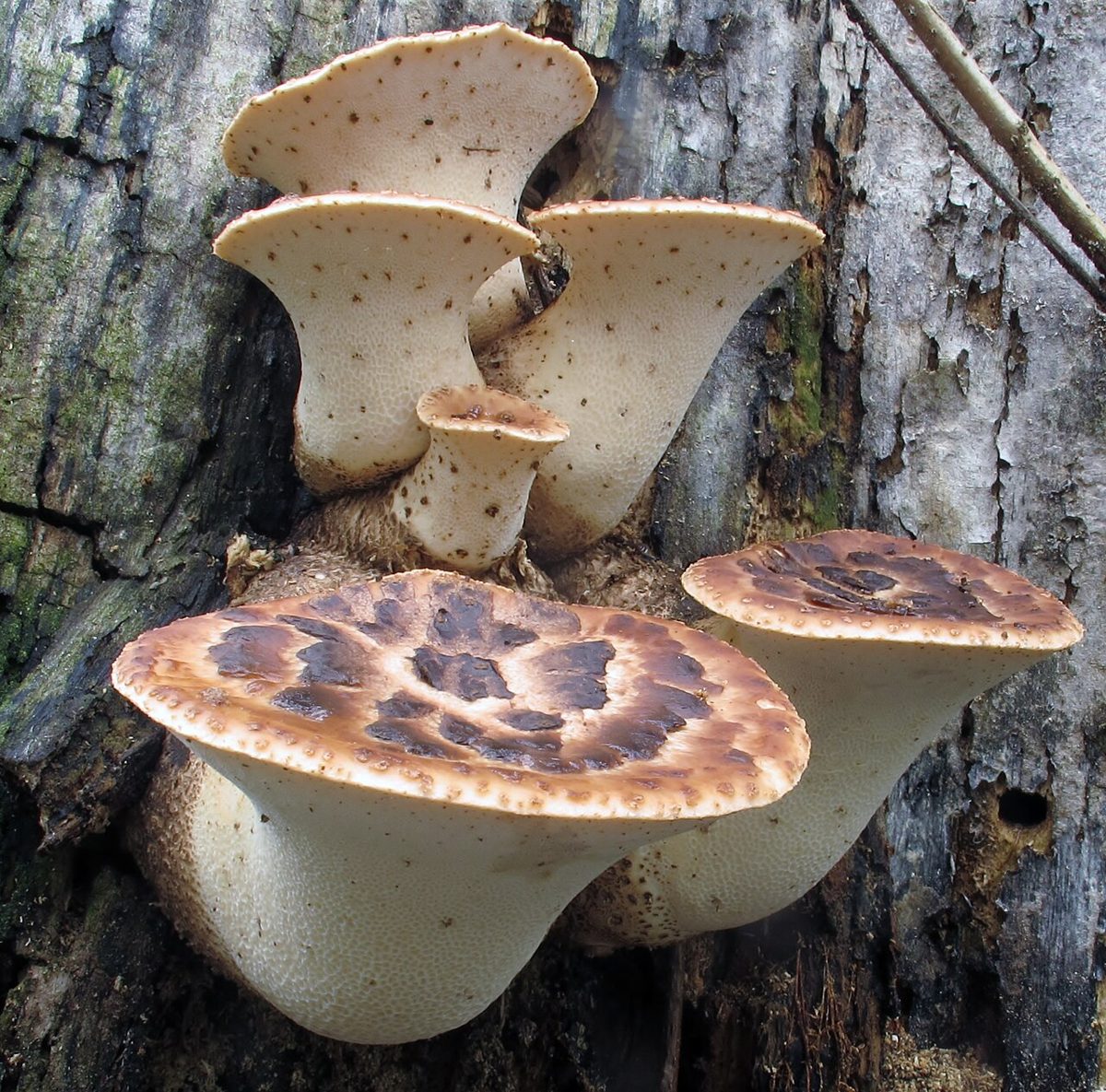
Dryad's Saddle
Cerioporus squamosus
A large, saddle-shaped spring and summer bracket covered in feather-like brown scales, common on sycamore, beech and elm. Easy to recognise and edible when very young, but it turns corky fast.
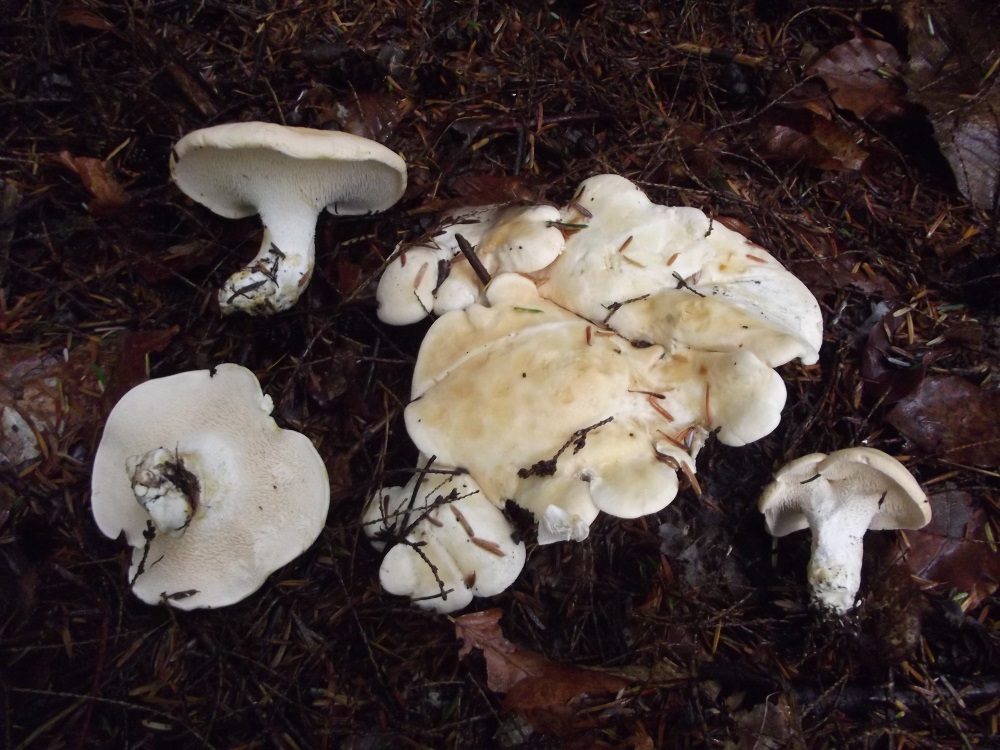
Hedgehog Fungus
Hydnum repandum
Buff coloured with soft spines instead of gills. Almost impossible to confuse with anything dangerous.
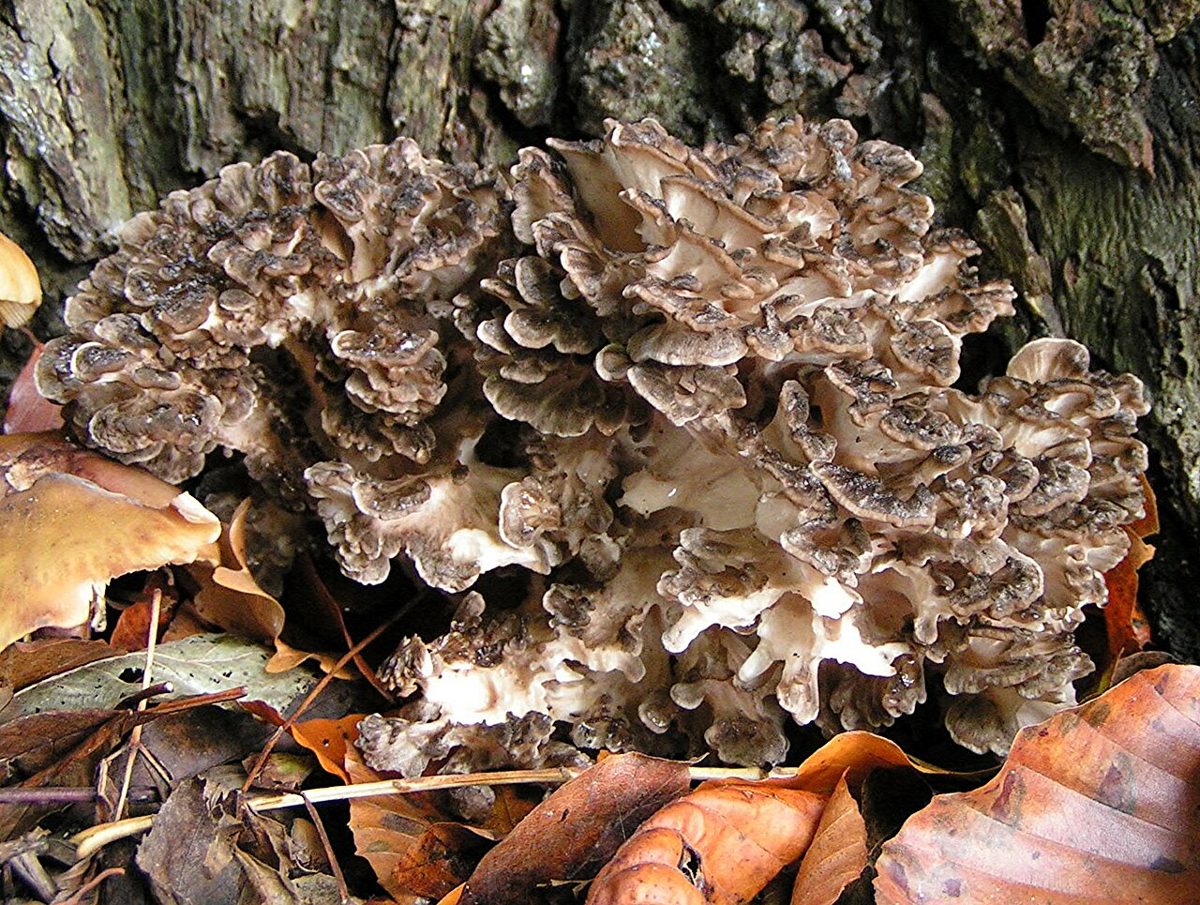
Hen of the Woods
Grifola frondosa
A big, ruffled rosette of grey-brown fronds at the base of old oaks, found occasionally in southern England in autumn. Sold in shops as maitake, it is one of the best-flavoured wild mushrooms and has no dangerous lookalikes.
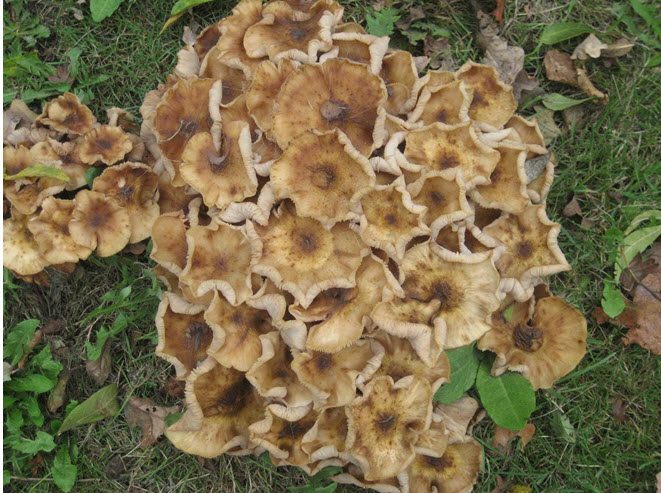
Honey Fungus
Armillaria mellea
The tree-killing parasite of woods, parks and gardens, fruiting in dense honey-to-tawny clumps on stumps and at the base of trees from late summer into early winter. Edible only young and thoroughly cooked, it upsets some people, and its clumps can hide the deadly Funeral Bell.
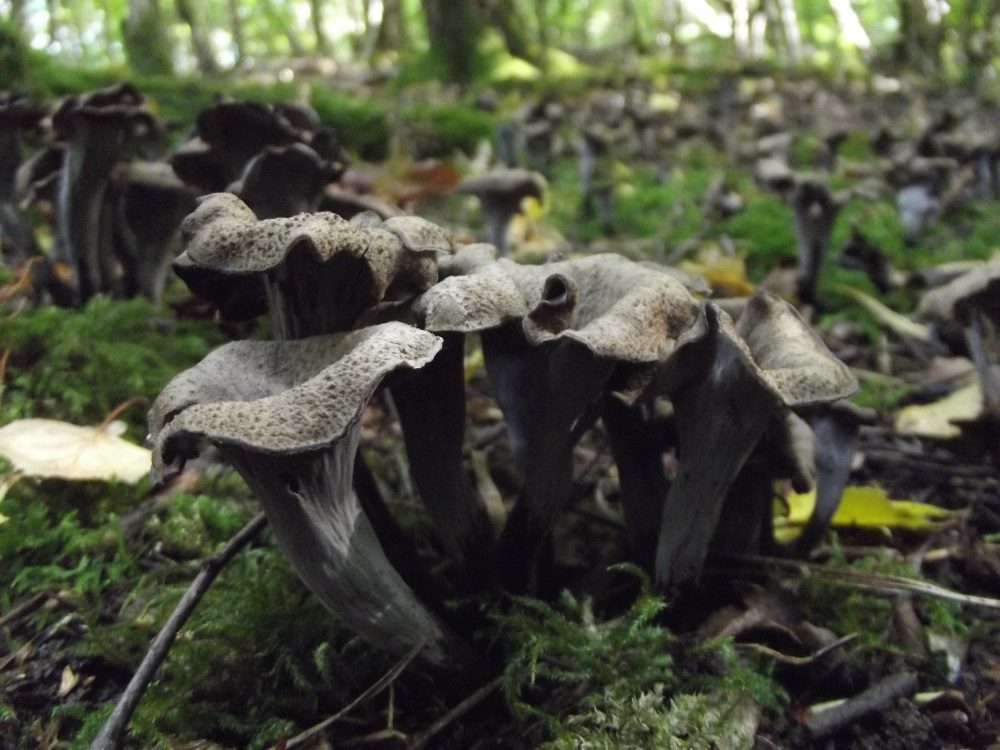
Horn of Plenty
Craterellus cornucopioides
Dark funnel-shaped fungi of broadleaf woodland, often hard to spot among fallen leaves.
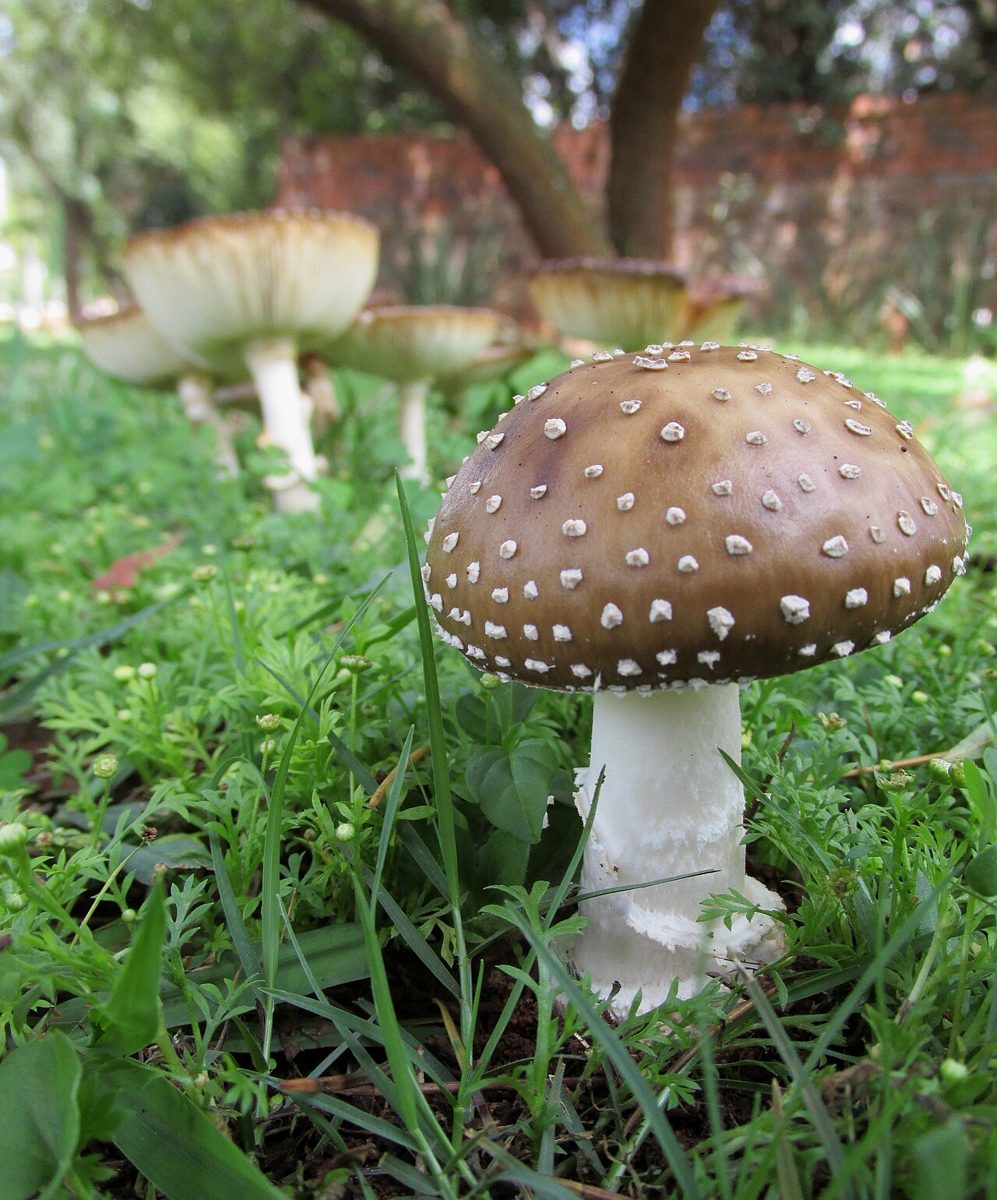
Panther Cap
Amanita pantherina
A brown Amanita dotted with pure white warts, found mainly with beech and oak. It contains the same toxins as the Fly Agaric in higher amounts, can occasionally kill, and is the classic dangerous double of the Blusher.
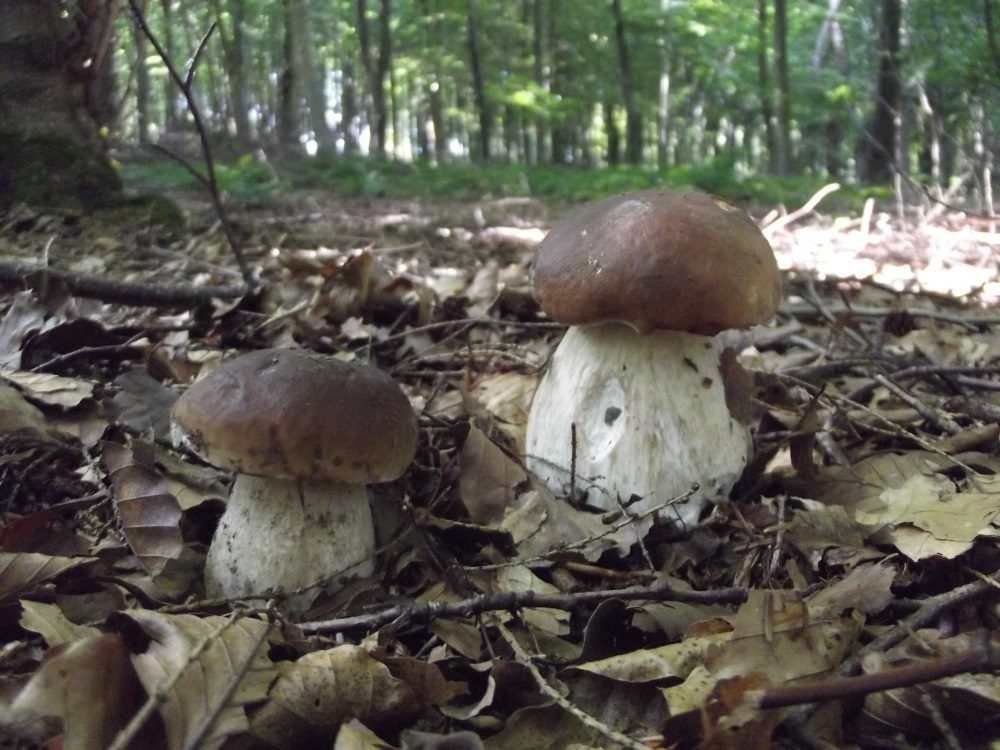
Penny Bun
Boletus edulis
The most sought-after wild mushroom in Britain: nutty, firm and richly scented, with a pale bun-like cap and a fat netted stem.
Scarletina Bolete
Neoboletus luridiformis
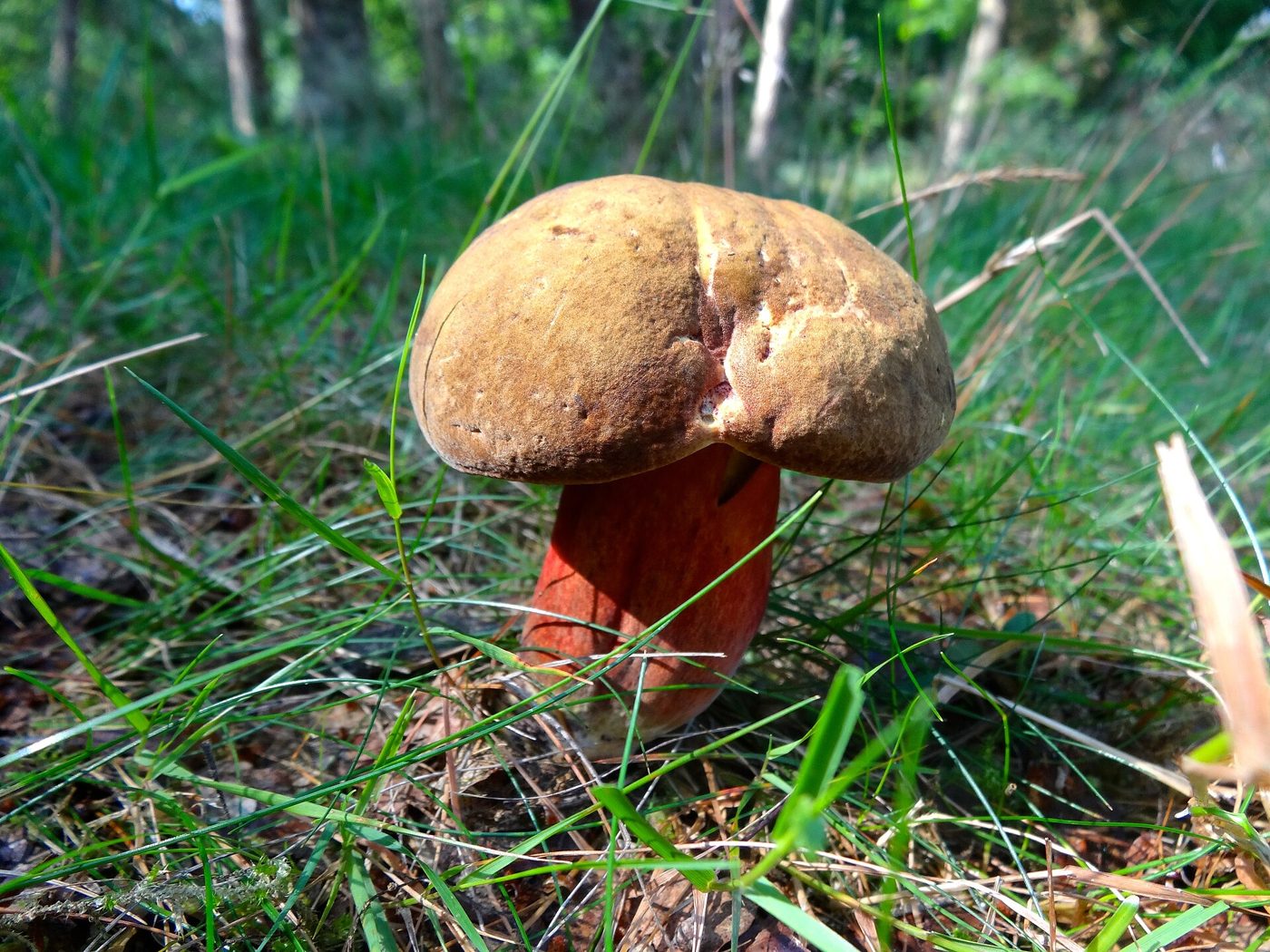
A chunky brown bolete with red pores and a yellow stem covered in tiny red dots. Its yellow flesh turns dark blue-black the instant it is cut. A good edible for experienced foragers, but only when thoroughly cooked, and it breaks the beginner's rule of avoiding red-pored boletes.
Shaggy Parasol
Chlorophyllum rhacodes
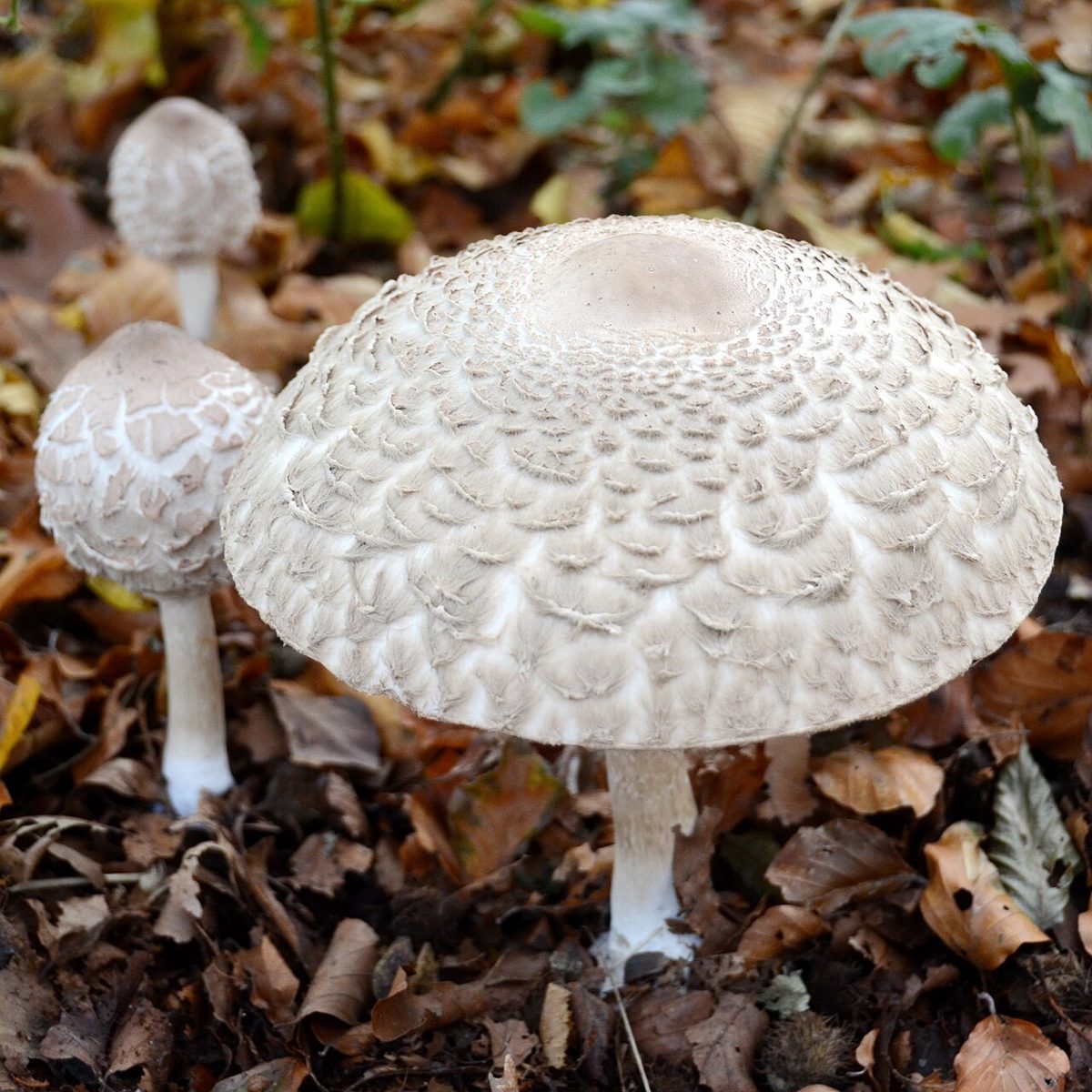
A big, shaggy-scaled parasol of woodland edges, gardens and compost heaps, whose flesh turns saffron-orange when cut. Eaten by some, but it upsets others, and small parasol-like Lepiota species can be deadly.
Stinkhorn
Phallus impudicus
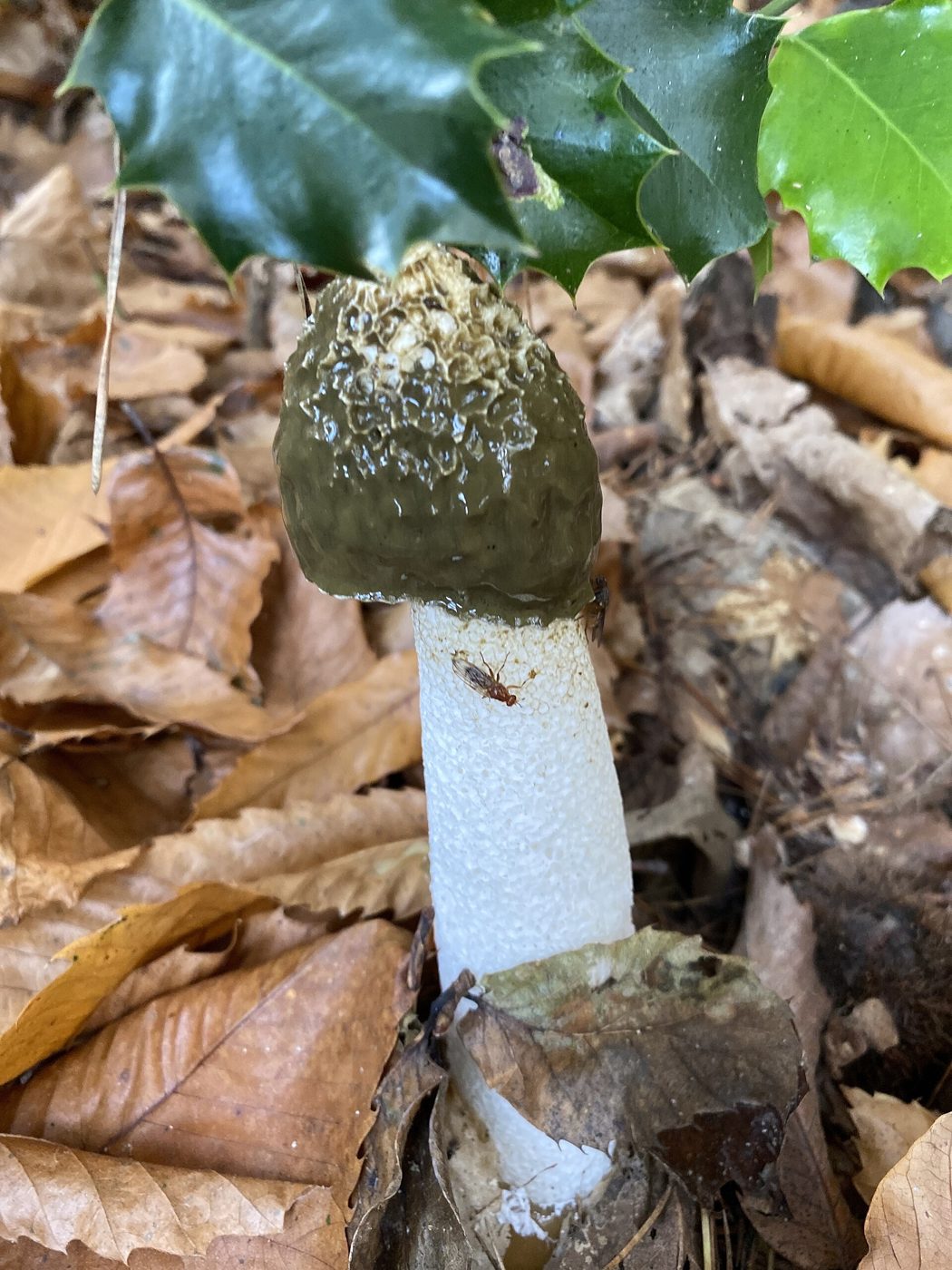
A white, spongy stem topped with olive-green slime that smells of rotting meat, rising from a soft white "egg" in woods and woodchip from summer to late autumn. You usually smell it long before you see it.
Tawny Funnel
Paralepista flaccida
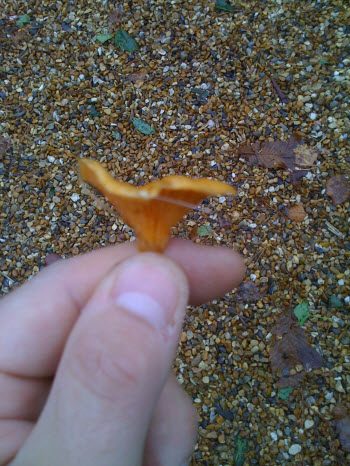
An orange-brown funnel that turns up in troops and rings in conifer and broadleaf litter from September into winter. Chris found dozens of them on Ludshott Common in November 2009. Not worth eating, but worth knowing so you can rule it out.
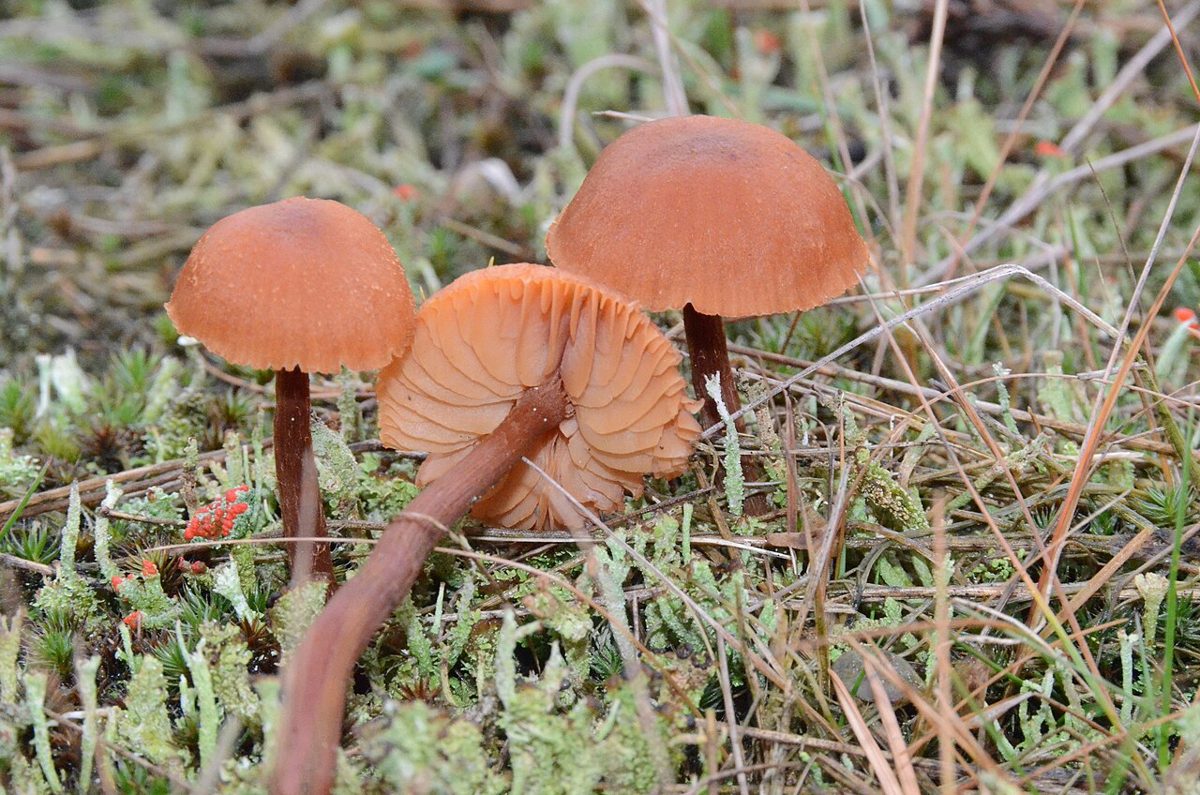
The Deceiver
Laccaria laccata
A small orange-brown mushroom with thick, widely spaced pink gills, found almost everywhere from summer to early winter. It earns its name by changing colour as it dries and looking like many other little brown mushrooms.
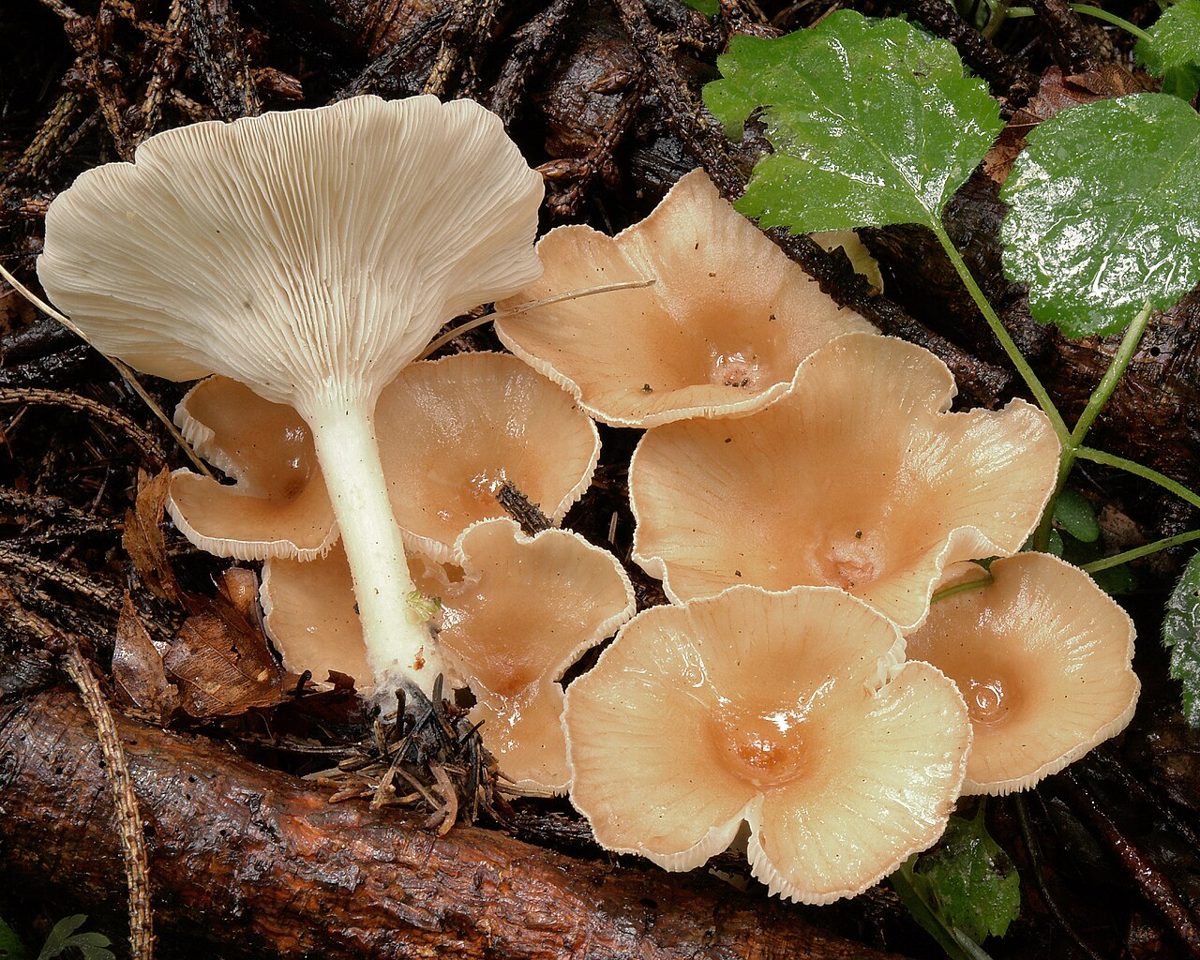
The Funnel
Infundibulicybe gibba
A pale tan funnel of woodland leaf litter, common from late summer to late autumn, and the edible funnel that must be kept well apart from the poisonous white funnels of grassland.
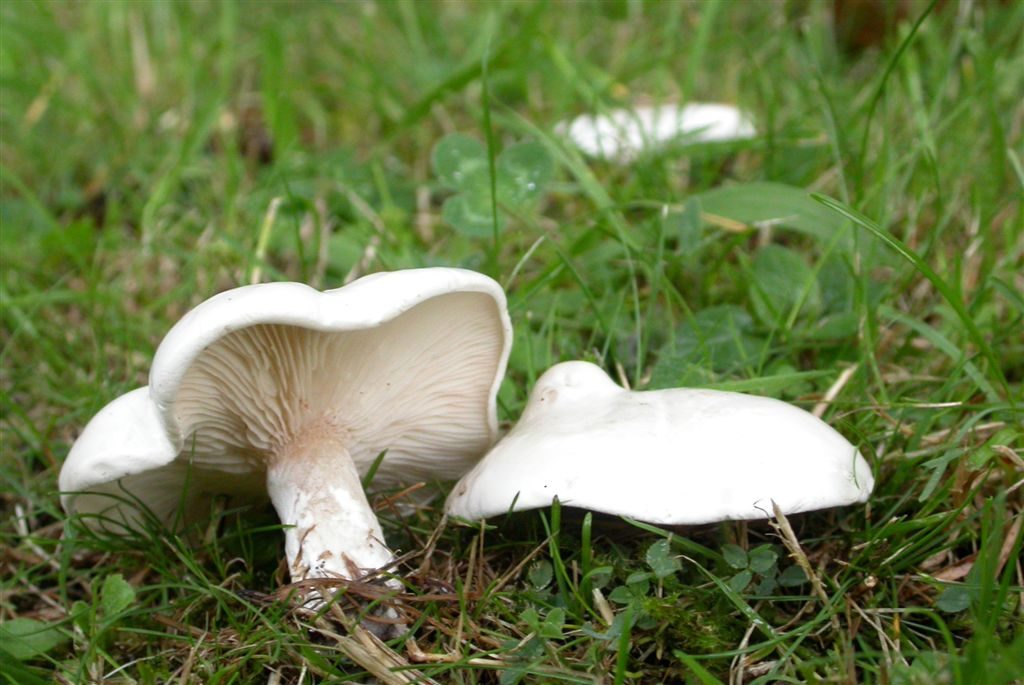
The Miller
Clitopilus prunulus
A soft white woodland mushroom with gills that run down its short stem and turn pink, and a strong smell of fresh flour or bread dough. A good edible and a traditional sign that Penny Buns may be nearby, but it closely resembles the poisonous Fool's Funnel.
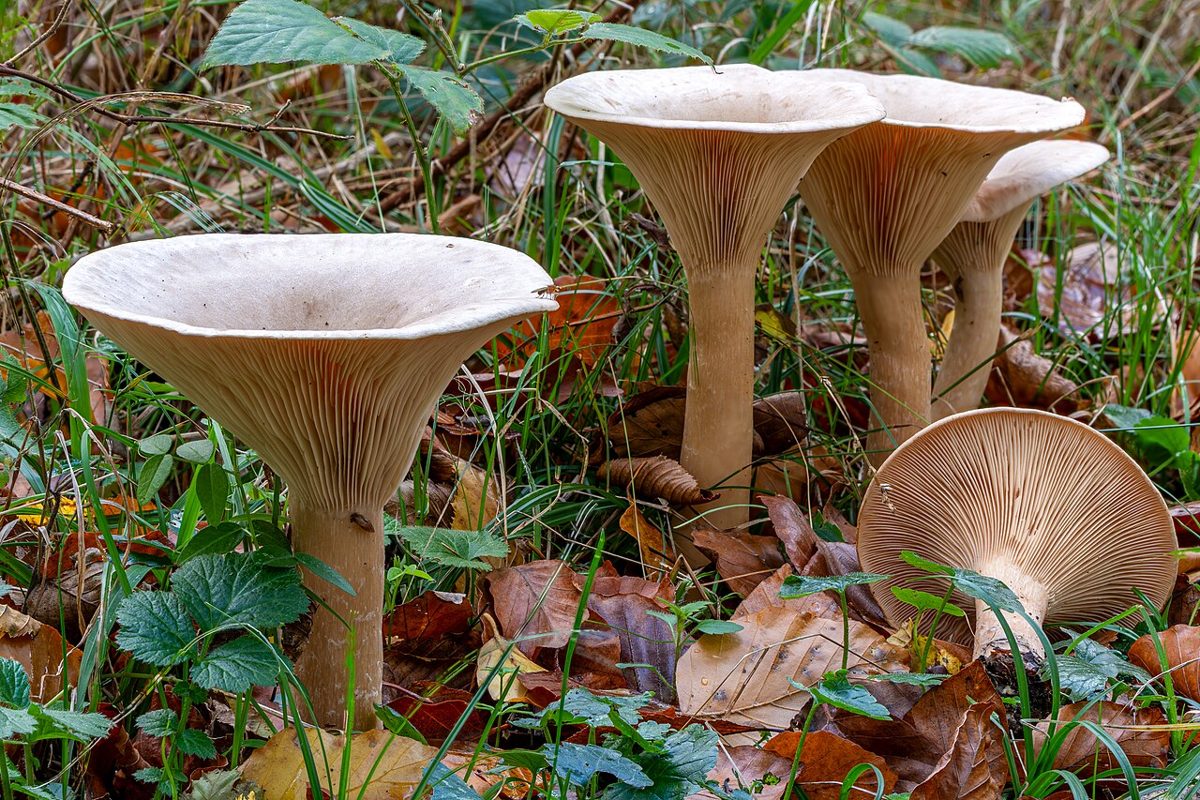
Trooping Funnel
Infundibulicybe geotropa
A tall, pale funnel with a pointed central boss that marches through woodland clearings in huge rings and lines from September to December. One of the better late-season edibles, but it shares its woods with the Clouded Funnel and the seriously poisonous Livid Pinkgill.
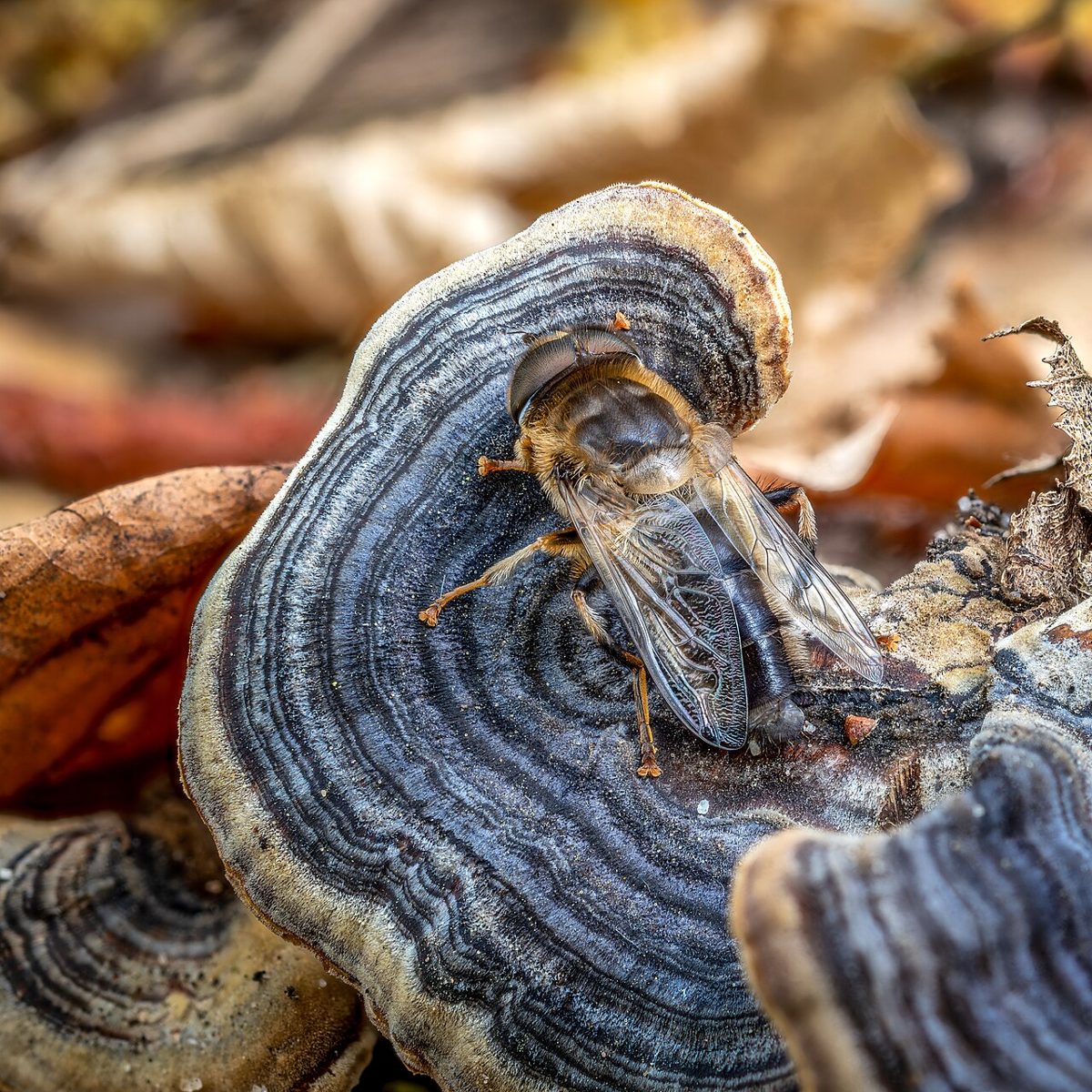
Turkey Tail
Trametes versicolor
Thin, leathery brackets in overlapping tiers, banded in browns, greys and blues like a fanned turkey tail, on dead wood all year round. One of the most common fungi in Britain, but far too tough to eat.
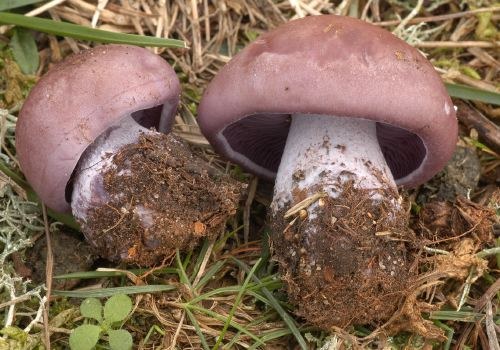
Wood Blewit
Lepista nuda
A late-season woodland mushroom with a striking lilac flush and a perfumed smell.
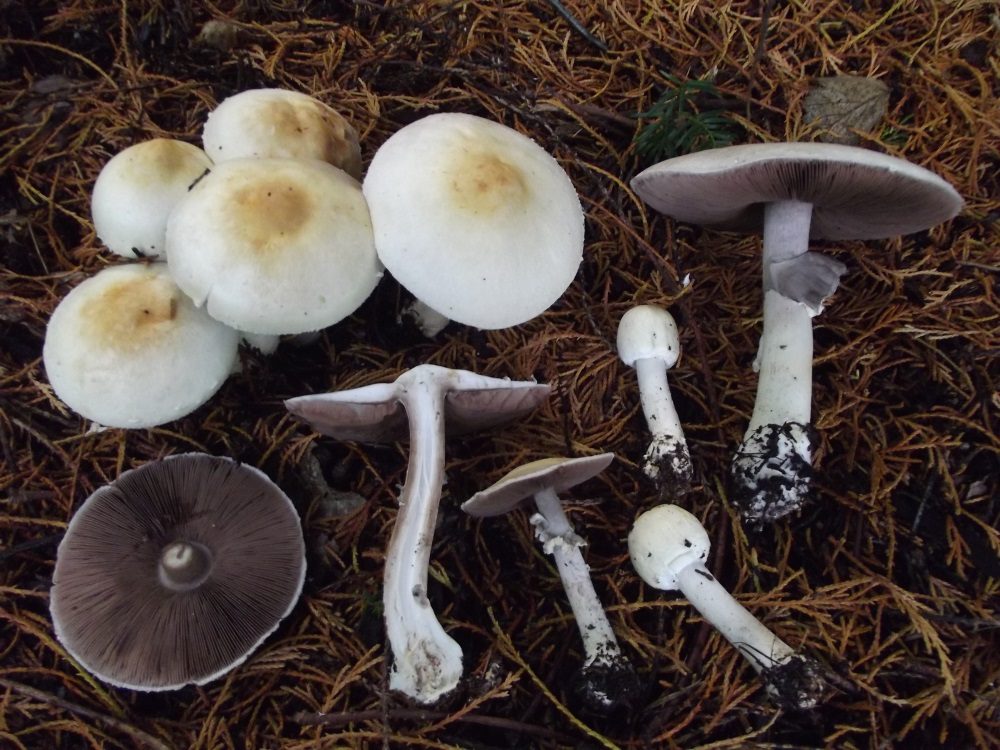
Wood Mushroom
Agaricus sylvicola
A pale woodland Agaricus that may smell of aniseed.