UK species guide
72 British fungi, written up the way you actually use them in the field: what it looks like, when it appears, where it grows, and what dangerous species it can be mistaken for.
Never eat a wild mushroom on the strength of a website alone. Some deadly species look very like good edibles. Check every feature, and get an expert opinion if there is any doubt at all.
Read the full foraging safety guidance.
Checking the weather across the UK…
Showing 6 of 72 species
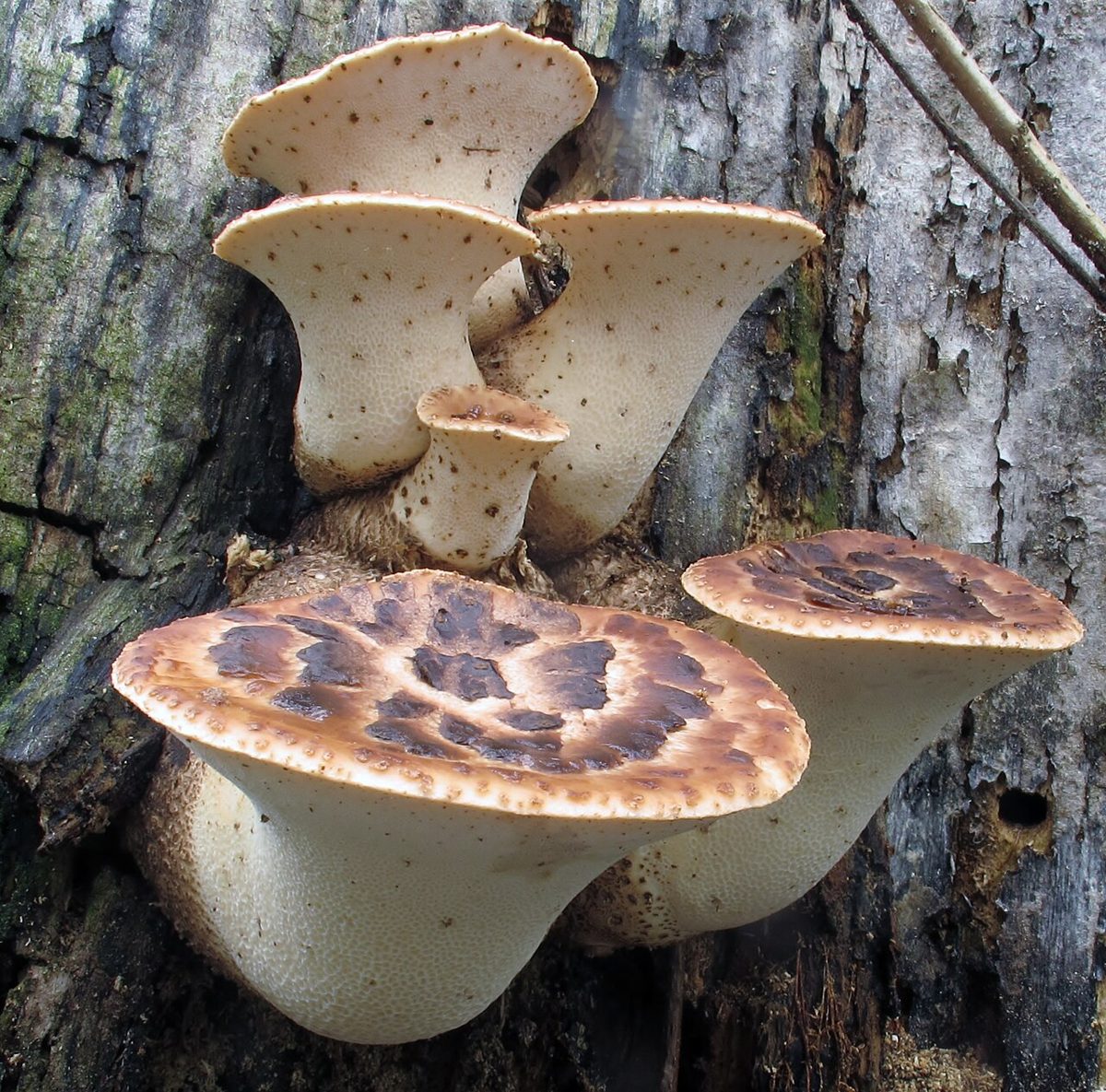
Dryad's Saddle
Cerioporus squamosus
A large, saddle-shaped spring and summer bracket covered in feather-like brown scales, common on sycamore, beech and elm. Easy to recognise and edible when very young, but it turns corky fast.
Funeral Bell
Galerina marginata
A small brown mushroom on dead wood carrying the same toxins as the Death Cap.
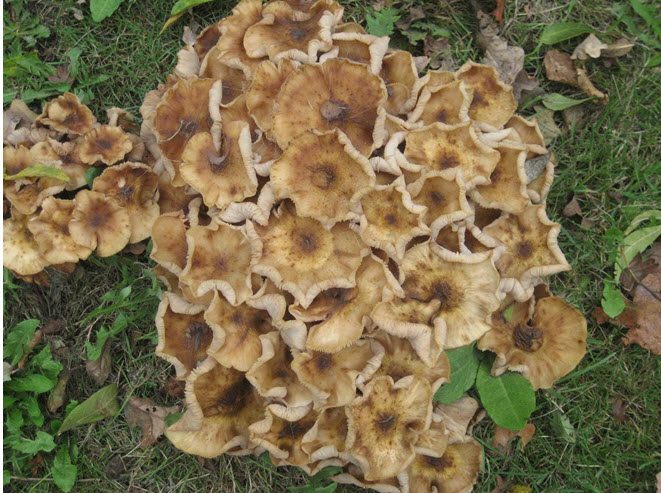
Honey Fungus
Armillaria mellea
The tree-killing parasite of woods, parks and gardens, fruiting in dense honey-to-tawny clumps on stumps and at the base of trees from late summer into early winter. Edible only young and thoroughly cooked, it upsets some people, and its clumps can hide the deadly Funeral Bell.
Sulphur Tuft
Hypholoma fasciculare
Dense sulphur-yellow clusters on stumps all year. Very common, very bitter, and toxic.
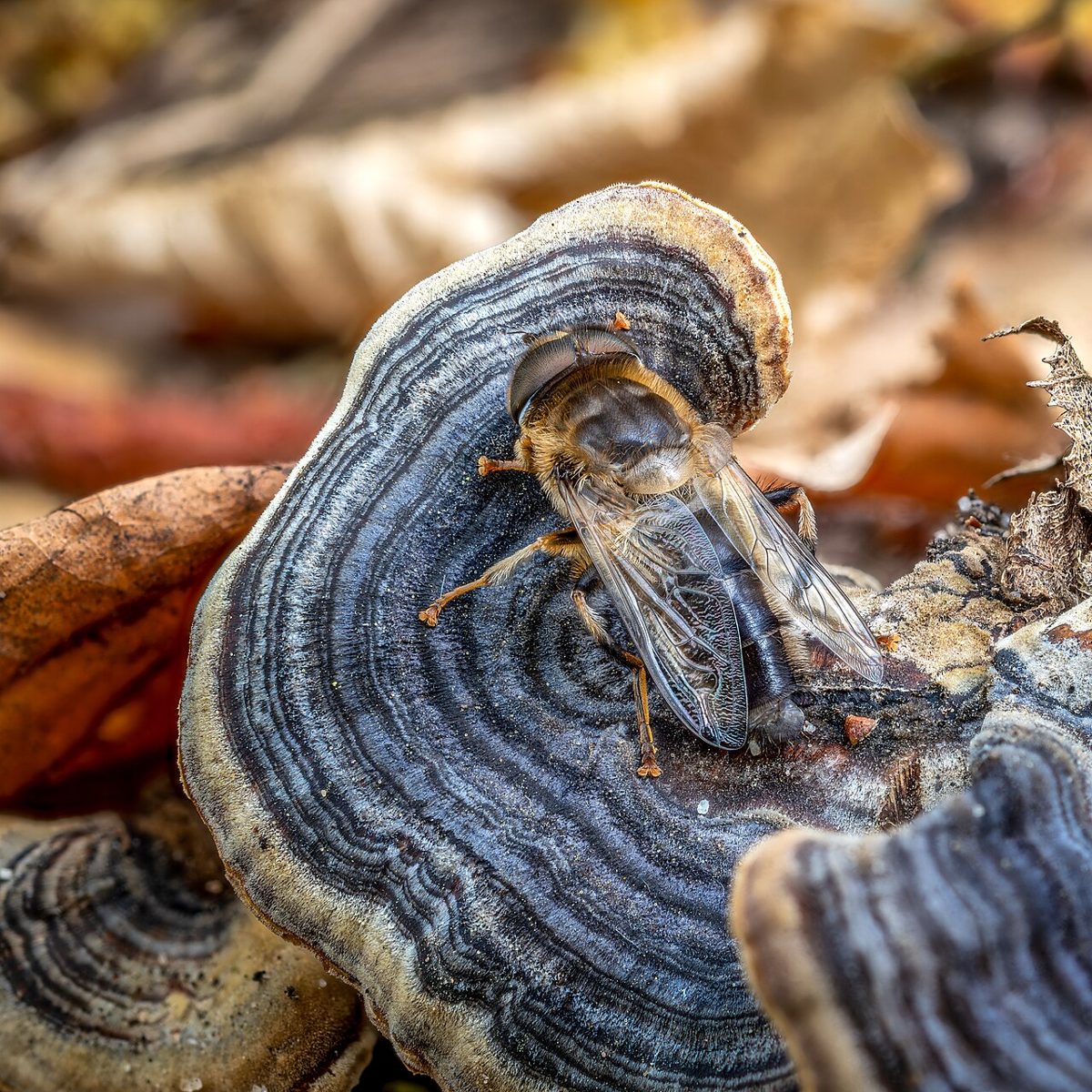
Turkey Tail
Trametes versicolor
Thin, leathery brackets in overlapping tiers, banded in browns, greys and blues like a fanned turkey tail, on dead wood all year round. One of the most common fungi in Britain, but far too tough to eat.
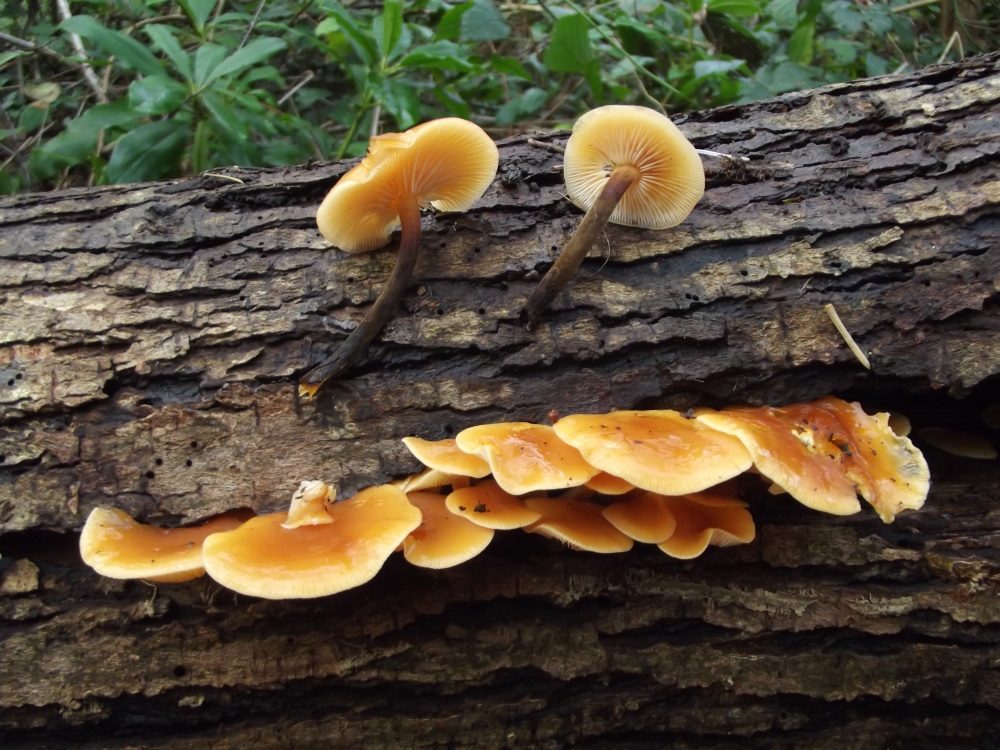
Velvet Shank
Flammulina velutipes
A winter mushroom: sticky orange caps in clusters on dead elm and other broadleaf wood, often through frost.