Galerina marginata · Hymenogastraceae
Also called Deadly Galerina
A small brown mushroom on dead wood carrying the same toxins as the Death Cap.
Deadly poisonous. DEADLY. Contains amatoxins. Never pick clustered small brown mushrooms from wood without a spore print: white print for Velvet Shank, rusty for this killer.
Read the full foraging safety guidance.
August to November
See what else is out in August, September, October and November.
Velvet Shank, Sheathed Woodtuft and Honey Fungus, all picked from wood. The rusty spore print is the giveaway.
Never eat.
Foraging after the first frost: November's best wild mushrooms
The season isn't over when the ceps go. Cold, wet November woods produce some of the cleanest edibles of the year, if you know what to look for and what to rule out.
The reclassification of the inkcaps
The genus Coprinus was broken apart by DNA work in the early 2000s. Here is what the inkcaps are called now, and why the Shaggy Inkcap kept its name.
Late winter foraging, when the mushrooms are gone
January and February are the lean months. There is still Velvet Shank and Jelly Ear on the wood, and the first hedgerow greens are worth more than most people think.
Honey fungus: friend of no gardener
Armillaria is the most destructive tree pathogen in British gardens and it is also, with serious caveats, edible.
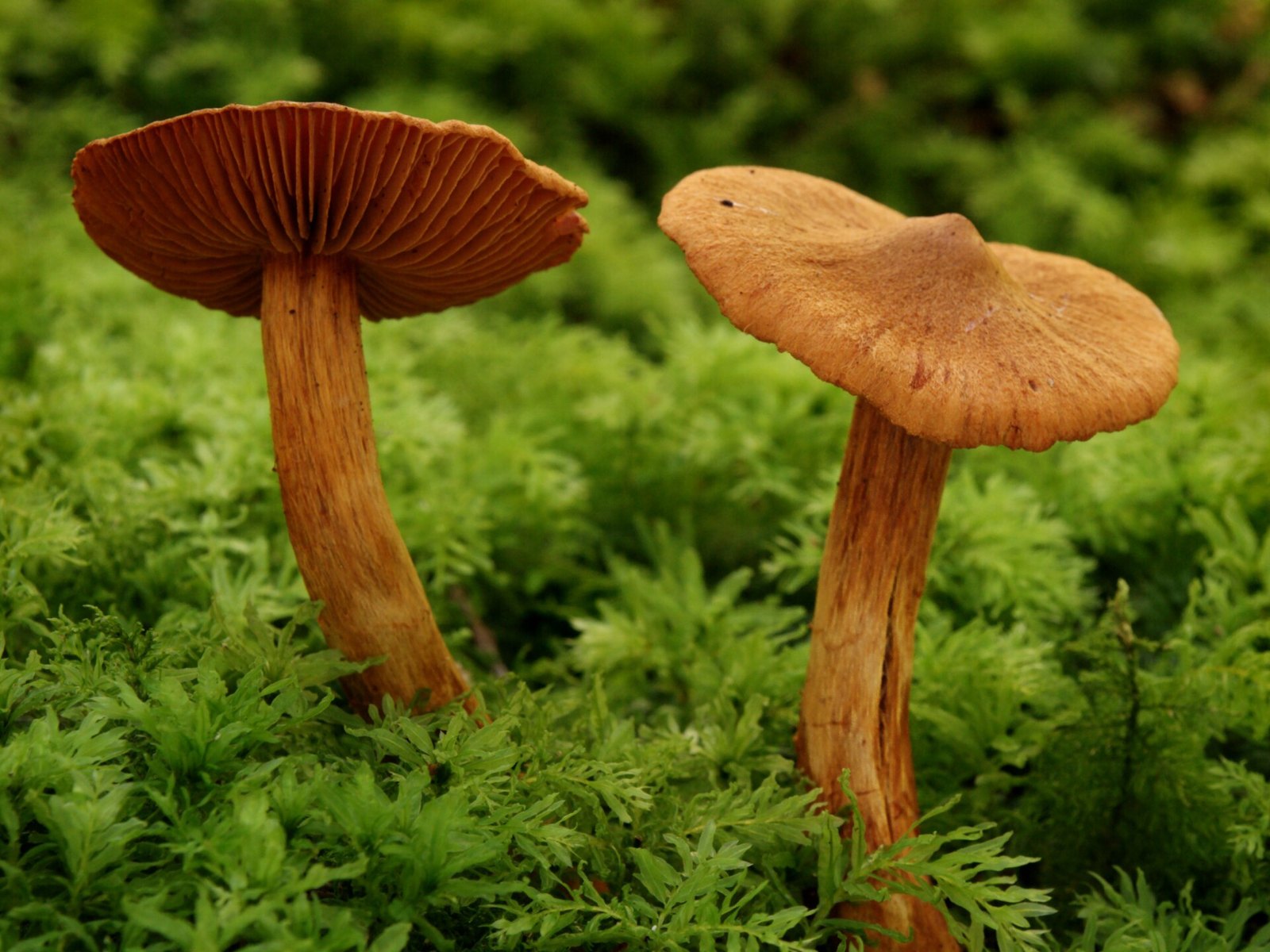
Cortinarius rubellus
A modest orange-brown mushroom whose poison destroys the kidneys weeks after the meal.
Amanita virosa
Pure white, elegant and lethal. The one to check for whenever you pick a white mushroom.
Paxillus involutus
Once eaten widely in Europe, now known to cause a fatal immune reaction that builds up over repeated meals.